UOC Chief Lawyer: SBI closed case of incitement to religious hatred early
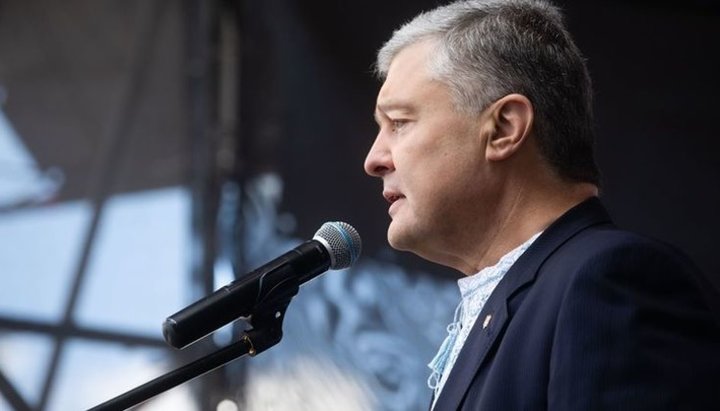
The court should determine the guilt or innocence of Poroshenko and other politicians and functionaries. Photo: Facebook / Petro Poroshenko
The head of the Legal Department of the Ukrainian Orthodox Church, Archpriest Alexander Bakhov, commented on the situation with the closure of the criminal case against the ex-President of Ukraine Petro Poroshenko by the State Bureau of Investigation (SBI).
“I think that the SBI investigators prematurely closed the case of 'incitement to religious hatred', which, for some reason, was mistakenly called the Tomos case,” the clergyman wrote on his Facebook page. “In fact, it has nothing to do with the tomos. First of all, it is about the violation of Ukrainian legislation, namely, incitement to religious hatred, abuse of power, interference in the internal affairs of religious associations, forgery of documents and fraud by politicians and functionaries, which should be properly investigated by law enforcement agencies."
The head of the Legal Department of the UOC noted that the degree of guilt or innocence of each should be determined by the court, "after all, not only of Poroshenko and Yurash are involved in the case since a whole criminal group was operating there!"
“The state and officials, by and large, should not care whether someone has a tomos or not, whether they recognize each other or not, because all this is an internal issue of religious associations. And before the state, the Christian religious community is no different from the Jewish or Muslim religious community, from the point of view of the law they are all equal!" he stressed.
The leadership of the OCU has nothing to worry about the tomos, he added, since “no decisions of the courts and law enforcement agencies regarding the prosecution of criminals will in any way affect the tomos, because this is a paper that has no legal force, and whether to recognize it or not is an internal issue of every person and religious group and organization (Article 35 of the Constitution of Ukraine)."
In conclusion, Archpriest Alexander wondered: "If there is no corpus delicti and the SBI investigators closed the criminal proceedings, then why did the OCU registration file and the UOC-KP liquidation file disappear?"
Earlier, the SBI has reported the closure of the criminal proceedings, which Petro Poroshenko publicly called the "Tomos case", which actually concerned the liquidation of the UOC-KP. The acting Director of the Bureau, Alexander Sokolov, explained that the case was closed due to the absence of signs of a criminal offense and, in his opinion, the deregistration of the UOC-KP should be considered within the framework of administrative or civil proceedings.
Read also
Khust Eparchy honors memory of St. Job of Uholka
A Liturgy is served in Mala Uholka, a birthplace of St. Job of Uholka, on the saint's feast day.
UOC parish in Cologne donates ultrasound machine to Kharkiv region hospital
In Cologne, UOC believers raised funds for an ultrasound machine for the Kehychivka district hospital in the Kharkiv region.
Shevchuk tells Pope Leo of Ukraine's preparations for "another harsh winter"
The head of the UGCC expressed "special gratitude" to the Pope for his phone calls with Putin and Zelensky.
Berlin hierarch comments on Phanar document published by UOJ-USA
Metropolitan Mark called the information about the 2018 "Unification Council" alarming if confirmed, and expressed hope that Patriarch Bartholomew will reconsider his position.
UOC marks Synaxis of All Saints of Volyn Land at Lutsk cathedral
Metropolitan Serhiy of Ternopil and Kremenets led the Liturgy on the feast day of the Lutsk cathedral of All Saints of the Volyn Land.
SBU detains OCU cleric who organized draft evader's escape for money
In Transcarpathia, law enforcement officers detained a clergyman of the OCU who arranged for a draft evader to be smuggled into Slovakia for $15,000.