Filaret: The USA influenced bestowal of the Tomos for OCU
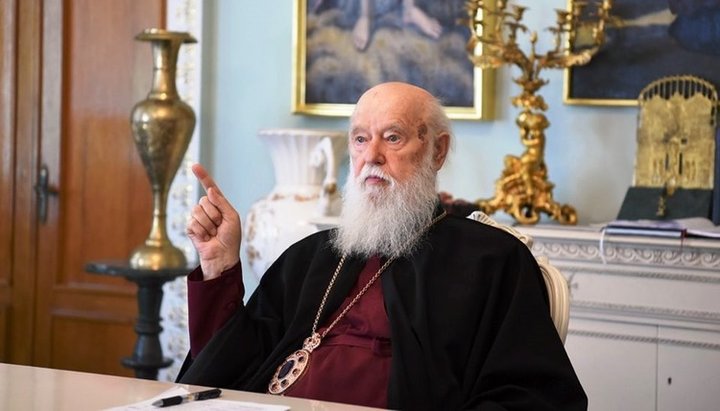
Filaret Denisenko. Photo: cerkva.info
The Tomos of the OCU was granted not without the influence of the United States. The head of the UOC-KP Filaret Denisenko stated this in an interview, which was aired on Ukraine 24 TV channel on October 20, 2020.
“There was an American influence on the Tomos being granted to the OCU,” he stressed. "However, the state can help in solving certain church issues but not interfere into church affairs."
Filaret noted that the decision, after all, "depends on the Church, not on the state, even when it comes to US officials."
“But they are able to help or hinder,” he added.
Recall that Filaret spoke about the heresy in the Tomos and explained why the OCU has no future.
Read also
Volodymyr-Volynskyi Eparchy marks 30 years since restoration
The Pantanassa Icon and relics of Prince Volodymyr have arrived in Kovel and will visit churches across the Volodymyr-Volynskyi Eparchy to mark the 30th anniversary of the restoration of the episcopal see.
Bukovyna faithful bring humanitarian aid to Kherson region residents
The UOC’s Chernivtsi Eparchy delivered food to Holy Spirit Cathedral in Kherson.
Ukraine must have its own faith: Poroshenko's party lays out peace terms
Poroshenko’s party European Solidarity described church policy as a matter of national sovereignty and said there can be no compromises in this area.
432 UOC churches damaged in Ukraine during war, report says
According to the Religion on Fire project, 807 religious buildings in Ukraine have been damaged or destroyed as a result of hostilities.
DESS official gives number of clergy exempt from mobilization in Ukraine
A DESS representative said the actual number of clergy exempt from mobilization is significantly lower than the number of religious organizations designated as critical.
Cabinet keeps gas prices unchanged for religious organizations
The Cabinet has fixed gas prices for religious organizations through the end of the 2026–2027 heating season.