Political expert: To take away Lavra is unethical, the state didn't build it
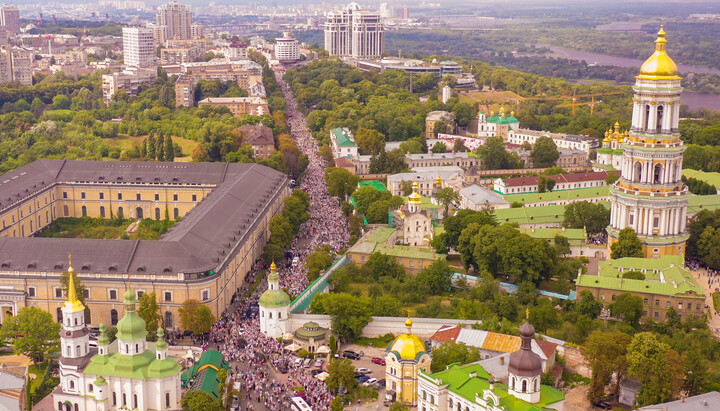
A religious procession of the UOC to the Lavra in 2021. Photo: UOJ
Ruslan Bortnik, the Director of the "Ukrainian Institute of Politics," in an interview with journalist and blogger Oleksandr Shelest, called the government's actions regarding the seizure of the Kyiv-Pechersk Lavra unethical.
"Even from an ethical standpoint, the state did not build the Lavra: neither the Ukrainian nor the Soviet one. The Lavra was established by a religious denomination. Even from this historical perspective, the state's ownership rights to the Lavra are very... (questionable – Ed.)," the politologist said.
In his opinion, there are many emotions and hype around the Lavra, as well as people who are trying to "warm their hands" and "grab pieces for themselves, stauropegias, and everything else".
He stated that he is a supporter of an independent Church in Ukraine. "But then independent from everyone," the political scientist stressed.
Ruslan Bortnik believes the authorities are doing with the Lavra brings great harm to Ukraine.
Read also
Sviatohirsk Lavra prays for murdered monk on 40th day after death
The brethren of the Sviatohirsk Lavra held a memorial service for murdered Monk Varsonofy, calling on the faithful to pray for the newly departed monk.
Polish Culture Ministry funds restoration of Armenian cathedral in Lviv
An international project supported by Poland aims to preserve the unique artistic heritage of the Armenian Cathedral in Lviv.
Persecuted UOC parish in Rakiv Lis celebrates patronal feast in new church
The faithful marked the fifth anniversary of the consecration of the church built to replace the one that was seized, as well as its patronal feast, in the Volyn village of Rakiv Lis.
Bartholomew to Poroshenko in 2018: You’re not ready for autocephaly, we’ll leave
In a leaked account, a Phanar representative recounted Patriarch Bartholomew’s conversation with Poroshenko while the Constantinople delegation was being held in Kyiv.
Dumenko holds "service" at seized UOC church in Boyarka
On September 29, the head of the OCU performed a "divine service" at St. Michael's Church in Boyarka and rewarded the raider-rector.
UOC hierarchs mark 30th anniversary of Holovchyntsi Convent's revival
UOC bishops and clergy of the eparchy congratulated the abbess of the Transfiguration Convent and her sisters on the memorable date.