"To pay to come to God?!" blogger outraged at paid entrance to St Sophia
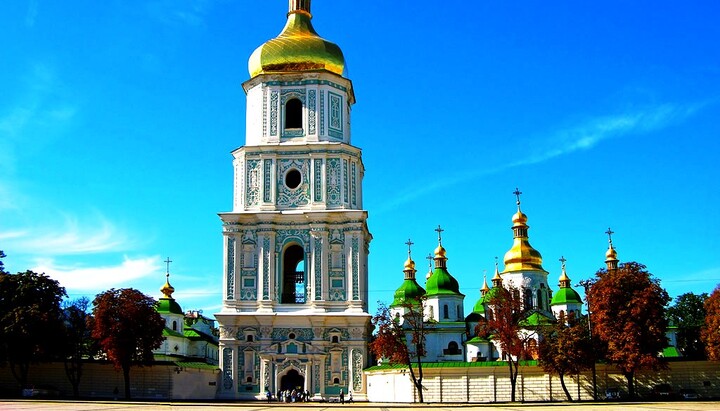
St. Sophia’s Cathedral. Photo: 24tv.ua
The blogger posted a video on social media from St. Sophia’s Cathedral in Kyiv, in which he explained that you can enter the church only by buying a ticket priced up to 300 UAH. He shared the video on his TikTok account, "Martynenko_prank_kr".
In the blogger's opinion, people should not have to pay money to enter a church and pray to God.
"What's going on?" he engaged in a discussion with a female tour guide. "I'm going to God; I don't want to pay anything; I just want to go and pray. Imagine, you can't enter the church for free; you have to pay for it. I understand that it's super cool and super beautiful here. But it seems a bit off to me. Why should a church be paid for?"
As reported, after the authorities closed the Lower Lavra for believers, you can only access the Caves by paying for a guided tour.
Read also
432 UOC churches damaged in Ukraine during war, report says
According to the Religion on Fire project, 807 religious buildings in Ukraine have been damaged or destroyed as a result of hostilities.
DESS official gives number of clergy exempt from mobilization in Ukraine
A DESS representative said the actual number of clergy exempt from mobilization is significantly lower than the number of religious organizations designated as critical.
Cabinet keeps gas prices unchanged for religious organizations
The Cabinet has fixed gas prices for religious organizations through the end of the 2026–2027 heating season.
Concert held at seized Cherkasy cathedral
The OCU thanked the musical ensemble for choosing the Cherkasy cathedral as the venue for a Baroque music concert.
OCU activist admits breaking into UOC church in Sloviansk
Oleksandr Onyshchenko said that the OCU held its first "service" at the Seraphim Church, which had previously been broken into by forcing the locks and doors.
Archimandrite Ioustinos, longtime keeper of Jacob's Well, dies in Jordan
Archimandrite Ioustinos (Mamallos), the keeper of Jacob's Well in Nablus, has died after a prolonged illness.