KDAiS rector: Canons of Ecumenical Councils limit Phanar head's power
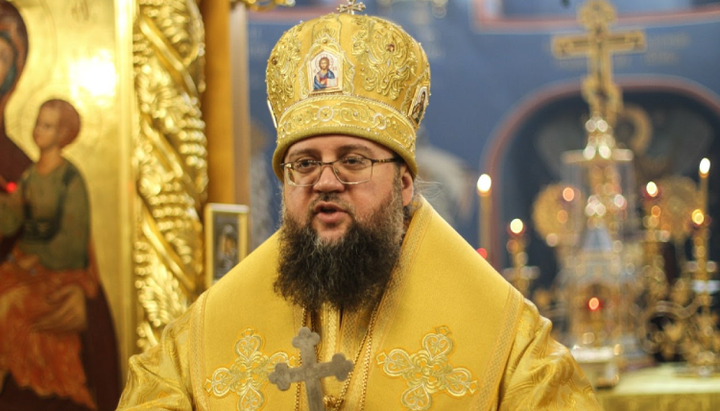
Bishop Sylvester (Stoychev) of Belogorod. Photo: kdais.kiev.ua
The canons of the Ecumenical Councils, with which Phanar justifies its claims to exclusive power in the Church, limit its interference in the affairs of other dioceses, Bishop Sylvester (Stoichev) noted in an interview with the Pravlife portal.
There are two rules of the Ecumenical Councils that are referred to when trying to justify the ambitions of the Patriarch of Constantinople for primacy in the Orthodox Church. This is the 3rd canon of the II Ecumenical Council and the 28th canon of the IV Ecumenical Council.
Both rules distinguish the See of Constantinople because of the increased political significance of the city itself, which is now the seat of "the king and the senate", but do not give Phanar any special power in the Church, Bishop Sylvester emphasized.
“As can be seen from these canons, the status and powers of the bishop of Constantinople in ancient times were associated with the political significance of Constantinople as a new capital,” he said. "Not with the antiquity of the Holy See, not with apostolic origin, and even less with Divine right, but only with the fact that this is the city of the king and the senate."
Canon 28 of the Council of Chalcedon allows the Bishop of Constantinople to ordain metropolitans in some of the neighboring regions. But even before that he tried to expand his power, since he had only the capital under his control.
“This canon not only allocates an ecclesiastical area to the Bishop of Constantinople, but also restricts his interference in the affairs of other dioceses. This is how the Byzantine interpreters understand this canon,” said the rector of the Kyiv Theological Academy and Seminary.
“Let's remember once again – Constantinople does not exist. There is Istanbul. The Greeks mythologized Constantinople, making it a kind of Kitezh-city in the Greek manner. Constantinople is a city of memory, a city of myth, a ghost city and a city of dreams. This is a dream of the former status, splendor and greatness of the Orthodox empire. As one author said, “The Greeks live as if they hadn’t heard about the fall of Constantinople,” summed up the hierarch of the UOC.
As the UOJ reported, earlier the rector of the Kyiv Theological Academy compared the independence of the UOC and the OCU.
Read also
Medieval сhurch сrumbles as Culture Ministry сites missing agreement
The 14th–15th-century St. Nicholas Church in Chesnyky, Ivano-Frankivsk Region, is falling into disrepair.
Poland сondemns Lviv Regional Council's decision to declare 2007 year of UPA
Polish Prime Minister Donald Tusk says the Lviv Regional Council's decision to dedicate 2027 to the UPA and Roman Shukhevych is harmful to Ukraine.
OCU seeks court recognition of ownership of seized Cherkasy cathedral
The Cherkasy Regional Commercial Court will hear an OCU lawsuit seeking ownership of St. Michael's Cathedral, which was seized from UOC believers.
Lithuanian bishop: Ukraine is no model for believers' rights
Vicar of Vilnius Diocese voices concern over attempts to import Ukraine's religious conflict into Lithuania.
Hundreds of believers honor St. Alexis of Carpatho-Russia in Khust Eparchy
At the St. Nicholas Monastery in the village of Iza-Karputlash, Metropolitan Mark of Khust led a festive liturgy, concelebrated by six metropolitans, five archbishops and three bishops.
Court upholds UOC parish appeal in Voloshky over OCU switch dispute
The Northern Commercial Court of Appeal has upheld the appeal of the St. Nicholas parish of the UOC in the village of Voloshky, Volyn region, in a dispute over a transfer to the OCU.