Ministry of Culture details restrictions in temples during strict lockdown
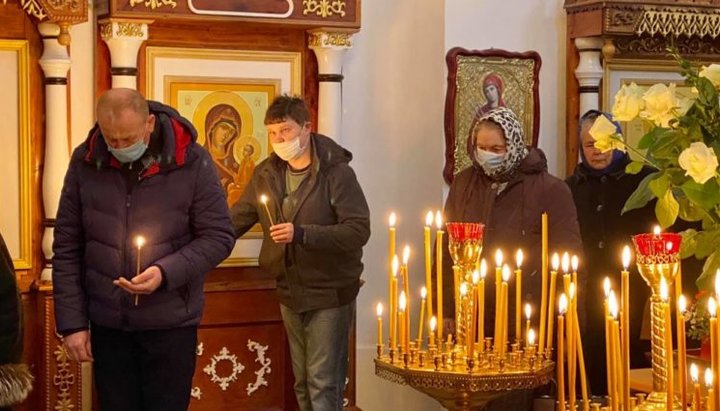
Restrictions in temples during the lockdown Photo: church.ua
From 8 to 24 January 2021, Ukraine enhances quarantine restrictions that will affect visits to churches, according to the official website of the Ministry of Culture and Information Policy of Ukraine.
The Ministry of Culture said that for this period, religious events in the premises are prohibited if more than one person per 5 square meters participates in them, outdoors – keeping a distance of 1.5 m.
As reported, on December 19, 2020, the Cabinet of Ministers of Ukraine adopted a resolution "On the establishment of quarantine in order to prevent the spread of acute respiratory disease COVID-19 on the territory of Ukraine", according to which attending temples is not prohibited, however, there are increased restrictions.
As the UOJ previously reported, the Cabinet of Ministers introduced new quarantine restrictions throughout Ukraine.
Read also
Poland bans entry to Lviv official over SS Galicia and UPA glorification
Polish Foreign Minister initiates entry ban on Lviv Regional Council deputy who proposed declaring 2027 the Year of the UPA.
OCU award winners stage provocations at UOC court hearings, media report
Rallies outside courts hearing UOC cases are organized by activists who received awards from Dumenko.
Khust Eparchy priest who shot people in Vyshkovo banned from ministry
The Khust Eparchy of the UOC has notified police that it has banned from ministry a priest suspected of killing three people in Vyshkovo, Transcarpathia.
Metropolitan Onuphry congratulates Georgia on 1,700 years of Christianity
The Primate of the UOC sent a message to Patriarch Shio III on the anniversary of Christianity becoming the state religion in Georgia.
Zakarpattia marks 25th anniversary of Alexis of Carpatho-Russia's glorification
An all-night vigil was served at St. Nicholas Monastery in the village of Iza-Karputlash to celebrate the 25th anniversary of the glorification of St. Alexis of Carpatho-Russia.
DESS finds Balta Eparchy of UOC affiliated with ROC
Yelensky-headed state service said it found signs of affiliation of the Balta Eparchy Administration of the UOC with the ROC.