One of the invaders of UOC Convent in Cherkasy identified on the Net
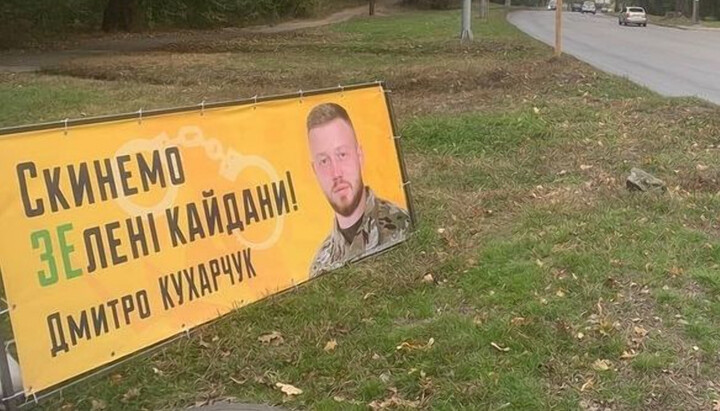
Banner of the National Corps political council member Dmytro Kukharchuk. Photo: zmi.ck.ua
Journalists have identified one of the invaders of the Nativity of the Holy Virgin Mary Convent, who, along with the raiders of the OCU in military uniforms, climbed over the convent's fence and beat UOC believers. It turned out to be a former member of the 'Azov' battalion, a member of the political council of the 'National Corps,' and an active serviceman of the Armed Forces of Ukraine, Dmytro Kukharchuk, as reported by Pershy Kozatsky.
In the published footage, Kukharchuk is seen as one of the first to climb over the fence of the UOC monastery, after which he pushes UOC believers and strikes them in the face with his fist.
'I was there for a prayer vigil after they had already seized the monastery. It's terrible! The thugs laugh, run around on the monastery grounds. I was scared, honestly! I cried and prayed, afraid to look at them,' said one of the UOC believers who defended the shrine.
As reported by the UOJ, raiders in Cherkasy broke the jaw of a UOC priest.
Read also
Dumenko holds "service" at seized UOC church in Boyarka
On September 29, the head of the OCU performed a "divine service" at St. Michael's Church in Boyarka and rewarded the raider-rector.
UOC hierarchs mark 30th anniversary of Holovchyntsi Convent's revival
UOC bishops and clergy of the eparchy congratulated the abbess of the Transfiguration Convent and her sisters on the memorable date.
UOC cleric discusses life of Ukrainian parishes with Hungarian official
A UOC priest and a Hungarian official paid particular attention to issues of practical interaction between Ukrainian parishes and government authorities.
Ukrposhta issues stamp featuring Lavra for Soviet-era reserve's anniversary
The new postal block, issued in a print run of 40,000 copies, depicts the Lavra's churches, bell tower, and ancient frescoes.
Met. Theodosiy links his criminal case to ex-prosecutor named in NABU tapes
A Cherkasy court extended Metropolitan Theodosiy’s preventive measure for another two months – until November 29, 2026.
Stefanchuk: Seeking UCCRO-LGBT compromise on new Civil Code
The Verkhovna Rada speaker said the working group is seeking a broad public compromise as it revises the draft of the new Civil Code.