Legoyda: The attitude towards COVID cannot and should not divide the Church
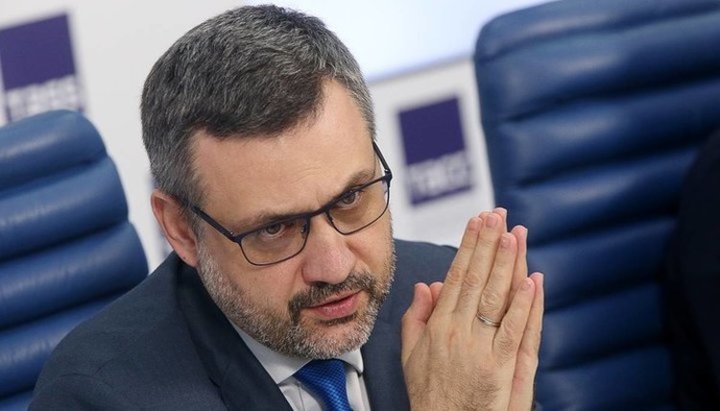
Vladimir Legoyda, Chairman of the ROC Synodal Department for Church Relations with Society and the Media. Photo: TASS
The issue of the attitude towards COVID-19 cannot and should not divide the Church. Vladimir Legoyda, chairman of the ROC Synodal Department for Church Relations with Society and the Media, said this in an interview with RIA Novosti.
“The issue of the attitude to the coronavirus epidemic is not dogmatic, therefore it cannot and should not divide the Church,” said Vladimir Legoyda, answering the question whether it is acceptable in the Church to express different opinions about the pandemic. “Both inside the Church and outside it there are different judgments about the degree of danger that coronavirus infection carries. This is due, among other things, to the fact that some feel it as a mild cold, and some end up in the intensive care unit for mechanical ventilation."
He emphasized that it is necessary "to treat our brothers with love and patience, regardless of what they think about this epidemic," at the same time "to follow all the orders of the hierarchy, not to expose each other to the threat of infection, and to use means of protection is our common Christian responsibility".
As for vaccination, according to the head of the Synodal Department of the Russian Orthodox Church, this is a decisive means of defeating many epidemiological diseases and the Church has never opposed vaccinations as such, like the absolute majority of other forms of medical intervention.
“However, the principle of voluntary vaccination is extremely important from the point of view of respect for human freedom and dignity. Any capable adult should make the decision to get vaccinated on their own. And, of course, one should not allow the deprivation of rights of those who for any reason, including medical prescriptions, cannot be vaccinated. Some bishops and priests, by their choice, have already been vaccinated against the coronavirus, but they do not impose their decision on anyone,” Vladimir Legoyda stressed.
Earlier, the UOJ wrote that Russia intends to mark those who have been vaccinated with special signs.
Read also
Zelensky says 9.5M Ukrainians expected to return home from abroad
Zelensky stated that 9.5 million Ukrainians who left abroad are expected to return home to rebuild the country.
German theologian criticizes Ukrainian authorities' pressure on UOC
German theologian Regina Elsner has said that pressure from the authorities on the Ukrainian Orthodox Church places an additional heavy burden on believers during the war.
Poland bans entry to Lviv official over SS Galicia and UPA glorification
Polish Foreign Minister initiates entry ban on Lviv Regional Council deputy who proposed declaring 2027 the Year of the UPA.
OCU award winners stage provocations at UOC court hearings, media report
Rallies outside courts hearing UOC cases are organized by activists who received awards from Dumenko.
Khust Eparchy priest who shot people in Vyshkovo banned from ministry
The Khust Eparchy of the UOC has notified police that it has banned from ministry a priest suspected of killing three people in Vyshkovo, Transcarpathia.
Metropolitan Onuphry congratulates Georgia on 1,700 years of Christianity
The Primate of the UOC sent a message to Patriarch Shio III on the anniversary of Christianity becoming the state religion in Georgia.