Amsterdam: Ukrainian government has weaponized religion against its people
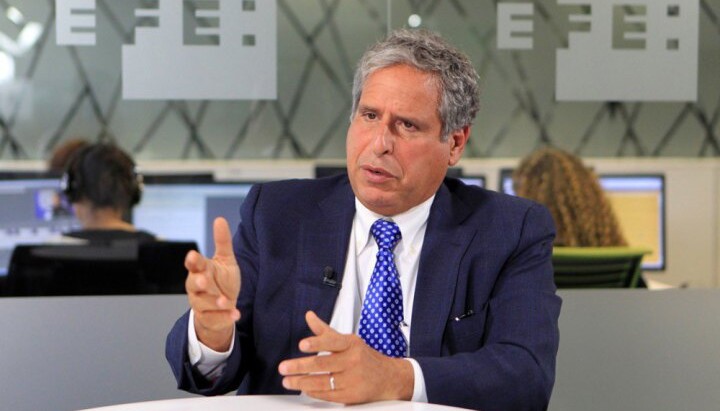
American human rights lawyer Robert Amsterdam. Photo: epaimages.com
American human rights lawyer Robert Amsterdam has revealed that a document justifying the persecution of millions of Orthodox Christians in Ukraine by the Ukrainian authorities is being actively circulated in Washington. Amsterdam published an analysis of an article by a certain Lauren Homer entitled "Ukraine’s pending law on religious organizations with Russian Headquarters" on his website.
According to the lawyer, this document "does not merit a response; however, the freedom of religion in Ukraine today is literally a matter of life and death for many Ukrainians."
He stated that the Ukrainian authorities had weaponized religion against their own people, and the Ukrainian Orthodox Church "is facing an unmitigated campaign of intimidation."
The lawyer also believes that Ukraine is now one of the least tolerant places in the world for religious freedom, and millions of Ukrainians are at risk of losing their religious home through the actions of their own government.
Amsterdam noted that there are fundamental misstatements of fact and one of law in Homer's analysis that undermine her credibility.
In his article, Homer contends that the bill banning the UOC is "inarrowly drawn and limited in its effect". However, Robert Amsterdam believes that Bill No. 8371 "will close the parishes of the UOC across the country, preventing the millions of ordinary UOC believers from worshiping in their church, with their religious leaders, and in community with one another."
"The law is draconian and disproportionate. After its passage, the UOC will not be able to operate on Ukrainian soil. ...> The law amounts to a form of targeted discrimination, which will collectively punish innocent Ukrainian citizens by depriving them of the church they call home," wrote the lawyer.
Commenting on Homer's statement that "the only canonical Church in Ukraine is the OCU", Amsterdam noted that the history of the UOC reaches back nearly a millennium, while the OCU was established by the Ukrainian authorities only in 2018.
"...> the canonical legitimacy of our church, the UOC, is uncontested. Moreover, it is deeply inconsistent with the basic notions of freedom of religion for a government to tell millions of UOC worshipers that they must convert to a new church with a different history and different leaders if they wish to practice their faith," he added.
Moreover, Amsterdam emphasized that in her publication, Homer blatantly misunderstands international human rights law and completely ignores Ukraine's legal obligations under the International Covenant on Civil and Political Rights of 1977.
"Homer’s gross misreading of international law turns human rights on its head by using human rights law to justify Ukraine’s flagrant violations of the freedom of religion.," wrote the human rights lawyer.
As reported by the UOJ, it became known when the Rada will consider the bill on the UOC in the second reading.
Read also
Upper Lavra court hearing postponed
The next court hearing in the Upper Lavra case has been scheduled for November 3.
UOC priest blesses ambulances at Kamianske medical center
A UOC priest in Kamianske blessed ambulances for a medical facility and wished its doctors God's help in their work.
Dumenko to German ambassador: Law targeting UOC also applies to other groups
Epifaniy Dumenko sought to defend Ukraine’s law restricting religious organizations during a meeting with the German ambassador.
Activists bused to court hearings in UOC cases, media say
A minibus has been spotted transporting protesters to and from courthouses where UOC cases are being heard.
Firefighters save historic UOC church from fire in Zakarpattia
A fire broke out at a UOC church in the Tiachiv district, damaging the altar and church furnishings.
Volyn Eparchy faithful collect six tons of aid for Sviatohirsk Lavra
Believers in Volyn collected food and warm clothing for people displaced by the war who have found shelter at Sviatohirsk Lavra.