A man sets fire to a mosque in Dnipro
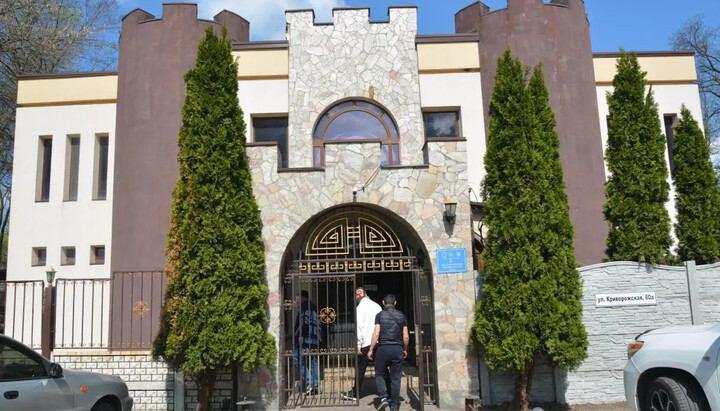
Mosque in Dnipro. Photo: Vidkrytyi
In Dnipro on April 14, an unknown man set fire to the mosque, which is part of the Spiritual Board of Muslims of Ukraine "Umma", reports the edition "Vidkrytyi".
A masked man climbed over the fence of the prayer room and poured some flammable liquid from a five-liter canister, set it on fire and watched the fire for several minutes before fleeing.
Tarlan, a member of the Muslim community, said that several months ago the car of Nizami Merzabekov, the head of the religious community, was burned in the parking lot. At that time, CCTV cameras also recorded a "shadow" moving away from the car.
"Of course, that time and today we called the Emergency Situations Ministry and the police, who registered these arson attacks... After today's incident, we are waiting for the public reaction and the results of the investigation from the police, because now we, the parishioners of the mosque, feel in danger," he said.
As reported by the UOJ, there was a fire in the monastery of the UOC near Kovel, the diocese does not rule out arson.
Read also
Lithuanian bishop: Ukraine is no model for believers' rights
Vicar of Vilnius Diocese voices concern over attempts to import Ukraine's religious conflict into Lithuania.
Hundreds of believers honor St. Alexis of Carpatho-Russia in Khust Eparchy
At the St. Nicholas Monastery in the village of Iza-Karputlash, Metropolitan Mark of Khust led a festive liturgy, concelebrated by six metropolitans, five archbishops and three bishops.
Court upholds UOC parish appeal in Voloshky over OCU switch dispute
The Northern Commercial Court of Appeal has upheld the appeal of the St. Nicholas parish of the UOC in the village of Voloshky, Volyn region, in a dispute over a transfer to the OCU.
Zelensky says 9.5M Ukrainians expected to return home from abroad
Zelensky stated that 9.5 million Ukrainians who left abroad are expected to return home to rebuild the country.
German theologian criticizes Ukrainian authorities' pressure on UOC
German theologian Regina Elsner has said that pressure from the authorities on the Ukrainian Orthodox Church places an additional heavy burden on believers during the war.
Poland bans entry to Lviv official over SS Galicia and UPA glorification
Polish Foreign Minister initiates entry ban on Lviv Regional Council deputy who proposed declaring 2027 the Year of the UPA.