Honored lawyer of Ukraine: Law 8371 has to be referred to Venice Commission
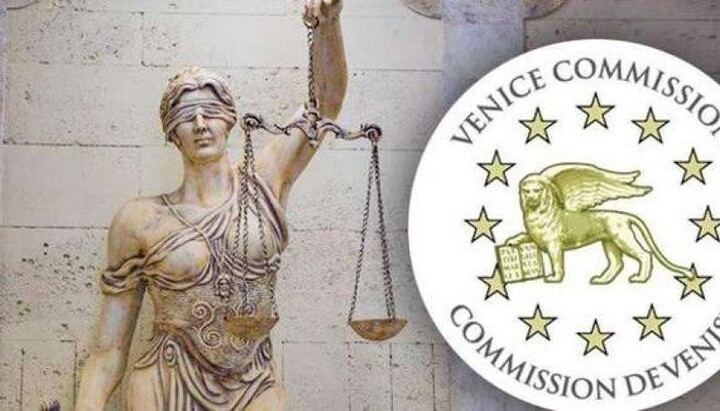
Venice Commission. Photo: enewsmd.online
Valeria Lutkovska, an honored lawyer of Ukraine and former Verkhovna Rada Commissioner for Human Rights, explained to comments.ua the potential consequences for the state resulting from appeals by UOC religious organizations to the ECHR following the adoption of bill No. 8371.
"State intervention can be justified if it is provided by law, but this does not mean that any regulatory act can satisfy the European Court. The European Court has a specific approach to the law: the regulatory legal act on which the intervention is based (not only on the right to religious freedom but also on other non-absolute rights) must be clear and predictable, meaning it must allow the person to foresee the consequences of their actions," she emphasized.
According to the lawyer, the draft does not contain clear and applicable definitions or explanations as to why the procedure for considering administrative cases regarding certain religious organizations should change.
Lutkovska estimates that the prospects for appeals to the ECHR are high, and this will have significant consequences for the state.
"If the ECHR finds a violation of the right to religious freedom, the state, as with other decisions of the European Court regarding human rights violations, must implement at least the following measures: pay the amount of fair satisfaction from the state budget (essentially from the pocket of every Ukrainian), restore the applicant's violated right as much as possible, and take general measures (very conditionally – make it so that similar applications do not reach the ECHR again), meaning change the legislation once more," she explains.
The former ombudsman for human rights recommends that the authorities refer the bill to the Venice Commission for evaluation.
"I must note that the conclusions of the Venice Commission are used by almost all Council of Europe member states, including Ukraine, which has always allowed for the prevention of significant negative consequences in the field of human rights compliance. I think that now, at the stage of preparing the draft law for the second reading, is the most opportune time for such a referral, resulting in a conclusion that will be a certain guide for Ukrainian politicians," concluded the human rights defender.
As the UOJ previously reported that the law banning the UOC could hinder Ukraine's path to the EU, according to Valeria Lutkovska.
Read also
Khust Eparchy marks memory of St. Job of Uholka
В селе Мала Уголька, на родине Иова Угольского, отслужили литургию в день памяти святого подвижника.
Shevchuk tells Pope Leo of Ukraine's preparations for "another harsh winter"
The head of the UGCC expressed "special gratitude" to the Pope for his phone calls with Putin and Zelensky.
Berlin hierarch comments on Phanar document published by UOJ-USA
Metropolitan Mark called the information about the 2018 "Unification Council" alarming if confirmed, and expressed hope that Patriarch Bartholomew will reconsider his position.
UOC marks Synaxis of All Saints of Volyn Land at Lutsk cathedral
Metropolitan Serhiy of Ternopil and Kremenets led the Liturgy on the feast day of the Lutsk cathedral of All Saints of the Volyn Land.
SBU detains OCU cleric who organized draft evader's escape for money
In Transcarpathia, law enforcement officers detained a clergyman of the OCU who arranged for a draft evader to be smuggled into Slovakia for $15,000.
Metropolitan of Berlin: Decision on OCU made under pressure is void
Metropolitan Mark of Berlin has stated that the decision to create the OCU under pressure is invalid.