Religious scholar: Nothing will change for rural UOC communities with Law 8371
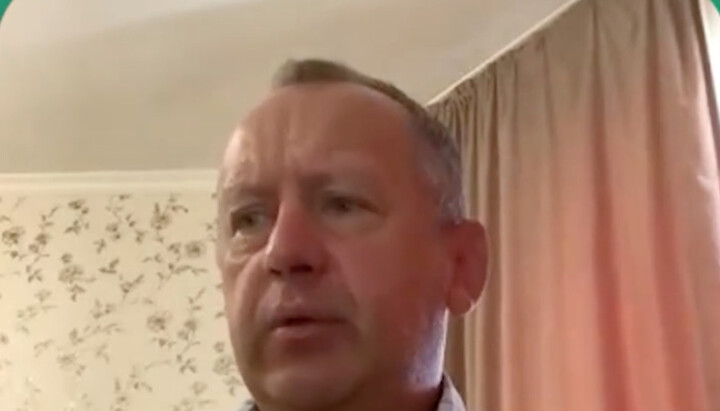
Alexander Sagan. Photo: Kashtan News
Law 8371, which aims to ban the activities of the Ukrainian Orthodox Church (UOC), does not involve the forced closure of churches. However, religious communities renting communal property will face certain challenges, religious scholar Alexander Sagan said in an interview with Kashtan.NEWS.
“We are not talking about the closure or liquidation of religious organizations in the Stalinist sense, where commissars in leather jackets would arrive, arrest the priest, close the church, and turn it into a warehouse. The issue is about termination. So, essentially, the only change will be that the religious organization will lose its status as a legal entity. For those religious organizations renting state or communal property, the changes will be drastic: they will be asked to vacate the premises. They won’t be able to continue renting, and today there are over 3,000 such properties. For rural communities that have built their own churches, nothing will change,” Alexander Sagan explained.
In his opinion, the law clearly defines the concept of affiliation, meaning the subordination of a particular religious organization to a specific spiritual center. The list of organizations affiliated with the Russian Orthodox Church (ROC) will be compiled by the State Service for Ethnic Policy and Freedom of Conscience.
“Therefore, we still expect that the law will be a wake-up call for these laypeople. That, seeing themselves on this list, they will stop believing those priests who, until the very end and even now, convince them that they have nothing to do with the Russian Orthodox Church – that it’s somewhere else, but not us, we are the Ukrainian Orthodox Church,” Sagan said.
He also emphasized that the law does not regulate issues of faith and worship.
As the UOJ reported, in Strilsk, in the Sarny-Polissia Diocese of the UOC, unknown individuals threw a grenade into a prayer room where the UOC community gathered after their church was seized by supporters of the Orthodox Church of Ukraine (OCU). Believers consider this to be a consequence of the adoption of Law 8371.
Read also
UCCRO concerned over damage to Vvedensky monastery by Russian shelling
UCCRO members have expressed concern over the fate of the Vvedensky Monastery, damaged during a nighttime shelling of Kyiv.
KDAiS vice-rector addresses Conference of European Churches in Prague
Vice-Rector of the Kyiv Theological Academy and Seminary Volodymyr Bureha spoke at an assembly attended by theologians, politicians and representatives of Christian denominations of Europe.
Phanar archon publishes fake associating convicted OCU "bishop" with UOC
In a European Diplomat article, Miceál O’Hurley passes off convicted OCU "bishop" Kyrylo Mykhailiuk as a UOC hierarch.
UCCRO slams peace initiatives by "certain Western countries" on Ukraine
UCCRO members urged the West to tighten sanctions against Russia and stop trying to appease the aggressor.
Ukraine's Justice Ministry to introduce chaplain posts in prisons
Ukraine's Ministry of Justice and the State Criminal Executive Service agreed to create a working group to launch a pilot project on chaplaincy service in prisons.
TRC abducts UOC church rector in Kyrdany village
TThe Territorial Recruitment Center (TRC) promised to release a UOC priest after checking his documents but instead the clergyman was sent to a military unit.