International conference in defense of UOC held in Bulgaria
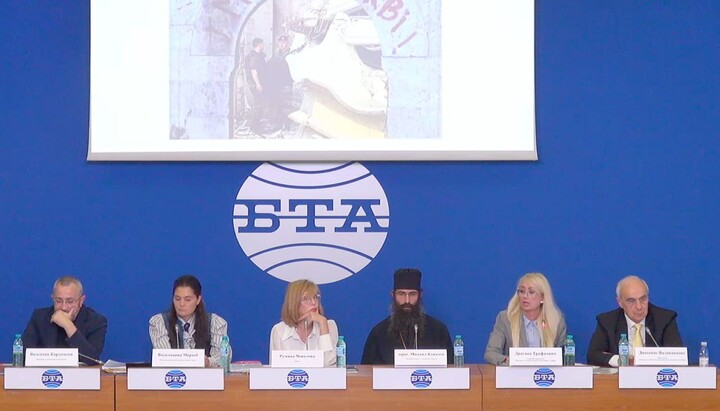
Participants of the conference in defense of Orthodoxy. Photo: UOJ
On August 26, 2024, an international conference titled "The Blockade of Aggression Against the Church - Protecting Orthodoxy" took place in Sofia, Bulgaria. The event brought together representatives from various Orthodox Churches and experts from different countries to discuss important issues related to the defense of Orthodoxy and religious rights.
Among the participants were Metropolitan Luke of Zaporizhzhia (Ukrainian Orthodox Church), Father Mihail Kovachev (Bulgarian Orthodox Church), Dragana Trifkovic (General Director of the Center for Geostrategic Studies, Serbia), Archbishop Theodosios (Hanna) of Sebastia (Jerusalem Orthodox Church, Palestine), lawyer Rumyana Chenalova (Bulgaria), and others. The topics in question included religious discrimination, pressure on the Ukrainian Orthodox Church, the situation in Kosovo and Metohija, religious persecution, and the challenges facing Orthodox churches.
The participants adopted a resolution calling for the provision of normal conditions for the Ukrainian Orthodox Church's activities in Ukraine. According to the resolution, which was submitted to the Ukrainian Embassy, the main demands included:
- The repeal of the law banning the Ukrainian Orthodox Church, which participants believe violates citizens' constitutional rights to freedom of religion and creates conditions for interference in the Church's internal affairs.
- The cessation of church seizures by supporters of the Orthodox Church of Ukraine (OCU), nationalist groups, and local authorities. The resolution emphasized the need to hold those involved in these actions accountable.
- The condemnation of campaigns to discredit members of the Ukrainian Orthodox Church, conducted by leading Ukrainian media, and called for an end to such actions.
- The release of arrested clergy members.
- The cessation of arrests of priests for exchanges with Russia for prisoners of war.
- The lifting of sanctions against the bishops of the Ukrainian Orthodox Church.
- The cessation of shelling of Orthodox churches.
The participants expressed concern over the destruction of images of Russian saints, icons, and church items associated with the Russian Orthodox Church, demanding that this process be halted.
The conference participants expressed support for the canonical Ukrainian Orthodox Church and condemned actions aimed at undermining its authority and violating the rights of believers.
The conference called on the Ukrainian authorities to end political and administrative support for the OCU, which, according to the participants, is aimed at destroying the canonical Ukrainian Orthodox Church.
These demands were presented as essential steps necessary to protect religious rights and ensure the stability of the Orthodox community in Ukraine. The participants emphasized the importance of international attention to these issues and called for active support from the global community.
As reported by the Union of Orthodox Journalists, the Zaporizhzhia Eparchy discussed the law banning the Ukrainian Orthodox Church. Metropolitan Luke, in his report, stressed that despite the law, the Church's mission remains unchanged – to lead people to God.
Read also
OCU activist admits breaking into UOC church in Sloviansk
Oleksandr Onyshchenko said that the OCU held its first "service" at the Seraphim Church, which had previously been broken into by forcing the locks and doors.
Archimandrite Ioustinos, longtime keeper of Jacob's Well, dies in Jordan
Archimandrite Ioustinos (Mamallos), the keeper of Jacob's Well in Nablus, has died after a prolonged illness.
Pilgrim group from Kyiv Theological Seminary visits Mount Athos
KTS students are making a pilgrimage to the holy sites of Romania, Greece, Mount Athos and Italy.
UOC cathedral celebrates its patronal feast in Ternopil
The service in the cathedral of the Holy Martyrs Faith, Hope, Love and their mother Sophia was led by Metropolitan Serhii of Ternopil, concelebrated by four hierarchs.
MinCulture marks centenary of Soviet-era reserve at Lavra's Refectory Church
Representatives of the Ministry of Culture presented awards to the Reserve's employees on the occasion of the anniversary at the Refectory Church of the Lavra.
Conference to mark 1700th anniversary of Christianity adoption held in Georgia
In Georgia, representatives of the Church and the state noted the defining role of Christianity in the country's cultural development.