KDA rector comments on what to expect from the "UOC ban law"
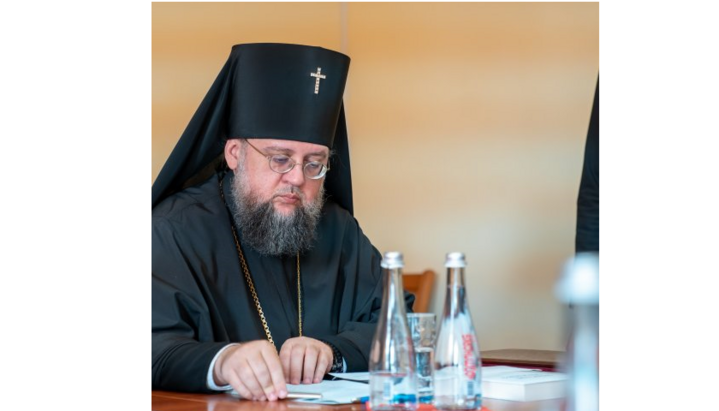
Archbishop Sylvester (Stoichev). Photo: KDAiS
The Rector of the Kyiv Theological Academy and Seminary, Archbishop Sylvester (Stoichev), published a comment on the KDAiS website regarding Law No. 3894 “On the Protection of the Constitutional Order in the Sphere of Activities of Religious Organizations” (Bill No. 8371 at the draft stage, – Ed.).
According to the archbishop, the adoption of the law, which is commonly referred to in the media as the "UOC ban law", has caused significant concern among the parishioners of the Ukrainian Orthodox Church (UOC).
Firstly, the archbishop emphasized that Law No. 3894 is not a "law banning the UOC".
He writes that the Ukrainian Orthodox Church is not mentioned at all in the text of the law; the law addresses the prohibition of the Russian Orthodox Church (ROC) in Ukraine.
Moreover, the law bans religious organizations that operate in Ukraine but are somehow affiliated with the ROC, are subordinate to the ROC’s leadership, or are directly part of the ROC. According to the archbishop, the positions of state authorities and the Ukrainian Orthodox Church differ significantly on this issue.
He reminded that in 2023, the State Service for Ethnopolitics and Freedom of Conscience (DESS) conducted an examination and concluded that the UOC remains subordinate to the Moscow Patriarchate and therefore is part of the ROC. However, the UOC itself categorically disagrees with this conclusion.
“On May 27, 2022, the Council of the Ukrainian Orthodox Church made fundamental changes to the Statute governing our Church. Since then, the UOC has no longer been affiliated with Moscow and exists as a completely independent and autonomous Church. Therefore, from the UOC’s point of view, Law No. 3894 has no relevance to it,” the analysis states. “Nevertheless, from numerous public statements by both Ukrainian lawmakers and government officials, it is clear that the new law was developed specifically to apply to the UOC.”
The KDA rector explained how the new law should be implemented.
“Law No. 3894 does not provide for the immediate ban of the entire UOC. Furthermore, such a ban is impossible under Ukrainian law. I remind you that the UOC is not a legal entity. Legally, the UOC is a religious association consisting of thousands of parishes, hundreds of monasteries, dozens of diocesan administrations, educational institutions, brotherhoods, and so on. All these structural units of the UOC are registered as religious organizations and thus have the status of legal entities. Therefore, only each of these religious organizations (individually) can be banned,” he explained.
According to the UOC hierarch, the law establishes a rather complex procedure for the liquidation of religious organizations affiliated with the ROC. They can only be liquidated through judicial procedures.
“Before considering banning, DESS must issue a directive to each specific religious organization indicating the problems identified in its charter documents. After that, the religious organization must address these issues. Only if it fails to do so, should DESS file a lawsuit. Consequently, the new law does not provide for an automatic ban of the UOC,” he adds, reiterating that the UOC does not consider itself part of the ROC.
He noted that religious communities will defend their position in courts (both Ukrainian and international).
He specifically highlighted that determining the existence of a connection with the ROC is one of the most problematic aspects of the law. Since, if the ROC’s Statute states that it considers the UOC a part of it, this alone is enough under the new law to recognize the UOC as dependent on the Moscow-based leadership.
“There has already been a clear analogy. The modern Russian Constitution states that Crimea, Donetsk, Luhansk, Kherson, and Zaporizhzhia regions are part of the Russian Federation. However, for both the Ukrainian state and international law, these provisions of the Russian Constitution are null and void. Similarly, the presence of provisions in the ROC’s Statute about the inclusion of the UOC in its structure does not mean that the UOC is truly part of the Moscow Patriarchate. In 2023, the DESS's conclusion included provisions of the ROC's statutes as evidence of the UOC's affiliation with the Moscow Patriarchate, and many experts criticized this approach as unacceptable,” he said.
The rector of the theological schools reminded that the UOC today adheres to its own Statute (as amended on May 27, 2022), which does not provide for any dependence on the ROC.
“Our Church does not adhere to any norms of the ROC’s current Statute and does not consider these norms binding on itself,” he concludes.
Archbishop Sylvester believes that Law No. 3894 will be another test of Ukraine's democratic European choice.
“Already today, foreign lawyers, human rights activists, religious scholars, and religious figures are expressing not only criticisms of the text of the law but also concerns about the possible practice of its implementation,” he warns.
As reported by the UOJ, the World Council of Churches has expressed concern about the law threatening the UOC with a ban.
Read also
Zelensky says 9.5M Ukrainians expected to return home from abroad
Zelensky stated that 9.5 million Ukrainians who left abroad are expected to return home to rebuild the country.
German theologian criticizes Ukrainian authorities' pressure on UOC
German theologian Regina Elsner has said that pressure from the authorities on the Ukrainian Orthodox Church places an additional heavy burden on believers during the war.
Poland bans entry to Lviv official over SS Galicia and UPA glorification
Polish Foreign Minister initiates entry ban on Lviv Regional Council deputy who proposed declaring 2027 the Year of the UPA.
OCU award winners stage provocations at UOC court hearings, media report
Rallies outside courts hearing UOC cases are organized by activists who received awards from Dumenko.
Khust Eparchy priest who shot people in Vyshkovo banned from ministry
The Khust Eparchy of the UOC has notified police that it has banned from ministry a priest suspected of killing three people in Vyshkovo, Transcarpathia.
Metropolitan Onuphry congratulates Georgia on 1,700 years of Christianity
The Primate of the UOC sent a message to Patriarch Shio III on the anniversary of Christianity becoming the state religion in Georgia.