UOC-owned real estate database published in the media
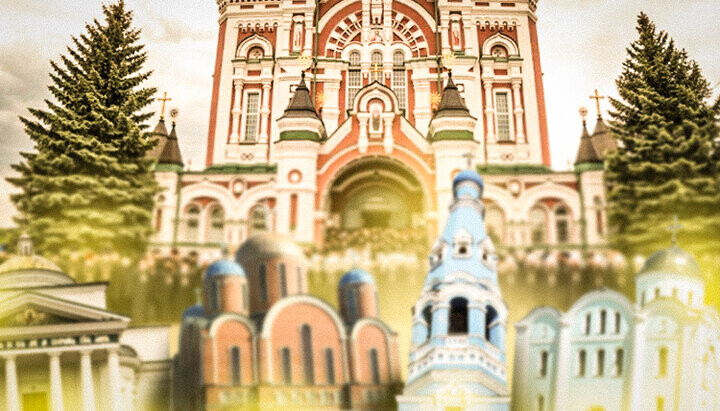
Photo: UOJ
NGL Media has published a real estate registry belonging to religious communities of the Ukrainian Orthodox Church. According to the presented data, the largest number of real estate properties is located in Kyiv and the Kyiv region, while the smallest number is in the Lviv region. The registry is posted on the official website of the organization.
According to the calculations, the total number of properties owned and used by religious organizations of the UOC amounts to 6,674. Of these, 3,798 are land plots, and 2,876 are religious buildings.
The researchers explained how they conducted their analysis: "First, we compiled a list of all organizations that have the word 'Orthodox' (in various grammatical cases) in their name, including registered religious communities. After that, we filtered out the organizations of the UOC-MP, removing other Orthodox confessions and denominations from the list."
Additionally, the journalists compared the data with the UOC church registry from Opendatabot and discovered that some communities had already transitioned to the OCU, although they are still listed as UOC in the Opendatabot registry.
"We refined the list of active UOC communities and organizations, considering the aforementioned nuances, and asked YouControl analysts to provide a database of real estate (land and buildings) registered under the UOC-MP. It is worth noting that this data does not account for properties registered under individuals associated with the UOC-MP.
All the identified properties were compiled into a unified database and mapped to specific addresses," the study states.
Most of the property is municipally owned and used by UOC religious communities based on rental or permanent use agreements. However, there are also properties that are privately owned, primarily in Kyiv and its region.
Thus, in Kyiv and the Kyiv region, the UOC owns 1,520 and 850 hectares of land, respectively. In the Odesa region, it owns 258 hectares; in the Donetsk region, 243 hectares; in the Sumy region, 189 hectares; in the Kharkiv region, 180 hectares; in the Dnipropetrovsk region, 170 hectares; in the Chernihiv region, 159 hectares; in the Vinnytsia region, 193 hectares; in the Chernivtsi region, 138 hectares; in the Rivne region, 135 hectares; in the Cherkasy region, 113 hectares; in the Poltava region, 103 hectares; in the Zakarpattia region, 98 hectares; in the Mykolaiv region, 95 hectares; in the Zaporizhzhia region, 94 hectares; in the Kherson region, 73 hectares; in the Volyn region, 70 hectares; in the Khmelnytskyi region, 58 hectares; in the Kirovohrad region, 43 hectares; in the Zhytomyr region, 38 hectares; in the Luhansk region, 29 hectares; in the Ternopil region, 18 hectares; in the Ivano-Frankivsk region, 5 hectares; in Crimea, 4 hectares; and in the Lviv region, 1 hectare.
As the UOJ reported, Oleksandr Sahan stated that law 8371, which aims to ban the activities of the UOC, does not propose the forced closure of churches. However, religious communities renting municipal property will face certain challenges.
Read also
All Local Churches should learn how OCU was created, says UOC Chancellor
Metropolitan Anthony urged the Local Churches to read the report on the 2018 “council” and begin an open pan-Orthodox discussion.
Activist targeting UOC lawyers wears clothing with Nazi symbols
Davyd Pshenychnyi, a radical who opposes the UOC, was photographed wearing clothing by Svastone, a brand that describes itself as pagan.
TRC mobilizes 24-year-old UOC hieromonk on his way to study in Athens
Hieromonk Viktor (Denysov), a student at a university in Athens, said he was taken off his flight and brought to a TRC and is now serving with the 8th Special Operations Regiment.
Shevchuk thanks Catholic cardinal for visit to Russia
The UGCC head called Catholic Cardinal Matteo Zuppi’s visit to Ukrainian prisoners held in Russia an extremely important step.
‘Won’t find a girl better than you’: UGCC clergy dance on church porch
In Ternopil, UGCC clergy danced to a wedding song on the steps of a church and tossed candy into the crowd.
Metropolitan Onuphry consecrates Church of Sts. Cosmas and Damian in Kyiv
On the feast day of the “She Who Is Quick to Hear” Icon of the Mother of God, the UOC Primate consecrated a Kyiv church dedicated to the Holy Unmercenaries Cosmas and Damian.