UOC hierarch: "We must enlighten our people, even if we are cursed"
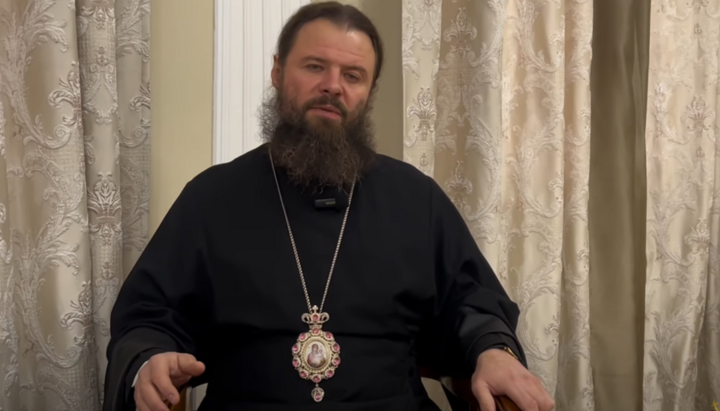
Metropolitan Boholep of Oleksandriya and Svitlovodsk. Photo: Screenshot from the bishop’s YouTube channel
On October 31, Metropolitan Boholep of Oleksandriya and Svitlovodsk addressed clergy, encouraging them not to stop preaching, even if their words are not welcomed by society. He shared this message on his YouTube channel.
"I would like to invite you to think about how much our pastoral work aligns with the apostolic calling," he began.
According to him, some priests feel disheartened when they preach and don’t receive a positive response.
"Some fathers say that there are no more good, devout people, let alone Christians. They feel there's no point in trying to reach anyone," the Metropolitan said.
He believes that while nothing should be forced upon anyone, the preaching of God's Word should not cease.
"We must not give up. As heirs to the apostles, we cannot simply say, ‘Let them figure it out on their own; it's their life.’ That is very, very wrong," he said.
Metropolitan Boholep noted that some priests prefer bringing the Light of Christ to people who respond positively, attend church, and help the community. While this requires less effort, he emphasized that each priest is called by the Lord Himself to "go and make disciples of all nations, baptizing them in the name of the Father, the Son, and the Holy Spirit."
“It is essential to understand that we should not judge a person based on how they respond to our preaching or our sometimes feeble efforts to bring them to Christ,” he added.
Regardless of whether someone responds warmly, remains indifferent, or even rejects and condemns the message, this should not deter or discourage anyone, he emphasized.
"We must continue to be fervent, teaching and enlightening our people. Even if we are cursed, condemned, ignored, or ridiculed, as heirs to the apostles, we must not weaken in our work," he said.
The bishop urged priests to pray and care deeply for those who, unfortunately, are still walking in darkness.
"I ask you, dear friends and fellow brothers, despite any disappointments, remain steadfast in preaching and as faithful heirs of the holy apostles. Care for your flock, even those who may seem neglectful. Let us pray for and care deeply for those who have not responded to our words, who have not heard our preaching, or who have not reacted to our efforts. Let us fulfill Christ's command by doing so. May there be more light in our lives, and may we carry that light to others," Metropolitan Boholep said.
As the UOJ previously reported, Metropolitan Boholep called for steadfastness following events at the cathedral in Cherkasy.
Read also
Zhytomyr court gives pastor suspended sentence for refusing mobilization
A court handed a pastor a three-year suspended prison sentence for refusing military service on religious grounds.
UOC bishop: Church is not holy water and prosphora but a bridge to Eternity
Metropolitan Boholep of Oleksandriia said that Christians must go beyond simply believing to embracing faith and being born again. Otherwise, they remain mere consumers of “church services.”
KDAiS rector responds to critics of delegation’s visit to Phanar exarch
Archbishop Sylvester said that congratulating the Phanar exarch on his anniversary was part of the Church’s diplomatic life.
OCU cleric joins UOC-KP along with his congregation
UOC-KP head Nikodym has signed a decree accepting another OCU cleric into his organization.
OCU-affiliated platform posts mock murder video
Supporters of the Dumenko structure have once again posted a video depicting a killing.
Dumenko: Churches not recognizing OCU do not deny its autocephaly
Dumenko claimed that Local Orthodox Churches have not established full relations with the OCU because of the Russian Orthodox Church’s influence over the Orthodox world.