Estonian Church says officials are interfering in church affairs
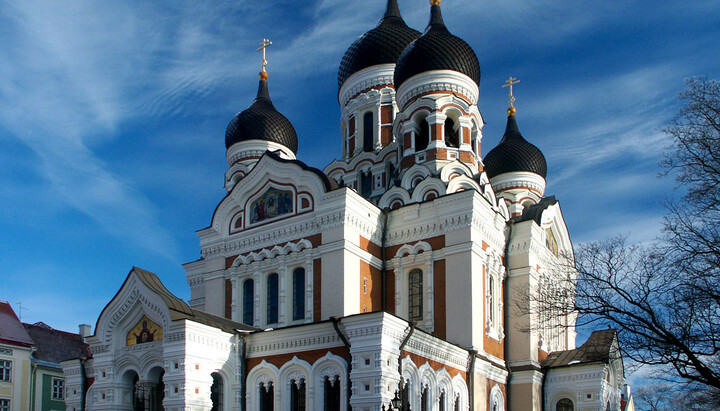
Alexander Nevsky Cathedral in Tallinn. Photo: open sources
On November 6–7, 2024, the Alexandrov Orthodox Brotherhood held an international academic and practical conference at the Tallinn Teachers’ House titled “The Orthodox Church in Estonia – Autonomy: Opportunities for Development, Risks, Consequences,” according to orthodox.ee.
The event was organized on short notice due to the ongoing crisis in relations between the Estonian Orthodox Church of the Moscow Patriarchate (EOC-MP) and Estonia’s government institutions. Speakers from Estonia, Germany, France, the United Kingdom, and Ukraine took part in the conference.
Representatives of the EOC-MP stated that Estonian authorities are pressuring the Church to sever its canonical ties with the Moscow Patriarchate due to Patriarch Kirill’s statements about the war in Ukraine.
The main goal of the conference was to explore ways to overcome the existing crisis and division among Orthodox Christians in Estonia and to find a reasonable compromise that could lead to mutual understanding and constructive relations between the Estonian state, the EOC-MP, and the Estonian Apostolic Orthodox Church (EAOC).
During his address, Archpriest Igor Prekup stated that the primary issue in relations between the EOC and Estonian authorities is the authoritarian approach of officials and parliamentarians, who are coercing the EOC-MP to change its canonical affiliation under threat of forced dissolution – which, he said, amounts to unacceptable interference in the Church’s internal life.
“The conference identified a number of factors contributing to public hostility toward the EOC-MP and hindering reconciliation between Orthodox Christians of the Moscow and Constantinople Patriarchates in Estonia,” said Archpriest Igor Prekup, head of the conference organizing committee.
Veiko Vihuri, pastor of the Estonian Evangelical Lutheran Church, voiced the consensus of the participants: “Since Estonia has no state church according to the Constitution, government authorities have no right to interfere in the internal affairs of churches – and may do so only in very limited cases strictly defined by law. Even arguments based on national security cannot override the rights and freedoms guaranteed by the Constitution. The state is obliged to respect law-abiding religious communities and not obstruct their activities for ideological or political reasons.”
“We must learn to understand and treat each other as equals so that the reunification of Orthodoxy in Estonia can become possible,” the conference organizers concluded, expressing hope that the Estonian Council of Churches might help facilitate this process.
Earlier, the UOJ reported that Estonia’s Ministry of the Interior considers the EOC’s changes to its statutes insufficient.
Read also
Catholic media outraged by forcible conscription of Uniate cleric
The Vatican’s Apostolic Nunciature has demanded the return of a forcibly mobilized Greek Catholic cleric.
Rivne court fines man for criticizing parish's "transfer" to OCU
A resident of the Rivne region was convicted over Facebook posts criticizing the “transfer” of a religious community in the village of Butove to the OCU.
Novynskyi: I quoted the Gospel to Zelensky on first day of war
The former Ukrainian MP said he advised Davyd Arakhamia to begin negotiations with Russia in the first days of the full-scale war and later spoke with Volodymyr Zelensky.
Sumy Eparchy venerates miraculous Korsun-Shpylivka Theotokos Icon
Celebrations honoring the Mother of God’s icon known as the “Restorer of Sight” were held at Sumy Cathedral and concluded with a car procession around the city.
Receding Dniester in Khmelnytskyi region exposes foundation of flooded church
The foundation of St. John the Theologian Church, submerged during the construction of a hydroelectric power plant, has resurfaced for the first time in 45 years.
Medieval сhurch сrumbles as Culture Ministry сites missing agreement
The 14th–15th-century St. Nicholas Church in Chesnyky, Ivano-Frankivsk Region, is falling into disrepair.