Synaxis of the Archangel Michael and the other Heavenly Powers
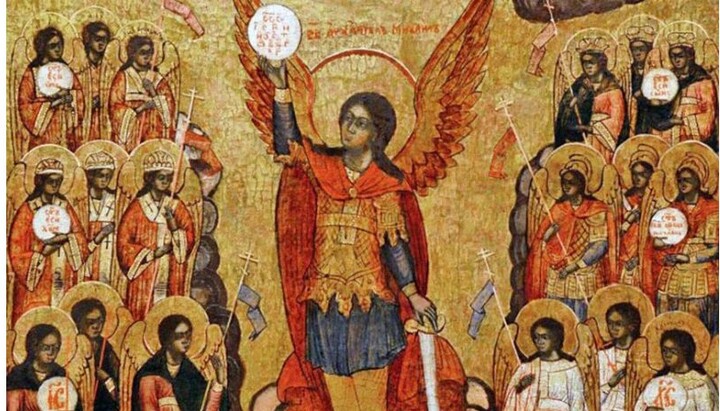
Synaxis of the Archangel Michael. Photo: myslo
We know the lives of the saints – their biographies, their paths, their struggles – and through this shared experience, a unity is formed between us and their persons. But with the Angels it is different. We do not know the details of their manner of life; yet we know one thing that matters greatly for us: we were created according to the same measure as the Angels (Rev. 21:17). Therefore, in what is essential, in what pertains to our nature, the human being is equal to the Angels – and the Mother of God has even surpassed them, becoming higher than all the heavenly powers.
At baptism God gives us the best and truest friend. How often I hear people describe this friend as if he were some sort of guard dog assigned to “protect” us simply because we were baptized. What a misunderstanding – and what naïveté! I have read many testimonies, from ancient Fathers and contemporary elders alike, that the human soul gives off a kind of subtle spiritual fragrance.
Elder Ephraim of Katounakia could sense by the “scent” of the soul what kind of person stood before him. “Ugh… what stench was that I felt?” he once said, making a grimace after an atheist had visited his cell. If such spiritual perception is accessible to saints, how much more must it be accessible to the Angels. How often we read in hagiographical accounts that a guardian angel could not even approach a person whose soul emitted a hellish odor. Our friendship with the Angel is possible only within the boundaries of true faith. The farther we wander from the commandments and fidelity to Christ, the farther from us our guardian Angel withdraws.
But if we live in God, then the radiant Angel becomes our best and most faithful companion.
Many years ago, a good acquaintance of mine, Boris Volynsky, passed away. He was a man pure of heart and noble of soul. His death was difficult – he suffered from pancreatic cancer. And yet he said that he always sensed (and perhaps even saw) the presence of his guardian Angel beside him. When he spoke about this Heavenly friend to his family, his eyes would fill with tears from love and reverence.
After Boris died, his daughter Polina went to pray at his grave. She later recounted that the day was overcast. Suddenly, a bright, dazzling light appeared from nowhere. She lifted her eyes and saw – right behind the grave, near the cross – an enormous figure of an Angel rising as if out of the air itself. The light coming from him was hundreds of times stronger than sunlight, yet it did not hurt her eyes. Warmth flooded her soul. And within herself she heard a voice:
“Do not be afraid. I am your father’s Angel. I accompanied him. He was not afraid. All is well with him.”
Then she saw a great movement like the sweep of wings, and the Angel vanished – but a Paschal joy remained in her heart.
We may and must treat such encounters with the unseen world cautiously; yet the peace, quiet, and tearful sweetness that descended like dew into her soul left no doubt that this vision belonged to the World of Light.
How important it is not to lose this friendship – not to break our unity with the one who will accompany our soul when it departs the body. This unity grows as we accumulate goodness within ourselves.
If we preserve chastity; help others; strive for moral purity; show humility and gentleness of character; treat people with respect; do not chase after self-interest; accept insults and slander, wishing salvation to the offender; do not abandon people in trouble even when we ourselves are struggling; keep modesty in all things, remaining simple and honest; preserve peace of soul in joy and sorrow; remain kind to all – step by step ascending toward Divine Love – then we undoubtedly accumulate good, and with us will be God and His holy Angels.
But if we recklessly lose chastity, thinking it will not affect our spiritual life; if we make spiteful remarks to others, criticize to exalt ourselves; waste time in idle chatter; hunt for gossip to demean others; boast of our “straightforwardness,” wounding people; imagine ourselves experts in everything while calling others ignorant; feel secret satisfaction when someone else errs; pour out “righteous anger” in vengeful spirits; demand humility from others while always justifying ourselves; publicly dissect the virtues and faults of others while concealing our own sins; nurture hidden malice; dwell continually in resentful thoughts – then we surely accumulate evil, and in such a life demons dwell beside us.
We must always remember that Goodness is the only true form of Life. Life itself is good, simple, humble, and it supports only Good, always remaining good. If we value our life, then we must live only for Good. If we do not value it – why did we enter this world at all? To be afraid of being good is the final depth of cowardice. To help another person, one does not need strength or wealth – only goodness of heart. Then the good Angel will always remain near such a soul and will shelter it with his wings both in this world and in the world to come.
Read also
Honest atheism vs. spiritual hypocrisy
The 70th anniversary of Albert Camus’s Nobel Prize recalls an uncompromising challenge to Christianity. An honest unbeliever brings theology back to the mystery of the Cross.
The valley of trouble and the gateway of hope
One soldier buried an expensive cloak and some gold beneath his tent. Because of this, all Israel lost a battle. Why did one man’s sin bring disaster upon an entire nation?
From love spells to bishop's throne
Antioch’s most powerful sorcerer sent demons against a devout young Christian woman three times – and failed every time. In the end, a demon himself revealed the truth that led to his conversion.
The Weeping Queen of Blachernae
On the night of the Feast of the Protection, only two people witnessed the miracle in the Church of Blachernae. Everyone else prayed and saw nothing. Yet they, too, received grace.
Deadly spiral of human hatred
The tragedy of Lebanon's civil war lays bare how dehumanization and fear can turn human beings into monsters.
Woe to expectant mothers – or to those of little faith?
God commanded one prophet not to have children, yet told his people in exile to bear sons and daughters. What does this apparent contradiction tell us today?