For salvation, we need God Himself rather than thoughts of God
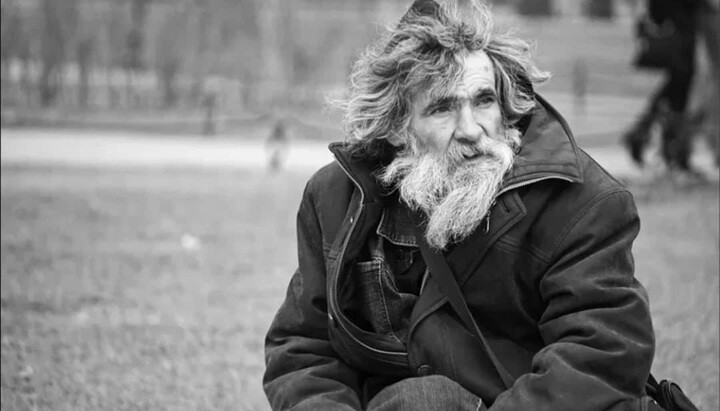
Photo: myslo
This week's liturgical apostolic reading reminds us of the necessity, while still in the body, to lead an intense spiritual life. “Live as children of light. Have nothing to do with the fruitless deeds of darkness, but rather expose them, … making the most of every opportunity, because the days are evil.” (Ephesians 5:8–19), the Apostle Paul urges us.
What does it mean to be children of light? Where should this light come from? From our minds? No, hell is full of clever people. This light must come from our hearts. There are no good or humble people in hell. God does not need our intellect; He needs our love. To us, worms crawling on the earth, God gives the opportunity to grow wings and become Angels. For this, we must endure many sorrows. Knowing that he faces suffering, fear, the mortal terror of dying and ordeals, a wise Christian begins to spread the weight of his cross over the days and years of his life. He consciously and systematically imposes small daily sorrows upon himself, so as not to accumulate the greatest ones by the end of his life.
Which is easier: not to judge, to avoid gluttony, or, living unrestrained, to answer for it later at the tollhouses? Which is more fearsome: to take up voluntary asceticism and choose the narrow path, or to hear the saying at the Last Judgment: “You have already received your good things in your earthly life”?
Indulgence in so-called "minor sins" and a careless attitude toward one's salvation is the main cause of most people’s downfall.
The salvation of the soul is a lifelong birth process. He who does not labour to give birth to an angel within himself degenerates into a demon. There are no other options. An angel is soft-hearted; a demon is hard-hearted. A soul woven of light is flexible and malleable. Sorrows press, crush, stretch it and spread it thin, yet it does not break. This flexibility is acquired through long practice and patience. Anything hard shatters easily, but no evil force can deal with the flexible.
Our greatest misfortune is that our minds treacherously escape into the fleeting “life” of the external world. Ancient monastic tradition has always taught that a person can find himself in Christ only in solitude, away from the bustle of the world. For most of us, this is impossible, but we are still obliged to arm ourselves with attentiveness for our salvation. The essence of daily spiritual practice is always within ourselves. The primary aim of a Christian is to keep his mind in Christ in all circumstances, not allowing it to be captivated or distracted by vain, meaningless, and diverse thoughts that attack the mind like a swarm of mosquitoes.
“Even to gather the mind for a moment and remember death is better than a lifetime of preaching about salvation while forgetting that all is subject to death” (Elder Simon of Mount Athos).
Unfortunately, many of our parishioners fail to guard their hearts from distraction and immediately forget about self-attentiveness after completing their prayer rule.
It is good to carefully fulfil one’s prayer rule, but it is far greater to preserve prayer during work and interaction with others. The Holy Fathers urge us to treat every moment of our lives with care. Not to lose even a second without spiritual practice while we are still in the body.
The world, with its myriad cares, and the body, with its fragile health, are our betrayers. They are ready to fail us at any moment. Perfect hatred even for the shadow of sin, and strict observance of Christ’s commandments in the smallest details, is the constant pulse of Orthodox life. The beginning and foundation of salvation in Christ is unceasing penitential prayer. Whatever you do, wherever you go: “Lord Jesus Christ, have mercy on me….”
Elder Ephraim of Katounakia teaches us: “Imagine Christ coming to judge the world, gathering His own, turning His back to you, and departing with the saints to the heavenly Light. As He leaves, you begin to sink into the cold, dreadful darkness. You run after the Saviour, crying out: ‘Lord Jesus Christ, have mercy on me….’”
Your eternal fate depends on this cry, on whether Christ hears you – this is the prayer that must never leave our lips.
To be human and not cultivate goodness within oneself is the greatest folly and complete self-deception. People in this world, according to Elder Gregory of Mount Athos, fall into two categories. The first looks at others and thinks: “What good can I get from this person?” The second asks: “What good can I do for this person?” The first suffers until they grow wiser. The second is saved until they attain salvation. Sadly, there are very few of the latter left on Earth.
To attain grace, a person must work on himself as a sculptor works on a block of stone.
First, he must cut away sinful actions of the body, speech and mind. Then, he must eliminate pride and, finally, all attachments. For it is obvious that any attachment to this world will ultimately lead to disappointment. Only madmen, as most inhabitants of our planet are now, strive to devote all their thoughts, feeling and desires to the external world. The end of such pursuits is always the same – despair. This is the fate of the devil’s slaves, whose minds dwell on the dust of this earth.
But if a person begins to direct all their movements, both inner and outer, toward entering the Kingdom of Christ, every action becomes a step toward Eternal Life. Their primary ally on this path is the remembrance of death, which eradicates pride and vanity. The most formidable enemy, however, is worldly reasoning and carnal thinking.
Modern ascetics teach us that thoughts are convulsions of the mind, a darkening that prevents it from functioning properly. When reasoning is feeble, one listens but does not understand, tries to comprehend but cannot, prays, and yet does not embrace grace in their souls. This must be avoided at all costs. To acquire grace, the mind must not be filled with thoughts but with Christ.
Read also
Honest atheism vs. spiritual hypocrisy
The 70th anniversary of Albert Camus’s Nobel Prize recalls an uncompromising challenge to Christianity. An honest unbeliever brings theology back to the mystery of the Cross.
The valley of trouble and the gateway of hope
One soldier buried an expensive cloak and some gold beneath his tent. Because of this, all Israel lost a battle. Why did one man’s sin bring disaster upon an entire nation?
From love spells to bishop's throne
Antioch’s most powerful sorcerer sent demons against a devout young Christian woman three times – and failed every time. In the end, a demon himself revealed the truth that led to his conversion.
The Weeping Queen of Blachernae
On the night of the Feast of the Protection, only two people witnessed the miracle in the Church of Blachernae. Everyone else prayed and saw nothing. Yet they, too, received grace.
Deadly spiral of human hatred
The tragedy of Lebanon's civil war lays bare how dehumanization and fear can turn human beings into monsters.
Woe to expectant mothers – or to those of little faith?
God commanded one prophet not to have children, yet told his people in exile to bear sons and daughters. What does this apparent contradiction tell us today?