In Odesa region, TRC attempts illegal mobilization of a UOC priest
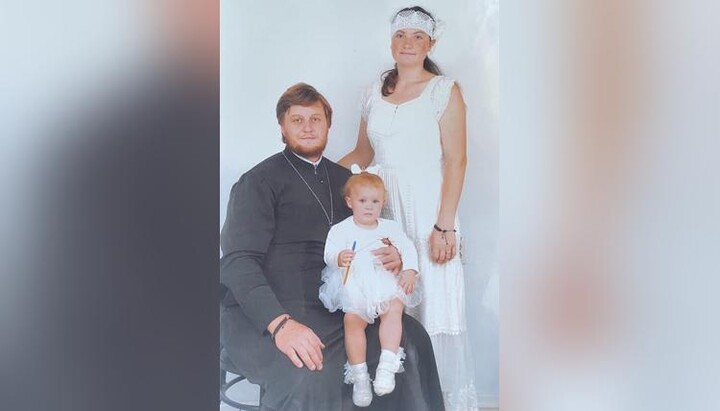
Mobilized UOC Priest Yevhen Rozhdestvensky. Photo: Facebook page of Archpriest Mykola Karpenko
On December 21, 2024, Father Yevhen Rozhdestvensky, a priest of UOC churches in the villages of Krasna Kosa and Semenivka in the Bilhorod-Dnistrovskyi deanery of the Odesa Diocese, was detained at a mobile checkpoint in the Odesa region and forcibly sent to a training center, according to a Facebook post by his uncle, Archpriest Mykola Karpenko.
He reported that Father Yevhen was driving back from the maternity hospital, where his wife had just given birth to their child. His 18-month-old daughter was also in the car. Although the priest was registered as "in reserve", he was informed at the checkpoint that he was wanted and taken to the Bilyayivka military recruitment office.
There, Father Yevhen underwent a medical examination that confirmed his health was not suitable for military service due to a traumatic brain injury sustained in a car accident. Nevertheless, he was sent to Vinnytsia for training. In Vinnytsia, he was again declared unfit for service and returned to the Bilyayivka recruitment office.
"After that, he was moved from Odesa to Rivne, then to the Kyiv region, and back to Rivne. Currently, Father Yevhen is in Rivne. His lawyers have filed all reports of violations during his detention and subsequent transfers with the relevant authorities," wrote his uncle. He emphasized that "a priest cannot be forced into actions that conflict with his conscience and spiritual convictions. It is vital that every individual has the right to freely choose their path without coercion or manipulation."
"I am convinced that such situations will become part of the Church's history in the 21st century as examples of how unjust actions against priests who strive to serve God and their flock undermine the foundations of religious freedom and personal liberty. In these circumstances, we cannot remain silent and must defend the rights and freedoms of every person, regardless of their faith or beliefs," the clergyman added, calling for prayers in support of Father Yevhen.
As previously reported by the UOJ, on October 25, 2024, the Military Recruitment Center forcibly mobilized Father Petro Cholak, dean of the Novovolynsk district of the Volodymyr-Volynskyi Diocese, in Lutsk. On October 2, the UOC's Khust Diocese published a call for prayers for another mobilized UOC priest, Archpriest Vasyl Rosokha. On September 22, 2024, two UOC priests were taken by recruitment officials in Zakarpattia but were released after hundreds of parishioners gathered at the TRC. In October 2024, Father Ioan Polishchuk was mobilized in Kremenets. On December 13, 2024, officials detained Father Andriy Stupnytsky, rector of the Holy Trinity Church in Povcha village.
Read also
UOC delegation meets with Patriarch Shio in Georgia
Catholicos-Patriarch Shio III received a delegation of the Ukrainian Orthodox Church at the Georgian Patriarchate.
UOC marks Synaxis of Poltava Saints
Metropolitan Philip celebrated the Divine Liturgy at the Horbanivka Monastery in Poltava on the feast of the Synaxis of the Saints of Poltava.
Rector of UOC church in Kramatorsk sent for second military medical exam
Lawyers have secured a second military medical examination for Archpriest Oleg Kruchinin, who was unlawfully detained by TRC officers.
Jews, Muslims, Catholics, and OCU pray together at St. Sophia Cathedral
Representatives of Jewish, Muslim, Catholic, and OCU communities held an ecumenical prayer service for Ukraine in Kyiv.
Horbanivka Theootokos Icon honored at Poltava Eparchy monastery
Metropolitan Philip of Poltava and Myrhorod led a festal service at the Horbanivka Convent.
Greek hierarch: Clergy should use social media to bring people to Church
The Church of Greece hierarch stressed that while the internet and YouTube can be useful, they cannot replace in-person participation in church life.