OCU cleric labels Sts. Matrona and Xenia as "Russian nutcases"
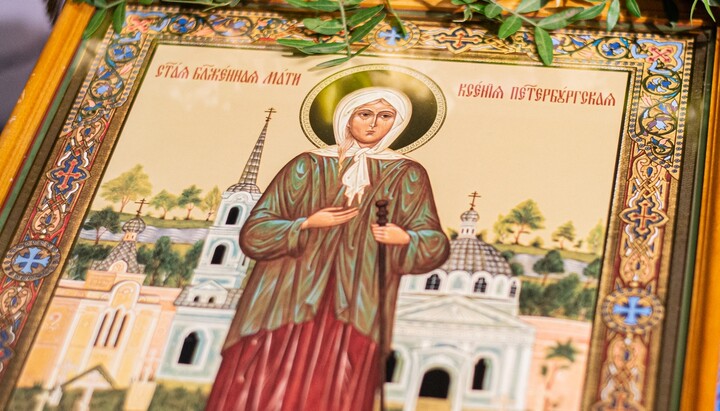
Icon of Xenia of St. Petersburg. Photo: Open Sources
Roman Hryshchuk, a "priest" of the Orthodox Church of Ukraine (OCU), attended the funeral service of a Ukrainian Armed Forces soldier at the UOC’s St. Nicholas Church and told those present that they were under "Moscow occupation", justifying his claim by pointing to the presence of certain saints' icons in the church.
In a Facebook post, Hryshchuk stated that these saints include the Royal Martyrs, Matrona of Moscow, and Xenia of St. Petersburg, whom he described as "Russian psychos."
"It’s very easy to identify churches occupied by Moscow," Hryshchuk assured. "They always have icons of the Russian trinity: Xenia of St. Petersburg, Matrona of Moscow, and Russian Emperor Nicholas II, to remind people whose imperial fist they are living under."
As previously reported by the UOJ, Roman Hryshchuk once shared proof of his mental health status.
Read also
Medieval сhurch сrumbles as Culture Ministry сites missing agreement
The 14th–15th-century St. Nicholas Church in Chesnyky, Ivano-Frankivsk Region, is falling into disrepair.
Poland сondemns Lviv Regional Council's decision to declare 2007 year of UPA
Polish Prime Minister Donald Tusk says the Lviv Regional Council's decision to dedicate 2027 to the UPA and Roman Shukhevych is harmful to Ukraine.
OCU seeks court recognition of ownership of seized Cherkasy cathedral
The Cherkasy Regional Commercial Court will hear an OCU lawsuit seeking ownership of St. Michael's Cathedral, which was seized from UOC believers.
Lithuanian bishop: Ukraine is no model for believers' rights
Vicar of Vilnius Diocese voices concern over attempts to import Ukraine's religious conflict into Lithuania.
Hundreds of believers honor St. Alexis of Carpatho-Russia in Khust Eparchy
At the St. Nicholas Monastery in the village of Iza-Karputlash, Metropolitan Mark of Khust led a festive liturgy, concelebrated by six metropolitans, five archbishops and three bishops.
Court upholds UOC parish appeal in Voloshky over OCU switch dispute
The Northern Commercial Court of Appeal has upheld the appeal of the St. Nicholas parish of the UOC in the village of Voloshky, Volyn region, in a dispute over a transfer to the OCU.