“Picassó”: Losing a Friend and Overcoming Temptation
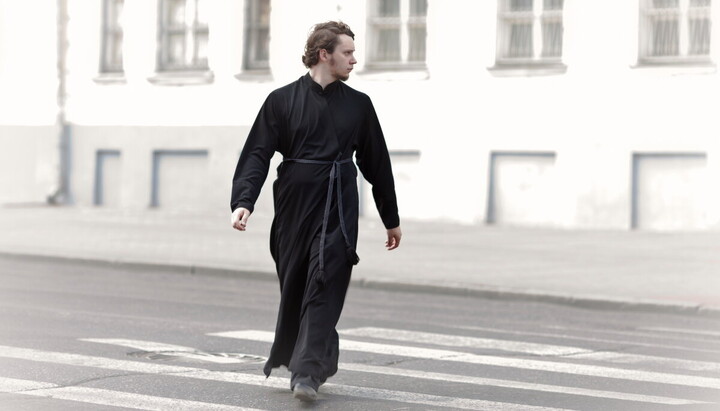
Seminarian. Photo: myslo
Time: 1992
Place: Kyiv
Characters: Misha Kaminsky, seminarians, instructors.
For Misha and Georgiy, days of grief had begun – and a tormenting search for an answer to a question which, strictly speaking, they could not even properly word. It was simply that the Church in which they lived, and without which they could not imagine life, had turned out not to be the Church at all. For Gleb Yakunin had explained everything so logically, so persuasively.
Everything became hateful: the services, the seminary classes, the choir, the prayers, the obediences. One phrase kept spinning in their heads: “a totalitarian-type organization.” Every manifestation of seminary life – indeed, of all church discipline – seemed to confirm it. Misha, raised in a priest’s family, still hesitated: “What if Yakunin is wrong?”
But Georgiy swallowed it whole, with the same certainty with which, a few years earlier, he had come to believe in God. When Misha suggested approaching one of the instructors and trying to sort things out, Georgiy replied:
“You what, brother?! Who would you go to? They’re all cut from the same cloth! What do you think they’ll tell you – the truth? They’ll say, ‘Yes, you’re right, we’re not the Church, it’s all just to make money’? Don’t be naive, brother.”
Misha was too crushed to argue. And yet it was hard to believe that everyone around them was driven only by greed for money and power. Father Lavr, for instance. Yes – Father Lavr. That was who he needed to see.
Without telling Georgiy, Misha went to look for Father Lavr. But it turned out Lavr was not in the Lavra. He had gone off again somewhere for treatment, and no one knew when he would be back. Misha was disappointed, but having stepped onto the path of seeking, he decided not to turn aside and to speak with someone else. He went to Father Viktor. A thought flashed: “He’s a sectologist. He must know everything about totalitarian organizations.”
Father Viktor listened to Misha’s stumbling question, flipped through the journals with a quick glance, and waved his hand.
“Ah! That Gleb Yakunin. He’s been suspended from ministry. He’s offended at the Patriarchate, so he writes all sorts of nasty things. Don’t pay attention!” He waved again and hurried off to oversee the PHD – the park-and-household chores.
Misha felt a little steadier, but of course the answer did not satisfy him. When Georgiy heard about the conversation with Father Viktor, he almost began stamping his feet:
“Mikhail, are you out of your mind? You found whom to ask – the inspector! That’s it. Now you’re on his hook, in the list of the unreliable. He’ll be watching you, and you’ll be kicked out in no time. You’ll see.”
“So what should I do?”
“I don’t know, brother.”
But Georgiy soon decided for himself what to do.
Around that time, there was an exodus of quite a large number of students from the seminary. About twenty-five seminarians, from different years, all natives of Lviv region, declared that they were transferring to the “theological seminary” of the Kyiv Patriarchate. That “seminary” had been thrown together in haste by the former rector of the real seminary, the former Archimandrite Daniil (Chokaliuk), who had gone into the Filaret schism. For its needs, the authorities allocated space beneath the most beautiful St Andrew’s Church in Podil, Kyiv.
The exodus was provoked by the fact that Bishop Andriy of Lviv – the very one who had not attended the Kharkiv Council of Bishops, citing illness – finally made up his mind. He, too, went into schism, along with much of the clergy of his eparchy. It turned out that graduates from Lviv region would have nowhere to return after completing seminary: the majority of parishes were now in schism. For them it was a moment of truth: to preserve unity with the canonical Church, full of grace, and endure the hardships of life – or return home, to their eparchy, to vacant “priestly” posts, to “serve,” earn their daily bread, but now in schism. And, by the way, everyone understood perfectly well that it was a schism. They only lulled themselves with thoughts that it would all end soon – that sooner or later Constantinople would recognize them, or somehow they would reunite again, and everyone would be one and full of grace once more.
The rector and instructors spoke with them, tried to explain, tried to persuade them to stay, but it was all in vain. Like hypnotized men they kept repeating a single argument:
“Where are we supposed to go back to?”
It was a pity. Almost all of them were good fellows, and many left in tears. But they still left…
And so Georgiy – fiery, ardent Georgiy, ready to lay down his life for standing in the truth – went with them. He tried to drag Misha along as well:
“Come on, brother. You can’t stay here. You’ve read it yourself. It’s all KGB, greed, lust for power. No spirituality, no grace. But there… There we’ll start a new life, there won’t be this swamp… So much filth has piled up… There will be grace, purity, and spirituality! You must, you must decide, brother. Come!”
But the absurdity of these claims was obvious even to Misha, a first-year student:
“Georgiy, are you serious?! Explain something to me… How, by what logic, if we assume that we, the Moscow Patriarchate, are not a Church of grace – then how can some group split off from us, the graceless, and suddenly become full of grace? Just think!”
But Georgiy did not want to think.
A few days later, Misha managed to go home and even stay overnight. Until deep into the night he spoke with his father about all these sorrowful matters. Georgiy had taken the journals with Yakunin’s articles from Misha, so Misha had to recount everything from memory. His father listened attentively, did not interrupt, and then asked:
“And what do you yourself think about all this?”
“I don’t know, Dad,” Misha lowered his head. “Father Viktor says it’s just resentment because they suspended him from ministry. But, Dad – could it all really be true?”
Instead of answering, Father Alexander went to the dresser and pulled a letter out of a drawer.
“This letter was written to me by my seminary confessor, Abbot Barnabas, about six years ago. When I lived in the Trinity–St Sergius Lavra and studied in seminary and academy, I confessed to him, spoke with him often, and in general regarded him as a spiritual father. I told you about him once. Remember? May the Lord grant rest to his righteous soul,” Father Alexander crossed himself reverently. “He went through the war, prisons and concentration camps; he lived in exile, but he never complained about anything,” Father Alexander opened the envelope. “We wrote to each other from time to time. I won’t read you the whole letter. Only the part that concerns the question: where the true Church is.”
The letter was written on ordinary squared notebook paper. The handwriting was clumsy and in places hard to read. It was clear that it had been written by someone with poor eyesight. A faint scent of old age rose from the pages – a monastic cell and quiet peace.
Father began to read:
“…Little by little, in our Trinity–St Sergius Lavra, people began talking about the celebration of the millennium of the Baptism of Rus’. It is still several years away, God grant us to live to see it, but we must prepare even now. Yes, Sashenka, it is a great feast. The Lord has descended in His mercy to us unreasonable ones and has been pleased to enlighten us with the light of Truth. Once not a people, but now the people of God. Once not shown mercy, but now shown mercy. We must greatly honor Prince Vladimir the saint, and Michael the hierarch, and all the people through whom the Lord planted the true faith in Rus’. Remember to write to me how things are there in Kyiv, the mother of Russian cities. Are they preparing for this celebration, or how is it? People say our rulers want to do the Church some kindness: return certain churches, open certain monasteries… God grant it. They also say disorder is beginning in our state, and minds are stirring. Some kind of perestroika, some kind of glasnost. They say newspapers are already writing what they used to be ashamed to write. You are young, you know more than I do about these things. But my heart senses it is not for the good. You, however, be not troubled by anything. Live in a godly manner and rely on His holy will. Do not murmur, even if you must endure something. Draw spiritual strength from the holy Church, for she alone bestows the grace of the Spirit. Thus has our Lord willed: that His faithful servant remain invariably in His Church. A branch cannot bear fruit unless it abides on the vine. So too people who cast off the Church of Christ cast off Christ Himself. My heart senses that brazen mockers will appear who will use the freedom to say whatever comes into their heads, and they will slander the Church and revile Her, and tear away from Her the foolish and unsteady in faith. But you, do not be troubled by this. By their fruits you shall know them. I speak thus because students from the academy have already begun to come to me and ask about these troubled times, about Patriarch Sergius, about whether he acted rightly when he recognized Soviet authority and agreed to fulfill its directives. Some ask sincerely and want to understand, but there are others who condemn. Here is what I tell you, Sashenka: a bishop stands in grace so long as he has not fallen into heresy and begun to draw his flock into it. If there are sins in him, God and the council of bishops are his judges. We must not separate ourselves from him; God has not set us sinners as his judges. As for His Holiness the Patriarch, the time truly was fierce. Sorrows without, sorrows within, sorrows from false brethren. I remember – for I was already of mature years – how much temptation his Declaration brought. They reviled him and called him an apostate and separated from him. But he said that without it – without the Declaration – the Church in Rus’ would have come to an end. And the Apostle writes that we should pray for those in authority and render due obedience to them.
I confess, Sashenka, whether Sergius was right then or not – to this day I do not know. For persecutions did not cease after the Declaration and at times even intensified. Yet one thing I know firmly: those who broke communion with him and abandoned the suffering Church were entirely wrong. And where are they? Where are those who went into the catacombs? Where are those who wished not to stain themselves by agreement with the authorities and went into schism? They strained out a gnat and swallowed a camel. For the sin of heresy and schism is a dreadful sin: it casts not only the schismatic into perdition, but also those who follow him – and they often follow out of ignorance. And where are they now? They are gone, Sashenka. But the Church in Rus’ stands and will stand unto ages of ages. Amen. I remember, beloved, how my confessor, Father Gerasim, after the Declaration served forty liturgies and asked the Lord how to act. He fasted strictly all forty days and at night read the Psalter. He prayed and begged God for understanding. And afterward he went up to the ambo and said to us, the parishioners: let us not be troubled, brothers and sisters, the Church suffers and we will suffer with her! But from our archpastors we shall not turn aside. May God help them and grant them discernment. And he himself stood there so radiant, so radiant. Such is it, Sashenka. And now people want to understand everything without prayer, without подвиг, without labors. To read it all out of books and journals and rumors.
And when after the war I entered our holy monastery, I saw many holy confessors returning from prisons and exile. They were holy men, like the ancient fathers, whose faith had been tried and had shone brighter than the sun. There were many of them, Sashenka. Among them were seers and great men of prayer, and not one of them dared to revile Sergius, or Alexy, or any of our other archpastors. In humility they passed their monastic life and worked out their salvation. So it is, dear one. Learn from this and imitate it.
My bow to your mother and children. Pray for them and do not grow weary.
You wrote that your eldest, Misha, has zeal for serving as an altar server. This is very good, only instruct him that by frequent entering into the altar of God he not lose reverent fear for that holy place. For this sin easily enters the soul, which I observe in part even in our monastery.
May God help you to please Him. Forgive me, and pray for my sinful soul.”
Father kissed the letter reverently and slipped it back into the envelope. For a while they sat in silence. Then Father brought his epitrachelion, cuffs, and cassock. He vested, and quietly, so as not to wake the others, they served a memorial service for Abbot Barnabas. Father spoke a little about him and about certain other confessors he had seen in the Trinity–St Sergius Lavra. The news that Georgiy had gone into schism greatly saddened him.
“He’s too hot-blooded. The enemy uses that.”
“Dad, maybe we could talk to him somehow?”
Father Alexander shook his head.
“You can talk with someone who wants to listen. Otherwise you’ll only embitter him more. We must pray for him. What else can one say?”
A few days later, as Misha was leaving the Far Caves, he met Father Lavr. The confusion sown in his soul by Gleb Yakunin had already been overcome; he even marveled that he could have believed so easily. Yet he still wanted to speak about it with Father Lavr.
“Bless me, Father,” Misha bowed and held out his hands for a blessing.
“May God bless.”
“Father Lavr, could you speak with me a little?”
Instead of answering, Father Lavr pointed to a bench. They went over. Sat down. Misha briefly told him about the journals and about Georgiy’s departure.
“You believe the articles are wrong, but you want me to convince you even more. Is that it?” Father Lavr asked.
Misha nodded.
“I have read them. There is much slander there. I do not know whether it is deliberate or from ignorance. Facts which truly occurred are horribly distorted and interpreted entirely incorrectly. For example, the fact that in 1943 Stalin summoned Metropolitans Sergius, Alexy, and Nikolay to the Kremlin and allowed a Local Council to be convened and a patriarch to be elected – Yakunin interprets this as though Stalin ‘re-founded’ the Church. That is absurd. Many Ecumenical Councils were convoked by emperors, but that does not mean emperors founded the Church. Yakunin asserts that the Church was full of grace until 1927. And where did it go after that? Let him show it. And the fact that we lived through a terrifying period – that neither bishop nor priest could take a step without the knowledge of the commissioner for religious affairs – is not a reason to pour filth on the Church. Once an old priest told me that after the war there were cases when ideologically pure Komsomol atheists were sent to serve as priests – as if by party assignment, to watch the people from within. Those people either became believers or ended very badly. You cannot stand before the altar of God with an unclean heart. Do you remember how Judas ended?”
Misha nodded.
“And that unfortunate priest who wrote those articles – he is like Ham, who exposed his father’s nakedness. And not only exposed it, but in many things also slandered him. May the Lord bring him to repentance,” Father Lavr crossed himself. “It is written: ‘by their fruits you shall know them.’ And what fruit came from his articles? Georgiy went into schism; you wavered. The serpent once said to Eve: ‘Did God really say?’ So you heard: ‘Is your Church truly the true Church?’ At our next lesson I intend to tell you in detail about the fall of Adam. It is very useful to know.”
Father Lavr rose from the bench. Misha stood as well.
“To sort this out is not sinful; it can even be useful for strengthening faith. I myself once sat in the library and studied documents from that period. I wanted to understand who was more right – we or the Russian Church Abroad.”
“And who is right?” Misha asked.
“I think we are,” Father Lavr smiled slightly. “But I believe soon the Lord will unite us again. And pray for your friend.”
“How?”
“Read forty times: ‘Lord Jesus Christ, save, have mercy on, and enlighten Thy servant Georgiy.’”
“And that’s all? Only forty times? Can I do more?”
Misha was ready to read a hundred akathists a day and make a thousand prostrations, if only Georgiy would come to his senses. But Father Lavr said:
“No. Only forty. But read it constantly – every day, without missing.”
“Bless me, Father.”
“May God bless.”
To be continued…
The previous episode of the book is available here.
Read also
A shepherd boy with a letter from Christ to French king
In the summer of 1212, thousands of pilgrims carrying staffs waited for the sea to part before them. Later chroniclers added ships, slave traders, and a pope's lament to their story.
Facade of bones and facade of light
Antoni Gaudí spent forty-three years building a church in Barcelona, knowing that this construction was for the ages.
Trial of a dead pope
Once in Rome, the body of a deceased pope was seated on the throne and put on trial. The accusation relied on a church canon that had once saved his see.
Monastery built in defiance of king
When Orthodox believers in Minsk were left with just one church, townspeople decided to build another – and even a royal decree did not stop them.
Young Mother and Sleeping Christ
Michelangelo carved a Virgin Mary who looks younger than her Son – and signed his name in marble for the only time in his life. Neither of these peculiarities was accidental.
Orthodox books from a Uniate printing press
In the 18th century, Uniate monks at Pochaiv printed books used in prayer by Orthodox Christians and Old Believers alike.