In Greece, the Pope calls for integration of migrants into European society
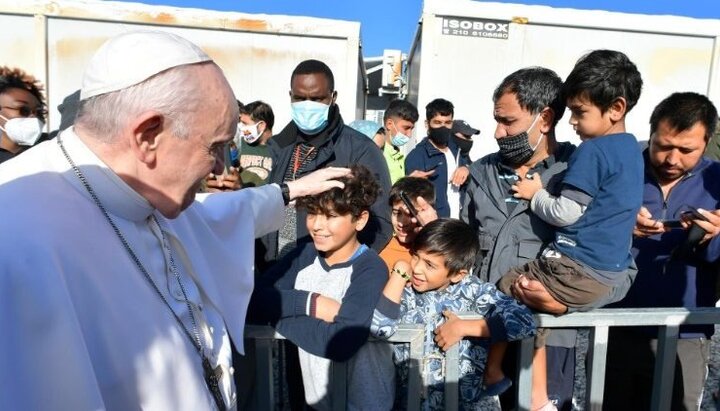
Pope Francis's visit to Lesbos. Photo: vaticannews.va
During a visit to the Reception and Identification Centre of Mytilene on the Greek island of Lesbos, Pope Francis expressed solidarity with the refugees who did not find a safe and dignified life in their homeland, reports vaticannews.va.
The head of the Catholic Church said that there are many in Europe who do not want to solve the problem of refugees, driven to extremes.
“We need to fight the distant causes, not the poor people who pay for their consequences and are used in political propaganda,” said Pope Francis.
The Pope thanked the Greeks for their help and assistance to the refugees and wished that "the Blessed Virgin would open our eyes to the suffering of our neighbours so that she would help us to recognize in people God's children, sisters and brothers who need to be accepted, protected, supported and integrated."
This is the second visit of Pope Francis to Lesbos. In April 2016, the pontiff visited the largest migrant camp in Europe, Moria, in Lesbos, which was completely burned down in 2020.
Earlier, the UOJ wrote that on the island of Lesbos, migrants destroyed and desecrated an Orthodox church and filmed it.
Read also
Met. Meletiy consecrates house of worship for UOC community in Dankivtsi
Members of the persecuted UOC Intercession parish in Dankivtsi have converted a house into a place for communal prayer and worship services.
OCU eparchy sells church center site to developer for housing
The OCU’s Volyn Eparchy sold land intended for a spiritual center to a private developer planning to build townhouses and residential buildings.
SBU names UOC priest’s wife a suspect in Cherkasy region
The SBU accused Matushka Kateryna Prykotenko of “spreading enemy propaganda” through correspondence with parishioners.
UGCC cleric calls Russian Orthodox literature dangerous for clergy
While examining the causes of divisions within the UGCC, Yustyn Boiko concluded that Russian Orthodox literature had influenced Greek Catholic clergy.
UOC will play major role in achieving peace, says Vadym Novynskyi
UOC Protodeacon Vadym Novynskyi believes the Church will help bring about reconciliation within Ukrainian society after the war ends.
Catholic media outraged by forcible conscription of Uniate cleric
The Vatican’s Apostolic Nunciature has demanded the return of a forcibly mobilized Greek Catholic cleric.