U.S. professor: Decline in faith will enable AI to deal with moral issues
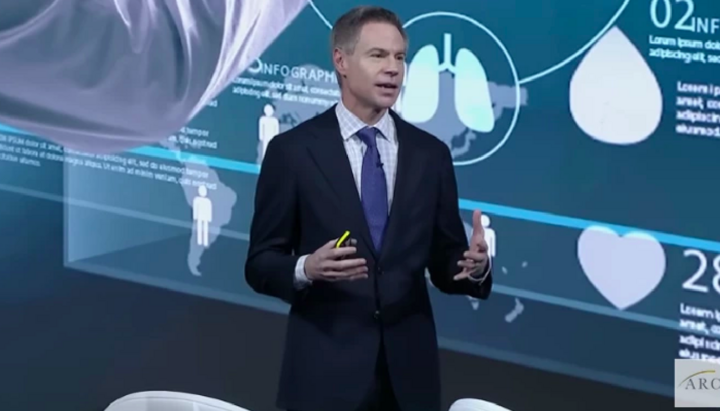
Michael Shellenberger speaks at the Alliance for Responsible Citizenship (ARC) conference in London, England. Photo: Screenshot/YouTube/Alliance for Responsible Citizenship
On February 18, 2025, Michael Shellenberger, a professor and writer from the University of Austin, delivered a speech at the 2025 Alliance for Responsible Citizenship conference in London. He spoke about artificial intelligence, its potential for digital identification, and its connection to having control over individuals' lives, as reported by Christian Post.
In addition to addressing social issues, Shellenberger pointed to the decline of religious beliefs in the West and its moral consequences in the face of AI development.
The U.S. professor stated: “The percentage of Americans with any religious identity has been decreasing, and the numbers are even more dramatic in Europe, where 80 to 90 percent of Europeans do not believe in God.”
Michael Shellenberger underscored that such a scenario leads to the emergence of political ideologies like "changing someone's gender with drugs and surgeries."
In his speech, Shellenberger argued that due to the ongoing crisis of faith in the West, an increasing number of people are no longer turning to the church for answers on morality and ethics but are instead searching for them online. This is why he is convinced that modern information technologies will have to take on the role of moral and ethical regulation in contemporary society.
"Maybe the problem is that people are not grounded in a solid set of virtues and morality,” noted the professor.
He highlighted the influence of modern social media influencers on the behavior and upbringing of young people. Shellenberger noted that account owners are not always real people – many popular accounts are now managed by AI.
The University of Austin professor urged the audience to reflect on the challenges they will face amid the crisis of faith. He stated: “If there's no God to hold you accountable for your sins, why not? The problem with disbelieving in God is not that a person ends up believing in nothing; rather, it’s much worse – he ends up believing anything.”
Shellenberger is convinced that issues of faith and morality are not concerns for the distant future but for the present moment in history, especially following the election of Donald Trump as president and his collaboration with Elon Musk.
The professor declared: “These aren't decisions that technologists are going to be able to answer.”
Earlier, the UOJ reported on Trump’s statements that “religion is part of the bedrock of American life.”
Read also
Met. Meletiy consecrates house of worship for UOC community in Dankivtsi
Members of the persecuted UOC Intercession parish in Dankivtsi have converted a house into a place for communal prayer and worship services.
OCU eparchy sells church center site to developer for housing
The OCU’s Volyn Eparchy sold land intended for a spiritual center to a private developer planning to build townhouses and residential buildings.
SBU names UOC priest’s wife a suspect in Cherkasy region
The SBU accused Matushka Kateryna Prykotenko of “spreading enemy propaganda” through correspondence with parishioners.
UGCC cleric calls Russian Orthodox literature dangerous for clergy
While examining the causes of divisions within the UGCC, Yustyn Boiko concluded that Russian Orthodox literature had influenced Greek Catholic clergy.
UOC will play major role in achieving peace, says Vadym Novynskyi
UOC Protodeacon Vadym Novynskyi believes the Church will help bring about reconciliation within Ukrainian society after the war ends.
Catholic media outraged by forcible conscription of Uniate cleric
The Vatican’s Apostolic Nunciature has demanded the return of a forcibly mobilized Greek Catholic cleric.