Bp Irinej: Schismatics remain where they were before "recognition" of Fanar
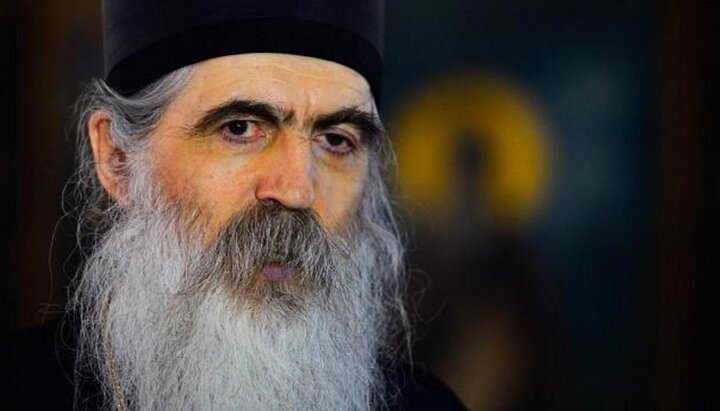
Bishop Irinej (Bulovic) of Bačka. Photo: spc.rs
The schismatics remain where they were before they were "recognized" by Phanar. Bishop Irinej (Bulovic) of Bačka of the Serbian Orthodox stated this in the "Pechatu" newspaper, according to the official website of the Serbian Orthodox Church.
In a detailed interview with the publication, the Serbian hierarch noted the similarity of the religious situation in Ukraine and Montenegro.
"In both cases, the Ukrainian and Montenegrin people, however, most convincingly showed the anti-church ‘church leaders’ their place, and the schismatics are more or less where they were before the non-canonical intervention of Constantinople and their legalization, not recognized at the level of Universal Orthodoxy," noted the Serbian bishop.
According to him, the state of ecclesiastical affairs in Montenegro is nothing more than a miniature picture of the situation in Ukraine, but with some differences.
“In both cases, national ‘engineering’ has been put in place. In Montenegro, this seems like a desperate attempt to permanently affirm a newly shaped Montenegrin identity based on the relinquishing of Serbian roots and the centuries-old Serbian identity of the Montenegrins,” the hierarch emphasized.
Bishop Irninej noted that in Montenegro, certain politicians are trying, if not to eradicate the very existence of the Serbian people, then to reduce it "to an insignificant, helpless and powerless national minority." He sees a similar situation in Ukraine despite the fact that "the oldest historical name of the great East Slavic country Rus" is retained today both in the title of Patriarch of Moscow and in the title of the schismatic "Patriarch of Kyiv" (Filaret – Ed.).
The bishop recalled that the identity of a nation is based on the native language, history, traditions, mentality and common spiritual, primarily religious affiliation. But "the designers and engineers of new nations in the 20th and 21st centuries, most often atheists or agnostics, came to the idea that they should either enslave and use the existing Church in their machinations or, if this is not possible, establish a new ‘Church’.”
The bishop of Bačka pointed out that “they do it according to the principle of ‘give what you give’, not caring about any rules or at least about ecclesiastical and legal regulations, but at the same time grossly falsifying historical facts and attributing nonexistent historical continuity to their pseudo-ecclesiastical or ecclesiastical creations." This is the case both in Ukraine and in Montenegro.
Earlier, the UOJ reported that, according to the Serbian Patriarch, no one can keep the Church in their pocket and use it for personal needs.
Read also
Medieval сhurch сrumbles as Culture Ministry сites missing agreement
The 14th–15th-century St. Nicholas Church in Chesnyky, Ivano-Frankivsk Region, is falling into disrepair.
Poland сondemns Lviv Regional Council's decision to declare 2007 year of UPA
Polish Prime Minister Donald Tusk says the Lviv Regional Council's decision to dedicate 2027 to the UPA and Roman Shukhevych is harmful to Ukraine.
OCU seeks court recognition of ownership of seized Cherkasy cathedral
The Cherkasy Regional Commercial Court will hear an OCU lawsuit seeking ownership of St. Michael's Cathedral, which was seized from UOC believers.
Lithuanian bishop: Ukraine is no model for believers' rights
Vicar of Vilnius Diocese voices concern over attempts to import Ukraine's religious conflict into Lithuania.
Hundreds of believers honor St. Alexis of Carpatho-Russia in Khust Eparchy
At the St. Nicholas Monastery in the village of Iza-Karputlash, Metropolitan Mark of Khust led a festive liturgy, concelebrated by six metropolitans, five archbishops and three bishops.
Court upholds UOC parish appeal in Voloshky over OCU switch dispute
The Northern Commercial Court of Appeal has upheld the appeal of the St. Nicholas parish of the UOC in the village of Voloshky, Volyn region, in a dispute over a transfer to the OCU.