Orthodox Syrians: "We are prisoners here, with no way to defend ourselves"
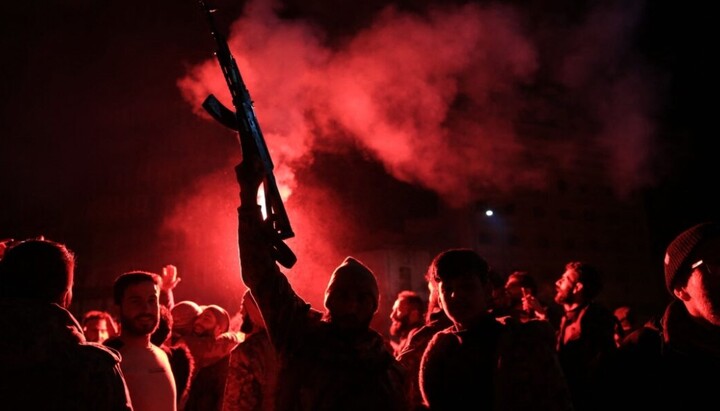
Illustrative photo: Greekcitytimes
Greek Orthodox Christians of the Antiochian Patriarchate living in Syria report a critical situation and plead for help, saying they feel "like prisoners" and unable to defend themselves against violence. Greekcitytimes has published a report from Syria.
Journalists shared the story of Orthodox Syrians who spoke about recent tragic events in Latakia.
Johnny S., a 48-year-old resident of Latakia, recounted how an armed group shot his cousin and his cousin's 20-year-old son. He and his friends, risking their lives, found the courage to leave their home – where they had been confined since the atrocities began on March 6 – to retrieve the bodies for burial. Prior to that, they only ventured out to fetch water and food, while electricity had been unavailable for about a week.
In another village near the city, militants killed the brother of Johnny’s fiancée, who was also Orthodox.
“The situation is tragic; we live in fear, we are in danger, and we lack even the most basic necessities. I am sad, scared, and angry,” said Johnny S., who works in IT. His name has not been published for security reasons, as Johnny is currently trying to hide his faith.
Eli H., a 26-year-old from Marmarita, has reached out to the Greek government for help. He fears that violence will spread to other provinces and calls the events a “genocide”,
"I am a proud Greek Orthodox and will not renounce my identity, even if it means death," Eli H. declared.
Christians say they want to leave Syria, but it is nearly impossible: there is no safe passage, Europe no longer accepts refugees, and obtaining visas to other countries is extremely difficult.
Rafi Issa, president of the Association of Greeks of the Levant, confirms that the situation in Syria is chaotic, especially outside Damascus. According to him, people "just lock themselves in their homes and wait," with no means of defending themselves.
“These are jihadists and they are currently slaughtering people. It seems that they got permission, perhaps from the state,” said Habib Salouma, former president of the Greek community in Damascus.
With fighting raging about 240 kilometers west of Damascus, Christians live in fear of the unknown. Salouma believes that "there was more freedom under Assad." However, the situation in Damascus appears more controlled. "The government forces have not bothered the residents," he said. “There are still tanks, but the checks are more discreet, except at night, when they stop you and you may be taken out of the car,” he added.
Despite assurances from Sunni President Al-Sarra that all religious and ethnic groups would be represented in Syria’s new government, Habib Salouma believes the opposite is true.
"Those who are on the side of the president are exclusively Sunnis. There is not a single Christian in the government, and even the police and army are staffed only by Sunnis, while in Damascus alone there are about 100,000 Christians," he said.
As previously reported by the UOJ, an EU lawmaker stated that Islamists in Syria had killed 7,000 Christians and Alawites.
Read also
Met. Meletiy consecrates house of worship for UOC community in Dankivtsi
Members of the persecuted UOC Intercession parish in Dankivtsi have converted a house into a place for communal prayer and worship services.
OCU eparchy sells church center site to developer for housing
The OCU’s Volyn Eparchy sold land intended for a spiritual center to a private developer planning to build townhouses and residential buildings.
SBU names UOC priest’s wife a suspect in Cherkasy region
The SBU accused Matushka Kateryna Prykotenko of “spreading enemy propaganda” through correspondence with parishioners.
UGCC cleric calls Russian Orthodox literature dangerous for clergy
While examining the causes of divisions within the UGCC, Yustyn Boiko concluded that Russian Orthodox literature had influenced Greek Catholic clergy.
UOC will play major role in achieving peace, says Vadym Novynskyi
UOC Protodeacon Vadym Novynskyi believes the Church will help bring about reconciliation within Ukrainian society after the war ends.
Catholic media outraged by forcible conscription of Uniate cleric
The Vatican’s Apostolic Nunciature has demanded the return of a forcibly mobilized Greek Catholic cleric.