Estonian Church bishop speaks at UN about violations of believers’ rights
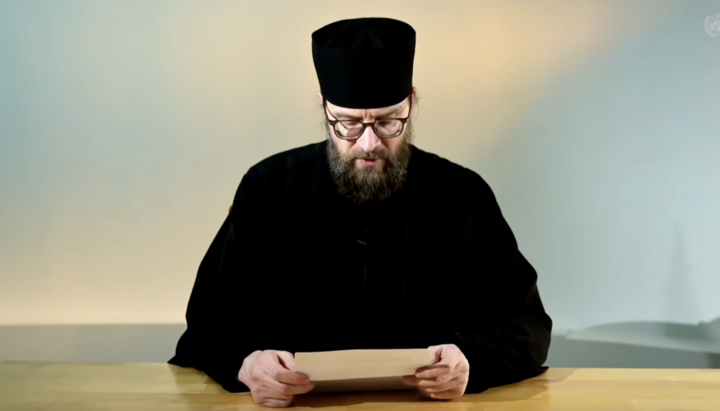
Bishop Daniil speaking at the UN. Photo: UN website
Bishop Daniil (Lepisk) of Tartu addressed the 58th session of the UN Human Rights Council in Geneva, raising concerns over discrimination against Orthodox believers of the Estonian Orthodox Church of the Moscow Patriarchate (EOC-MP).
As reported on the official website of the EOC-MP, Bishop Daniil voiced serious concerns before diplomats from UN member states, UN officials, and representatives of international human rights organizations regarding a bill proposing amendments to Estonia’s Law on Churches and Congregations.
“Currently, the Estonian parliament is reviewing a law that would prohibit us from maintaining any ties with a religious center in the Russian Federation. However, we cannot renounce our canonical connection, as it is part of our faith,” the bishop stated.
He emphasized that the proposed legislation effectively places responsibility on the Estonian Orthodox Church for the actions of religious leaders in another country, which “violates the legal principle of individual responsibility.”
“We believe the actions of the Estonian authorities contradict international law and may lead to serious consequences, fostering societal hatred and violations of human rights,” Bishop Daniil said.
According to him, the Estonian Orthodox Church plans to begin active human rights advocacy on the international stage to seek an effective legal and diplomatic response to threats against religious freedom posed by the proposed law.
The bishop’s address was supported by the international human rights alliance Church Against Xenophobia and Discrimination, as well as organizations with consultative status at the UN ECOSOC – Public Advocacy and VSI Zmogaus teisiu apsauga.
Oleg Denisov, head of Public Advocacy, stated that the planned changes to Estonian legislation “contradict international law, as they violate freedom of religion, which includes the right of believers to freely choose the legal and organizational structure of their religious community without external interference.”
“The state cannot dictate to believers the parameters or conditions for practicing their faith, nor can it prohibit or demand the severance of historically established canonical ties,” Denisov emphasized.
He also noted that his organization would support the EOC-MP through legal work to defend its interests under the UN’s special procedures, the OSCE, and other international human rights mechanisms.
Earlier, UOJ reported that an Estonian court dismissed complaints filed by the EOC-MP against the Riigikogu.
Read also
SBU told Phanar many UOC bishops would join OCU in 2018, report says
According to a Phanar representative’s account, Ukrainian security services told the Constantinople delegation that many UOC representatives were prepared to attend the OCU’s “Unification Council.” In the end, only two did.
Catholic cardinal visits Ukrainian POWs during trip to Russia
During three days of consultations in Moscow, Cardinal Matteo Zuppi discussed prospects for ending the war in Ukraine.
Ukrainians help restore Serbian Orthodox church in Paris
Orthodox Ukrainians have become regular parishioners of St. Sava Church in Paris and have taken part in its restoration.
Bulgarian Church clergy and laity oppose Phanar head’s visit
More than 2,000 clergy and laity have called for the Ecumenical Patriarch’s visit to be canceled, citing disagreement with his actions and concerns that the visit could legitimize schism.
Unknown intruders break down doors at two UOC churches in Sloviansk
Archbishop Paisiy said OCU activists are suspected of breaking into the churches in Sloviansk, and police have launched an investigation.
Sviatohirsk Lavra prays for murdered monk on 40th day after death
The brethren of the Sviatohirsk Lavra held a memorial service for murdered Monk Varsonofiy, calling on the faithful to pray for the newly departed monk.