Russia declares Easter truce
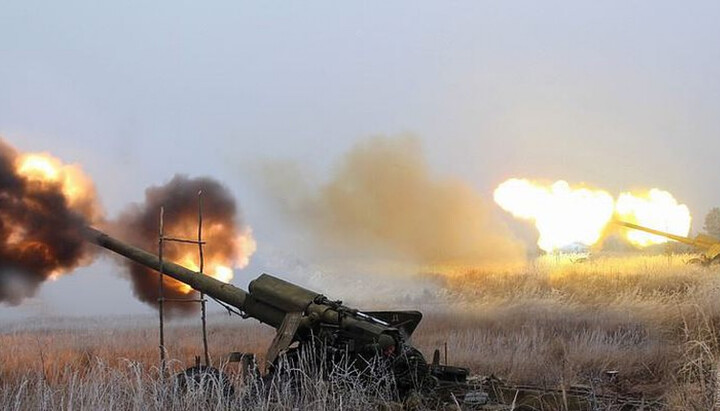
Artillery in action. Photo: Nashe Misto
Russian President Vladimir Putin has declared an Easter truce, Realnoe Vremya reports. The Russian military will suspend all combat operations from 6:00 PM on April 19 until midnight on April 21.
“Guided by humanitarian considerations, from 6:00 PM today until midnight from Sunday to Monday, the Russian side is declaring an Easter truce. I order all combat operations to cease during this period. We proceed from the assumption that the Ukrainian side will follow our example,” Putin stated, adding that Russian forces “must remain ready to repel any violations of the truce or provocations.”
As previously reported by the UOJ, a UOC church in Pokrovsk was completely destroyed as a result of shelling.
Read also
Court orders TRC to remove transgender woman from military register
A Dnipropetrovsk administrative court ruled that a TRC’s refusal to remove a transgender woman from the military register constituted discrimination.
UCCRO, WCC discuss possible OCU membership in World Council of Churches
A World Council of Churches delegation visited Kyiv to learn about the activities of Dumenko’s organization as part of its review of the OCU’s membership application.
BOC Patriarch: Bartholomew cannot be anathematized without conciliar decision
Patriarch Daniel said that no Local Orthodox Church has anathematized the Patriarch of Constantinople, warning that misguided zeal can lead people to place themselves above the Church.
Church сonflicts in Ukraine are not particularly bloody, DESS head says
Viktor Yelensky claimed that tensions between Orthodox Christians in Ukraine are "far from dramatic" and that parish transfers to the OCU generally take place without conflict.
Bulgarian Patriarch: Athos monasteries do not admit OCU clergy
The Bulgarian Primate noted that the monasteries of Iviron, Vatopedi, Hilandar, and Zograf do not admit OCU clergy but remain in communion with Patriarch Bartholomew.
Rivne Eparchy of UOC marks 290th anniversary of Bilashiv church
Metropolitan Pimen led a festive Liturgy marking the 290th anniversary of the founding of the Church of the Nativity of Theotokos in Bilashiv.