DESS states at UN: OCU creation strengthened religious freedom in Ukraine
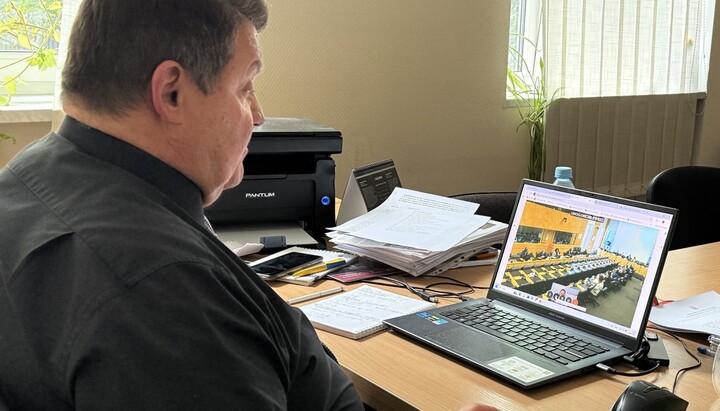
DESS Deputy Chairman Ihor Lossovsky answering questions from the UN Committee. Photo: DESS
Representatives of the State Service of Ukraine for Ethnopolitics and Freedom of Conscience (DESS) participated in the 115th session of the UN in Geneva. As reported on the DESS website, Ukrainian officials informed international human rights defenders about a "significant event" in the religious sphere of Ukraine – the establishment of the Orthodox Church of Ukraine (OCU) – a symbol of spiritual independence.
During this session, the UN Committee on the Elimination of All Forms of Racial Discrimination reviewed periodic reports from six participating countries, including Ukraine.
"Over the course of two days of the event, the Ukrainian side provided comprehensive answers to more than 110 questions from about ten speakers and committee members who showed deep interest in the situation in Ukraine and demonstrated awareness of our state's fulfillment of international obligations under the Convention," the statement said.
It is noted that the Deputy Head of the State Service of Ukraine for Ethnopolitics and Freedom of Conscience, Ihor Lossovsky, spoke online about the "problems with human rights compliance in the occupied territories," where "Crimean Tatars, Ukrainians, and others particularly suffer".
According to him, an important event in the religious sphere of Ukraine was the creation of the OCU. He claims that the emergence of this structure "has become a symbol of spiritual independence and support for religious freedom in the country".
Although the DESS website did not provide details, media reports indicated that some questions were related to violations of the rights of believers of the Ukrainian Orthodox Church.
In particular, Committee expert Chinsun Chun expressed interest regarding possible violations of the rights to freedom of thought, conscience, and religion in Ukraine in connection with the adoption of a law that actually bans the activities of the UOC.
In response to this question, Ihor Lossovsky noted that Ukraine does not consider what is happening to be a conflict but rather calls it a "bloody, existential, colonial war with Russia". According to him, the establishment of the OCU was a "revolutionary decision", as prior to this, Ukraine "did not have its own independent Orthodox Church".
"Now there is an independent church of Ukraine, as in other Orthodox Christian countries. No other activities of other churches have been banned in Ukraine," said the DESS representative, adding that the restrictions on activities only concern the ROC.
As reported by the UOJ, the UN previously stated that national security cannot be an excuse for violating the rights of believers in Ukraine.
Read also
Volodymyr-Volynskyi Eparchy marks 30 years since restoration
The Pantanassa Icon and relics of Prince Volodymyr have arrived in Kovel and will visit churches across the Volodymyr-Volynskyi Eparchy to mark the 30th anniversary of the restoration of the episcopal see.
Bukovyna faithful bring humanitarian aid to Kherson region residents
The UOC’s Chernivtsi Eparchy delivered food to Holy Spirit Cathedral in Kherson.
Ukraine must have its own faith: Poroshenko's party lays out peace terms
Poroshenko’s party European Solidarity described church policy as a matter of national sovereignty and said there can be no compromises in this area.
432 UOC churches damaged in Ukraine during war, report says
According to the Religion on Fire project, 807 religious buildings in Ukraine have been damaged or destroyed as a result of hostilities.
DESS official gives number of clergy exempt from mobilization in Ukraine
A DESS representative said the actual number of clergy exempt from mobilization is significantly lower than the number of religious organizations designated as critical.
Cabinet keeps gas prices unchanged for religious organizations
The Cabinet has fixed gas prices for religious organizations through the end of the 2026–2027 heating season.