Lviv and Ivano-Frankivsk RMAs report complete destruction of UOC in regions
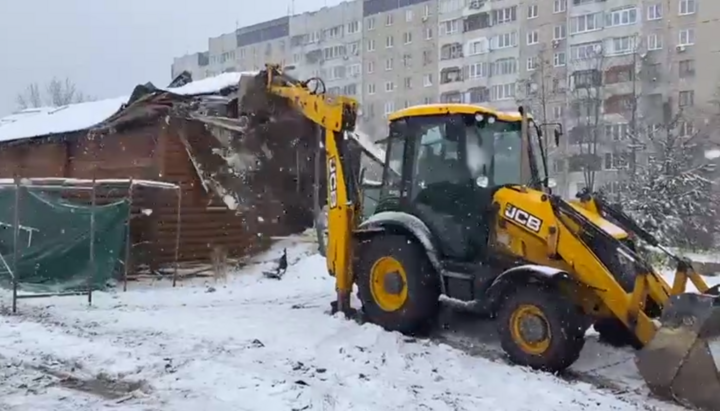
Demolition of the last UOC temple in Lviv. Photo: Kozitsky's Telegram channel
In Lviv and Ivano-Frankivsk regions, there is officially no religious community of the Ukrainian Orthodox Church (UOC). This was reported by the regional military administrations in response to a query from "Glavkom" journalists.
"The Lviv RMA was the first to report that the Moscow Church ceased to exist in the region," the resource writes.
According to the Lviv RMA, between August 20, 2024, and April 20, 2025, three UOC religious communities joined the OCU. Fourteen UOC parishes allegedly ceased their activities voluntarily.
"The Moscow Church is gone. This is the second region in Ukraine to announce a complete break with the ROC," "Glavkom" claims, referring to the Prykarpattia region.
In the Ivano-Frankivsk region, as of today, there is no UOC religious community, according to the RMA.
As reported by the UOJ, the head of the Nadvirna city community boasted about driving the UOC underground.
Read also
Met. Meletiy consecrates house of worship for UOC community in Dankivtsi
Members of the persecuted UOC Intercession parish in Dankivtsi have converted a house into a place for communal prayer and worship services.
OCU eparchy sells church center site to developer for housing
The OCU’s Volyn Eparchy sold land intended for a spiritual center to a private developer planning to build townhouses and residential buildings.
SBU names UOC priest’s wife a suspect in Cherkasy region
The SBU accused Matushka Kateryna Prykotenko of “spreading enemy propaganda” through correspondence with parishioners.
UGCC cleric calls Russian Orthodox literature dangerous for clergy
While examining the causes of divisions within the UGCC, Yustyn Boiko concluded that Russian Orthodox literature had influenced Greek Catholic clergy.
UOC will play major role in achieving peace, says Vadym Novynskyi
UOC Protodeacon Vadym Novynskyi believes the Church will help bring about reconciliation within Ukrainian society after the war ends.
Catholic media outraged by forcible conscription of Uniate cleric
The Vatican’s Apostolic Nunciature has demanded the return of a forcibly mobilized Greek Catholic cleric.