Russian Exarchate of Africa plans to serve liturgy in four languages
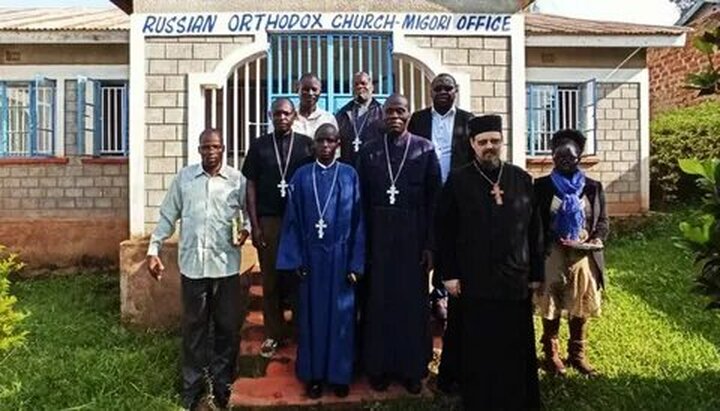
Priests of the African Exarchate will serve the liturgy in the language spoken by their parishioners. Photo: Metropolitan Leonid’s Telegram channel
Entering new countries, the ROC sets itself one of the tasks not to break the foundations and traditions of people. Therefore, one must be very careful about the language in which the clergy will serve and preach. The first liturgy that took place in Africa was served in Swahili, the Exarch of the Russian Orthodox Church in Africa said during an online conference on the protection of Christians in Africa and the Middle East.
“There was raw material for the liturgy of St. John Chrysostom in Swahili, and in a month our translators and missionaries managed to supplement it in order to use it, and at the liturgy in Kenya, our believers prayed according to this rite,” Vladyka Leonid said.
The main languages spoken on the continent are English, French, Swahili and, in Northern Africa, Arabic. In all languages, according to Metropolitan Leonid, services will be performed depending on the linguistic affiliation of a particular country. Translators are already working to ensure that all the necessary prayers and rites are translated into these languages.
“People with whom you work, prepare for baptism, for the perception of Orthodoxy, should be comfortable communicating with you. And this is the beginning of great work on the preparation of pastors,” said Vladyka.
As reported, on January 30, with the blessing of Metropolitan Leonid of Klin, at the Church of the Holy Great Martyr Panteleimon in the village of Ebuayangu, 24 African priests of the ROC from the Kakamega and Vihiga districts celebrated the first Divine Liturgy.
Entering new countries, the ROC sets itself one of the tasks not to break the foundations and traditions of people. Therefore, one must be very careful about the language in which the clergy will serve and preach. The first liturgy that took place in Africa was served in Swahili, the Exarch of the Russian Orthodox Church in Africa said during an online conference on the protection of Christians in Africa and the Middle East.
“There was raw material for the liturgy of St. John Chrysostom in Swahili, and in a month our translators and missionaries managed to supplement it in order to use it, and at the liturgy in Kenya, our believers prayed according to this rite,” Vladyka Leonid said.
The main languages spoken on the continent are English, French, Swahili and, in Northern Africa, Arabic. In all languages, according to Metropolitan Leonid, services will be performed depending on the linguistic affiliation of a particular country. Translators are already working to ensure that all the necessary prayers and rites are translated into these languages.
“People with whom you work, prepare for baptism, for the perception of Orthodoxy, should be comfortable communicating with you. And this is the beginning of great work on the preparation of pastors,” said Vladyka.
As reported, on January 30, with the blessing of Metropolitan Leonid of Klin, at the Church of the Holy Great Martyr Panteleimon in the village of Ebuayangu, 24 African priests of the ROC from the Kakamega and Vihiga districts celebrated the first Divine Liturgy.
Read also
SBU told Phanar many UOC bishops would join OCU in 2018, report says
According to a Phanar representative’s account, Ukrainian security services told the Constantinople delegation that many UOC representatives were prepared to attend the OCU’s “Unification Council.” In the end, only two did.
Catholic cardinal visits Ukrainian POWs during trip to Russia
During three days of consultations in Moscow, Cardinal Matteo Zuppi discussed prospects for ending the war in Ukraine.
Ukrainians help restore Serbian Orthodox church in Paris
Orthodox Ukrainians have become regular parishioners of St. Sava Church in Paris and have taken part in its restoration.
Bulgarian Church clergy and laity oppose Phanar head’s visit
More than 2,000 clergy and laity have called for the Ecumenical Patriarch’s visit to be canceled, citing disagreement with his actions and concerns that the visit could legitimize schism.
Unknown intruders break down doors at two UOC churches in Sloviansk
Archbishop Paisiy said OCU activists are suspected of breaking into the churches in Sloviansk, and police have launched an investigation.
Sviatohirsk Lavra prays for murdered monk on 40th day after death
The brethren of the Sviatohirsk Lavra held a memorial service for murdered Monk Varsonofiy, calling on the faithful to pray for the newly departed monk.