UOC priest: OCU is turning into "ROC 2.0" in its relations with government
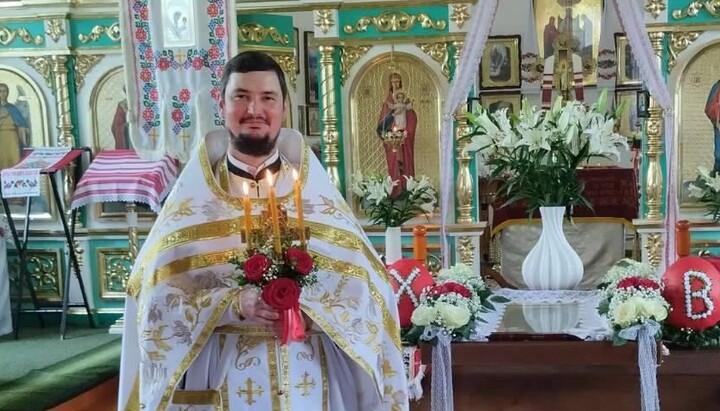
Priest Rostyslav Khrubchyk. Photo: Facebook of Khrubchyk
In an interview with the YouTube channel Viche, Father Rostyslav, the rector of St. Michael's Church in the village of Sedlyshche, stated that the OCU (Orthodox Church of Ukraine) is becoming a tool in the hands of the authorities, mirroring the path of the Russian Orthodox Church (ROC).
According to Father Rostyslav, the current situation is fundamentally different from previous attempts to unite Ukrainian Orthodoxy. He recalled the events of 2008 when President Viktor Yushchenko tried to organize a unification council with the participation of Patriarch Bartholomew. However, at that time, the authorities did not pressure the non-canonical UOC-KP (Ukrainian Orthodox Church – Kyiv Patriarchate) and UAOC (Ukrainian Autocephalous Orthodox Church).
The situation changed after the OCU received the Tomos of Autocephaly. "When Patriarch Bartholomew granted the Tomos to the OCU, a tandem began to operate, which from the outside looks not just like the creation of the Orthodox Church of Ukraine, but as a direct struggle against the UOC as a structure," Khrubchyk noted.
The priest is convinced that accusations of mass collaborationism against the UOC are unfounded. "Out of 9–10 thousand priests, you can't even find a dozen proven cases of collaborationism. Meanwhile, many UOC priests actively volunteer and serve in the ranks of the Armed Forces of Ukraine," he stated.
The priest expressed concern that "all the pressure is aimed simply at destroying the UOC," and the OCU supports this. In his opinion, the leadership of the OCU does not understand the danger of aligning itself too closely with the authorities.
"I am simply amazed that the leadership of the Orthodox Church of Ukraine still does not understand: the state is using them and will turn them into what Putin's regime has done with the ROC. I am convinced of this: if they don't wake up, there will be ROC 2.0," the priest emphasized.
He cited the destruction of the Greek Catholic Church by the Soviet authorities as an example and recalled what it led to: "In the '90s, even before the '90s, the spring that was compressed finally snapped back, and all the pain, anger, and aggression of the Greek Catholic faithful spilled out on whom? On those who occupied their churches at that time, or on those whose churches they wanted to claim."
"And today, there are not just cases of abuse, but criminal abuse of power, authority, and the impunity of officials and representatives of the OCU. This only deepens the schism and division between the UOC and the OCU," Khrubchyk concluded.
Earlier, the UOJ reported that, according to a cleric of Constantinople, violence is being committed against the Church in Ukraine.
Read also
Shevchuk thanks Catholic cardinal for visit to Russia
The UGCC head called Catholic Cardinal Matteo Zuppi’s visit to Ukrainian prisoners held in Russia an extremely important step.
‘Won’t find a girl better than you’: UGCC clergy dance on church porch
In Ternopil, UGCC clergy danced to a wedding song on the steps of a church and tossed candy into the crowd.
‘This is not how freedom is done’: Met. Theodosiy on secret Phanar report
The Cherkasy hierarch said the Constantinople cleric’s report on the 2018 “council” shows that the fate of “autocephaly” was determined not by the canons but by the authorities and security services.
UOC lawyer urges police to prevent provocations at upcoming court hearing
The next court hearing in the case seeking the dissolution of the UOC Kyiv Metropolia is scheduled for October 7.
UOC hierarch consecrates new bell tower at church in Behendiatska Pastil
In Transcarpathia, a vicar bishop of the Mukachevo Eparchy celebrated the Liturgy and then performed the rite of consecration of the new bell tower.
Metropolitan Onuphry calls for prayers to Mother of God for peace in Ukraine
On the feast day of the “She Who Is Quick to Hear” icon, the UOC Primate spoke of the Mother of God’s maternal care and urged the faithful to live by the laws of holiness and love.