Cabinet approves procedure for checking UOC communities' ties to ROC
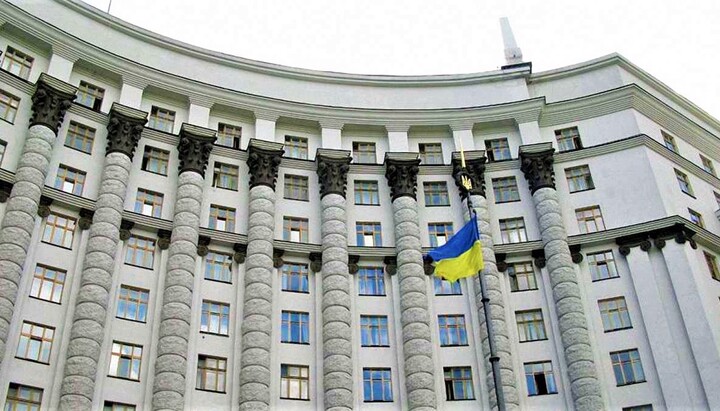
Cabinet of Ministers of Ukraine. Photo: open sources
On May 9, 2025, the Cabinet of Ministers of Ukraine approved the procedure for conducting investigations into religious organizations to determine their affiliation with foreign religious bodies whose activities are banned in Ukraine. Resolution No. 543 was signed by Prime Minister Denys Shmyhal.
According to the document, DESS is authorized to conduct investigations of religious organizations both on its own initiative and upon requests from government bodies, local authorities, civil associations, and other individuals.
The investigations aim to identify any of seven specific indicators of affiliation between the Ukrainian Orthodox Church (UOC) and the Russian Orthodox Church (ROC), as outlined in Part Two of Article 51 of the Law of Ukraine “On Freedom of Conscience and Religious Organizations.”
As part of the investigation, DESS may request information from state institutions, use data from public registries, involve religious studies experts, and conduct interviews with clergy – with the right to make audio and video recordings. The expert analysis may last up to 60 days.
Based on the findings, DESS will issue an official order stating either that signs of affiliation with the ROC have been found, or that no such signs are present.
This procedure effectively initiates the mechanism for investigating UOC religious organizations for potential ties to the ROC, whose activity may be banned in Ukraine under the Law “On the Protection of the Constitutional Order in the Sphere of Religious Organizations.”
The order in which organizations are investigated will be determined by DESS, taking into account the type of religious organization and its position within the hierarchical structure of the religious association. Notice of each investigation will be published on the official DESS website no later than one business day before it begins.
Earlier, the UOJ analyzed why rectors of UOC communities should avoid sending letters to Moscow.
Read also
SBU names UOC priest’s wife a suspect in Cherkasy region
The SBU accused Matushka Kateryna Prykotenko of “spreading enemy propaganda” through correspondence with parishioners.
UGCC cleric calls Russian Orthodox literature dangerous for clergy
While examining the causes of divisions within the UGCC, Yustyn Boiko concluded that Russian Orthodox literature had influenced Greek Catholic clergy.
UOC will play major role in achieving peace, says Vadym Novynskyi
UOC Protodeacon Vadym Novynskyi believes the Church will help bring about reconciliation within Ukrainian society after the war ends.
Catholic media outraged by forcible conscription of Uniate cleric
The Vatican’s Apostolic Nunciature has demanded the return of a forcibly mobilized Greek Catholic cleric.
Rivne court fines man for criticizing parish's "transfer" to OCU
A resident of the Rivne region was convicted over Facebook posts criticizing the “transfer” of a religious community in the village of Butove to the OCU.
Novynskyi: I quoted the Gospel to Zelensky on first day of war
The former Ukrainian MP said he advised Davyd Arakhamia to begin negotiations with Russia in the first days of the full-scale war and later spoke with Volodymyr Zelensky.