The Church celebrates the Feast of the Apostle John the Theologian
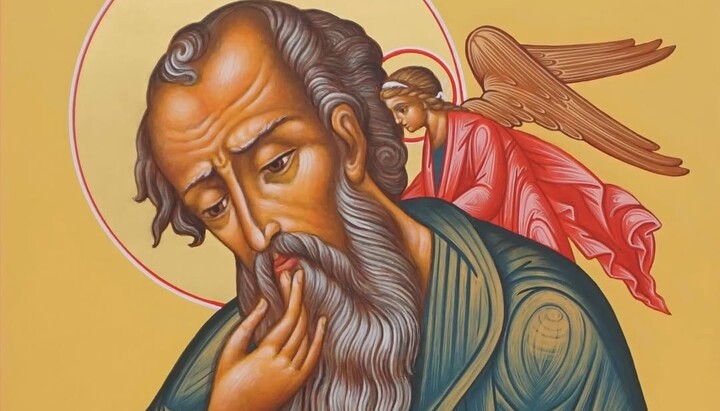
Icon of the Apostle John the Theologian. Photo: open sources
On May 21 (May 8 according to the Julian calendar), the Church holds a solemn service in honor of Saint John the Apostle and Evangelist – the beloved disciple of Christ who was entrusted with a special mission in the history of Christianity.
John the Theologian occupies a unique place in Christian tradition as the author of one of the four canonical Gospels, three universal epistles, and the Book of Revelation (the Apocalypse). His theological works are of fundamental importance to Christian doctrine and have had a profound impact on the development of dogmatics.
The Gospel of John stands apart from the Synoptic Gospels (those of Matthew, Mark, and Luke) in the depth of its theological reflection on the earthly life of Christ. It is John who emphasizes the divine nature of the Savior, beginning his Gospel with the words: "In the beginning was the Word, and the Word was with God, and the Word was God." These lines became the cornerstone of Christian teaching on the Incarnation.
In his epistles, the Apostle John develops the teaching of love as the foundation of Christian life. His famous words "God is love" have served as a spiritual guidepost for millions of believers through the centuries. The Church especially honors him as a preacher of love and mercy and a mentor in the spiritual life.
The Book of Revelation, written by John near the end of his life while exiled on the island of Patmos, contains prophetic visions concerning the destiny of the world and the Church. This apocalyptic text, rich in symbolism, remains one of the most profound and mysterious parts of Holy Scripture.
According to tradition, John was the only one of the twelve apostles who did not suffer a martyr’s death, living to an advanced old age – around 105 years. Patristic tradition recounts that even in old age, he would continually say, “Children, love one another!”
A distinctive feature of the Church’s veneration of the Apostle John is the unique nature of his departure from earthly life. When his disciples came to the place of his burial, they found no body of the saint.
Earlier, the UOJ explained why the Apostle John is called the Apostle of Love.
Read also
Sumy Eparchy venerares miraculous Korsun-Shpylivka Theotokos Icon
Celebrations honoring the Mother of God’s icon known as the “Restorer of Sight” were held at Sumy Cathedral and concluded with a car procession around the city.
Receding Dniester in Khmelnytskyi region exposes foundation of flooded church
The foundation of St. John the Theologian Church, submerged during the construction of a hydroelectric power plant, has emerged for the first time in 45 years.
Medieval сhurch сrumbles as Culture Ministry сites missing agreement
The 14th–15th-century St. Nicholas Church in Chesnyky, Ivano-Frankivsk Region, is falling into disrepair.
Poland сondemns Lviv Regional Council's decision to declare 2007 year of UPA
Polish Prime Minister Donald Tusk says the Lviv Regional Council's decision to dedicate 2027 to the UPA and Roman Shukhevych is harmful to Ukraine.
OCU seeks court recognition of ownership of seized Cherkasy cathedral
The Cherkasy Regional Commercial Court will hear an OCU lawsuit seeking ownership of St. Michael's Cathedral, which was seized from UOC believers.
Lithuanian bishop: Ukraine is no model for believers' rights
Vicar of Vilnius Diocese voices concern over attempts to import Ukraine's religious conflict into Lithuania.