On Russia’s “defense” of the UOC
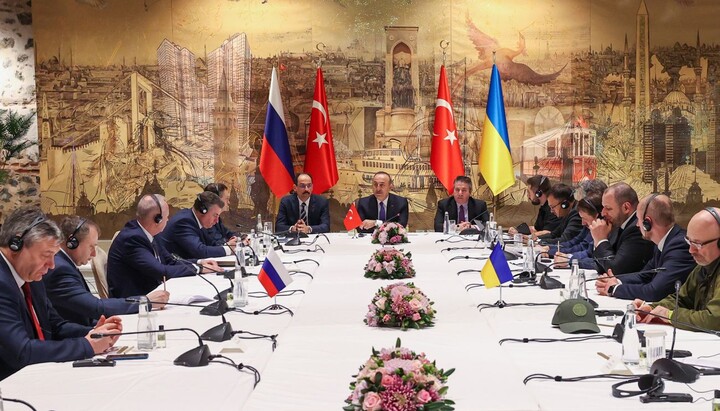
Ukraine–Russia negotiations in Turkey. Photo: GettyImages
After the latest round of Ukraine–Russia negotiations, many figures from the OCU and Ukrainian authorities mocked and twisted the Russian memorandum, where point 11 called for the lifting of restrictions against the Ukrainian Orthodox Church.
Their logic is blunt: “If Moscow mentions the UOC, then the UOC must be an arm of Moscow – and thus an enemy.”
Let us be clear: the document does not call the UOC a Russian Church. But in the very first point, it does state explicitly that Russia considers Crimea, Luhansk, Donetsk, Kherson, and Zaporizhzhia regions to be Russian territory. So – does this mean Ukraine must now abandon those regions? Must the people who live there be stripped of Ukrainian identity and treated as outsiders?
If we follow the "church logic" of some of our fellow citizens – then yes, apparently we must.
But tell me: who benefits from that? Ukraine? Or Russia?
Since the start of the war, many Ukrainians have trapped themselves in a false, reactionary logic: that everything Russia says is a lie by default, and thus, Ukraine must do the opposite – on principle, in defiance.
That’s how we get the rewriting of our shared history, language, culture.
Russia says the SS “Galicia” Division were Nazis? Then we will glorify them.
Russia honors Tchaikovsky, Bulgakov, Gogol? Then we will ban them.
Russia celebrates Victory Day? Then we will erase it.
At this rate, if tomorrow Russia declares that water in the Dnipro is fresh, we’ll insist it’s salty.
And the campaign against the UOC fits perfectly into this tragic absurdity.
But is Ukraine really winning anything from this? Is this revenge or self-sabotage?
Who, in the end, is truly served by our war against the Church?
Read also
Who destroyed and restored Kyiv Lavra? MinCulture's video reveals the truth
The Culture Ministry’s propaganda about the Kyiv-Pechersk Lavra has inadvertently revealed the truth.
Ternopil post on Feast of Intercession: Has calendar reformn failed?
A significant number of believers have rejected the new church calendar introduced by the OCU and UGCC with government support.
Shoulder straps or a cassock: who writes the script for UOC "fighters"?
Everything indicates that both Veliar and Pshenychny are ordinary performers of someone else's script. There is only one question – does the scriptwriter wear shoulder straps or a cassock?
Why is it legal to kill a person before birth but not after?
Children are the most privileged members of society. Yet that same society officially permits children to be killed – and on a massive scale.
Honoring the Bolsheviks’ successors at Kyiv Lavra
It was under the Reserve that the relics of the saints were desecrated, Lavra churches were turned into an atheism museum, and toilets were installed in sanctuaries.
"Degenerates" and "stupid animals": anti-UOC activists turn on children
Future historians will wonder how a vast country’s information agenda could have been shaped for so long by people so petty, vicious, and utterly contemptible.