
The devolution of Metropolitan Simeon
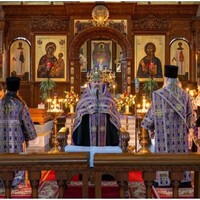
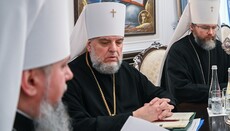
According to Shostatsky, “we know that where the majority is, there is the truth – not where the minority is.”
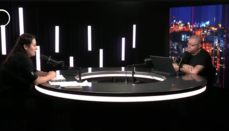
Former UOC Metropolitan Simeon (Shostatsky), speaking on Khmelnytskyi television, shared his reflections on the relationship between the UOC and the OCU. And his theses are so striking that we decided they deserve to be highlighted.
1. “If you are so pure and righteous – why cling to your churches?”
Speaking about the conflicts surrounding “transfers” into the OCU, Shostatsky reproaches UOC faithful and clergy alike: why, he asks, do you even try to defend your churches?
“If you are so righteous and keep saying that we are uncanonical, graceless, that we have lost the purity of the faith, while you are so white and fluffy – then please… step aside, and pray wherever you want,” says the former metropolitan.
In plain terms, Shostatsky is telling UOC believers to walk away from their own church because, supposedly, they are the real prayerful ones and walls should not matter to them. In doing so, he tacitly sets them against his present flock. Of course, the current OCU hierarch is trying to sound ironic – but the effect is weak and unconvincing. As everyone knows, every joke contains only a fraction of a joke. The rest is truth.
2. Shostatsky insists that anyone living in a given locality has the right to vote on behalf of a church community, even if they come to church once a year – or never at all. Such people, he says, may “change completely tomorrow,” and therefore “have the same right as those who come every Sunday.” Speaking of them, he even invokes “examples from the Gospel,” apparently hinting at the Good Thief.
First, this position flatly contradicts the Law on Freedom of Conscience, under which a parish meeting must act in accordance with the parish statute. And the statute states clearly that only those who regularly participate in the services, the sacraments, and the life of the parish may determine its future.
Second, the metropolitan is in effect advocating the expulsion of the actual community and its replacement by casual drop-ins who “might change someday.” But let us ask the obvious question: what are the real chances of such a transformation? And if tomorrow they keep coming only at Pascha, just as they do today, who exactly will sustain the parish? The answer seems self-evident.
3. Shostatsky stresses that at meetings on “transfer,” the genuine UOC parish almost always ends up in the minority. And his next thesis is perhaps the most jarring of all.
In his words, “we know that where the majority is, there is the truth – not where the minority is.” Which immediately raises the question: who exactly are these “we”? Because Holy Scripture says precisely the opposite. The majority is no measure of truth.
“Fear not, little flock, for it is your Father’s good pleasure to give you the kingdom” (Luke 12:32).
“Many are called, but few are chosen” (Matthew 22:14).
“Wide is the gate and broad is the way that leads to destruction, and many go in by it; because narrow is the gate and difficult is the way which leads to life, and few find it” (Matthew 7:13–14).
One might also recall the example of Mark of Ephesus, who alone among the bishops refused to sign union with Rome at the Council of Florence.
Seven years have passed since Metropolitan Simeon left for the OCU. It may not seem like much time. Yet the changes in the hierarch are unmistakable.
“Bad company corrupts good morals,” the Apostle Paul warned. It would be hard to put it more precisely.