Rwanda and Ukraine: How far is too far?
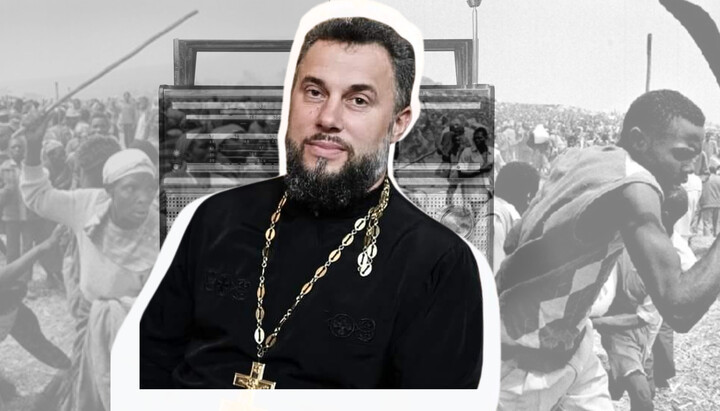
Hryshchuk calls for the physical extermination of UOC believers. Photo: UOJ
Many have heard about the genocide in Rwanda in 1994, when in the span of just three months, members of one ethnic group – the Hutu – killed over a million people from another group, the Tutsi. It’s well known that these killings were backed by the government and coordinated in part by a radio station called “Radio Mille Collines.”
To this day, people struggle to comprehend how neighbors and friends could suddenly turn into monsters – raping, torturing, and murdering en masse.
The American film Hotel Rwanda shows how it all unfolded. That the Tutsi and Hutu were nearly indistinguishable. That the massacre was deliberately engineered. That it was ignited by a chilling signal phrase: “Cut down the tall trees.”
Paradoxically, Rwanda was an overwhelmingly Christian nation. Over 93% of the population identified as Catholic. And yet, most of the killings took place in churches where the victims sought refuge. Even more shocking, some of the clergy – Hutu priests – encouraged the slaughter, claiming that the Tutsi were not human, not made in the image of God, but vermin: dogs, hyenas, cockroaches, lice. This was no accident: it is much easier to kill a cockroach than a person.
You may think such horror could happen only in Africa, that it’s unthinkable in a civilized country like Ukraine. But take a look at the public statements of OCU cleric Roman Hryshchuk.
After the failed assault on the UOC Cathedral in Chernivtsi, Hryshchuk posted several disturbing messages, in which he refers to UOC parishioners not as people, but as “zombies.” In fact, he calls for their extermination. Implicitly, not openly – at least not yet.
He shared a clip from the film World War Z, showing an army mowing down a crowd of zombies with machine guns, and captioned it: “A short summary of what happened yesterday near the Holy Spirit Cathedral in Chernivtsi. We are still too tolerant toward this Moscow Patriarchate sect. It should be like in the video.”
In the same clip, Hryshchuk replaced the original audio with a speech by Metropolitan Meletiy expressing gratitude to the parishioners who defended the cathedral. There is no doubt about who he meant. Hryshchuk, like Rwanda broadcasters, is effectively saying: “Cut down the tall trees.”
Before the Tutsi were exterminated in Rwanda, they were called hyenas and cockroaches. Today in Ukraine, faithful Christians are branded as “zombies,” and there are open calls to shoot them down. And this is not just rhetoric – UOC priests are brutally beaten and maimed by members of the OCU. Faithful Christians lie bloodied, churches stormed, hatred preached from the pulpit.
How far is too far?
How long until the unthinkable becomes inevitable?
Are you still so sure Rwanda cannot reincarnate – here, now, in Ukraine?
Read also
Ternopil post on Feast of Intercession: Has calendar reformn failed?
A significant number of believers have rejected the new church calendar introduced by the OCU and UGCC with government support.
Shoulder straps or a cassock: who writes the script for UOC "fighters"?
Everything indicates that both Veliar and Pshenychny are ordinary performers of someone else's script. There is only one question – does the scriptwriter wear shoulder straps or a cassock?
Why is it legal to kill a person before birth but not after?
Children are the most privileged members of society. Yet that same society officially permits children to be killed – and on a massive scale.
Honoring the Bolsheviks’ successors at Kyiv Lavra
It was under the Reserve that the relics of the saints were desecrated, Lavra churches were turned into an atheism museum, and toilets were installed in sanctuaries.
"Degenerates" and "stupid animals": anti-UOC activists turn on children
Future historians will wonder how a vast country’s information agenda could have been shaped for so long by people so petty, vicious, and utterly contemptible.
Zelensky sees murder of Polish priest but not of Sviatohirsk monk
Why does Zelensky react so emotionally and swiftly to the murder of a Catholic cleric while remaining completely silent about the murder of an Orthodox monk?