Bulgarian Patriarch: Athonite monasteries no longer receive OCU
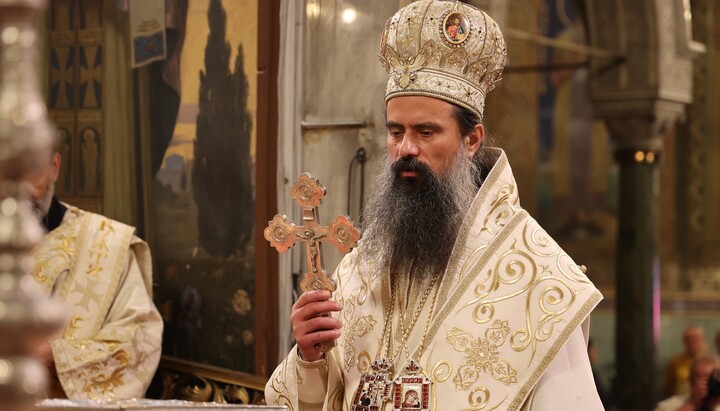
Patriarch Daniil. Photo: Bulgarian Church press service
Violence during church seizures and the beating of priests have led those Athonite monasteries that once received representatives of Epiphanius to change their stance toward the OCU. Patriarch Daniil said this in an interview with national television, the UOJ in Bulgaria reports.
“At first, the Athonite monasteries received clergy from the OCU, but now they don’t,” said the head of the Bulgarian Orthodox Church.
According to Patriarch Daniil, the change in the position of the Athonite monasteries came from observing the OCU’s methods. “They see when violence is used to seize churches, when priests are beaten, when their churches (taken from the UOC) stand empty,” he explained.
The Bulgarian Patriarch also pointed out the paradoxical situation with the Kyiv-Pechersk Lavra: “The state handed over the Kyiv-Pechersk Lavra to this church structure – and it stands empty. They hold cooking shows there.”
Earlier, the UOJ reported that Patriarch Daniil said the problem of the OCU would eventually be resolved in Orthodoxy, as all the Churches come to see the true nature of this structure.
Read also
432 UOC churches damaged in Ukraine during war, report says
According to the Religion on Fire project, 807 religious buildings in Ukraine have been damaged or destroyed as a result of hostilities.
DESS official gives number of clergy exempt from mobilization in Ukraine
A DESS representative said the actual number of clergy exempt from mobilization is significantly lower than the number of religious organizations designated as critical.
Cabinet keeps gas prices unchanged for religious organizations
The Cabinet has fixed gas prices for religious organizations through the end of the 2026–2027 heating season.
Concert held at seized Cherkasy cathedral
The OCU thanked the musical ensemble for choosing the Cherkasy cathedral as the venue for a Baroque music concert.
OCU activist admits breaking into UOC church in Sloviansk
Oleksandr Onyshchenko said that the OCU held its first "service" at the Seraphim Church, which had previously been broken into by forcing the locks and doors.
Archimandrite Ioustinos, longtime keeper of Jacob's Well, dies in Jordan
Archimandrite Ioustinos (Mamallos), the keeper of Jacob's Well in Nablus, has died after a prolonged illness.