Yelensky discusses religious freedom in Ukraine with Kellogg
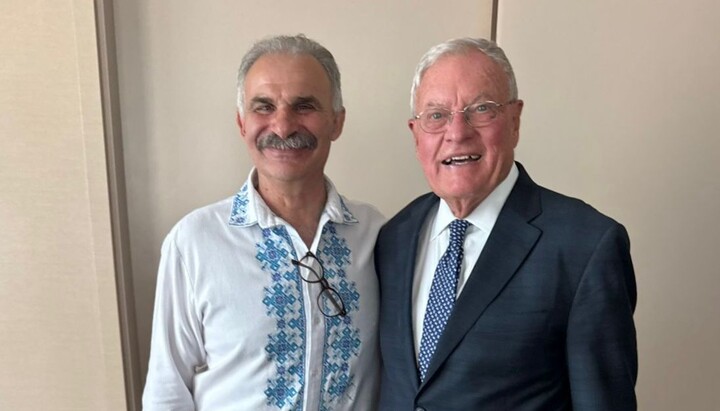
Yelensky and Kellogg. Photo: State Service for Ethnopolitics press service
On July 15, 2025, a meeting took place between U.S. Special Representative Keith Kellogg and DESS head V. Yelensky, according to the State Service for Ethnopolitics press service.
“The discussion covered the religious situation in Ukraine, Europe, and the world, the state of church–state relations in Ukraine, as well as the contribution of churches and religious communities to the spiritual and humanitarian support of the population and the strengthening of the country’s defense capability,” the statement said.
DESS reported that Kellogg and Yelensky “noted the need for global resistance to the axis of evil formed by the world’s most brutal persecutors of religious freedom, who seek to spread repressive practices to all regions of the planet.”
Whether the participants discussed the destruction of the UOC by the Ukrainian authorities is not mentioned in the text.
Earlier, the UOJ reported that, according to Yelensky, the destruction of the UOC cannot be considered a violation of religious freedom.
Read also
Ecumenism leads to religion of Antichrist, U.S. theologian says
Theologian Fr. Peter Heers described ecumenism as the greatest temptation of the last days and a heresy concerning the nature of the Church.
Kyiv Theological Academy opens exhibition marking Lavra's 975th anniversary
The Kyiv Theological Academy and Seminary presented ancient icons, early printed books, archival documents, and other exhibits marking the 975th anniversary of the Kyiv-Pechersk Lavra's founding.
Cherkasy hospital evicts UOC from prayer space over refusal to join OCU
The administration of Cherkasy City Hospital No. 3 removed a UOC community from its prayer space after the rector refused to transfer to the OCU.
Priest: Those deferring to Patriarch Bartholomew to back OCU are papists
Fr. Peter Heers says no patriarch has the authority to make decisions unilaterally on behalf of the entire Church.
26 historic churches digitized in Rivne region
Researchers in the Rivne region have digitized 26 historic churches to preserve their authentic appearance.
UOC Chancellor explains why state persecutes Church
Metropolitan Anthony explained the reasons behind government pressure on the Church, drawing on the history of the Seventh Ecumenical Council.