A dialogue with Elder Joseph – “Prayer is a craft”
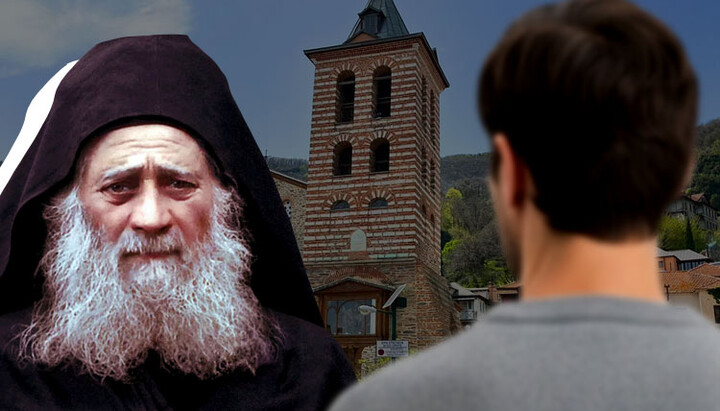
Our first interlocutor is Elder Joseph the Hesychast. Photo: UOJ
Every believer – regardless of age or degree of church involvement – hungers and thirsts for spiritual nourishment, something we hope to receive from the lips of a spiritual guide. But what are we to do when we clearly see that true eldership has become scarce in our times?
Some may grow disillusioned and leave the Church. Others begin building a spiritual life based on their own – often mistaken – assumptions. Only a few – those who truly value spiritual growth – follow the wise counsel of St. Ignatius (Brianchaninov):
“Make the thoughts and spirit of the holy fathers your own by reading their writings. The holy fathers have reached the goal – salvation. You will reach it too. United in thought and soul with the fathers, you will be saved.”
We are beginning a new series titled “Dialogues with Saints and Elders.” To better understand the spirit of patristic teaching, we will draw near to the wisdom of great spiritual fathers by entering into dialogue with them through their writings. These conversations – through books and letters – we hope will be edifying and beneficial.
Our first guide on this path is Venerable Elder Joseph the Hesychast. His teachings are an invaluable treasure of spiritual wisdom for anyone seeking the path to Christ.
A theologian without a theology degree
We learn about the life of this Athonite ascetic from his close disciple – Elder Ephraim of Philotheou. His book “My Life with Elder Joseph” introduced the world to this remarkable 20th-century monk – Joseph – who was called “the Hesychast” (the Silent One) for his mastery of the Jesus Prayer.
Archimandrite Ephraim notes that Elder Joseph, from a worldly perspective, was poorly educated – having completed only two grades of primary school.
“He was profoundly wise in divine matters, a man taught by God. The Elder never studied theology, yet he was a deep theologian. The university of the desert taught him that which we need most – heavenly things.”
At the age of 24, Joseph gave away all his possessions to the poor and went to struggle on Mount Athos. Growing spiritually in prayer and silence, Elder Joseph later became the founder of a new generation of Athonite monasticism. His disciples revived the spiritual life in six of the twenty Athonite monasteries – and in many monastic communities beyond the Holy Mountain.
Elder Joseph left behind a large number of letters to his spiritual children – monks and laypeople, priests and abbesses. For each one he found the right words and counsel, now gathered in the books “Expression of Monastic Experience” and “Experiences of Divine Grace.”
So let us begin our dialogue with the Elder.
Prayer is a craft, not magic
“How should I pray?” – believers often ask this question of priests or search online hoping to find an easy method. It is often more comfortable to receive a “task” in the form of a set prayer rule and be content with reading it regularly. But once that “task” is done, questions may arise in the mind: “What was I just doing?” “What’s the purpose of this ‘reading through’?” “Was I even praying at all?”
Elder Joseph warns against such a mechanical approach, which more resembles a magical ritual than a conscious conversation with God. For him, prayer is labor – or as they say on Athos, praxis (πρᾶξις).
“The Jesus Prayer for me is like a craft for any other man – and I have labored at it for more than thirty-six years,” writes the Elder.
Sadly, we rarely approach prayer with true diligence. In the spiritual life, two extremes are often encountered – either praying sporadically, when the mood arises (which is rare), or reducing prayer to a formal “reading through” of a rule. Elder Joseph, referring to the Apostle Paul’s exhortation (1 Thess. 5:17), speaks of prayer as continual labor.
“It requires struggle – standing, sitting. When you’re tired, sit down. Then rise again so that sleep does not overcome you. This is called ‘praxis,’” instructs the Elder.
Such practice is, of course, not fully accessible to laypeople – but that does not negate the need to compel ourselves to frequently invoke the name of God, who saves us from daily temptations.
The fruits of prayer – love, grace, and contrition
To understand how fruitful our prayer labor is, it is important to evaluate its results. Monotonous reading, at best, leads nowhere – at worst, it may plunge the soul into despondency. To avoid this, Elder Joseph advises watching the inner feelings that arise during our conversation with God.
“When you rise and pray, … show compassion and mercy – then God will love you. And then you will love Him. He loves first and pours out His grace,” says the Elder.
Thus, the first fruit of right prayer is active love for God and neighbor. The second is the grace of God, given in response to our effort. The Fathers call this gift theoria (θεωρία) – contemplation.
But what is the most precious gift for the one who prays? The Elder says it is contrition (κατάνυξις). This blessed state must be distinguished from delusion, when one imagines oneself to be a perfect man of prayer. Contrition always keeps the soul sober – it does not let one forget one’s sins, yet at the same time, it inspires hope in God’s mercy. Elder Joseph writes:
“Contrition comes when you reflect on how deeply you have grieved God – the One who is so kind, so sweet, so merciful, so good, so full of love, who was crucified and endured all things for our sake. Meditating on this … brings contrition.”
With that, our first conversation with Elder Joseph the Hesychast comes to an end. As a parting blessing, let us hear this exhortation from the Athonite spiritual father: “Knock directly at the door of Divine mercy – and Christ will surely open it for you. There is no other way. Love Him much – that you may receive much!”
Read also
The Time of the Soul's Ripening
Modern society has turned youth into a cult and calls old age a period of "living out one's days." The Christian view reveals the deep spiritual meaning of one's later years.
Faith is not a checker piece in a spectator sport
Arguments about faith on social media increasingly resemble no-holds-barred fights. We turn to a saint who, sixteen centuries ago, knew how to speak to those interested only in turning theology into a combat arena.
The metropolitan who fought with a pen
St. Cyprian of Kyiv was robbed, expelled, and barred from his see. He answered with letters, books, and canons – and before his death, forgave everyone.
Loneliness under one roof
Spouses can share a home for years, raise children, and faithfully attend church – yet remain strangers to each other.
The cross – the deepest healing of the human soul
Emotional exhaustion and anxiety have become a way of life. Ancient Christian tradition offers an unexpected way out – embracing one's own cross.
The Prophet Elisha and the mystery of the Bethel massacre
The story of the prophet Elisha and the two bears seems to be the harshest in the Bible. But in reality, it carries a profound theological meaning.