
The metropolitan who fought with a pen
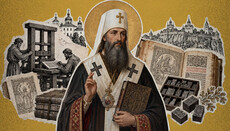
St. Cyprian of Kyiv was robbed, expelled, and barred from his see. He answered with letters, books, and canons – and before his death, forgave everyone.
On a June night in 1378, a man sat imprisoned, stripped, hungry, and shivering with cold. He had been traveling to Moscow as the lawful primate of Rus’, with the blessing of the Patriarch of Constantinople and accompanied by his retinue. Now he had neither retinue, clothes, nor horses. Grand Prince Dmitry Donskoy had ordered Metropolitan Cyprian detained, placed him in the hands of a “tormentor” named Nikifor, and driven him from his lands.
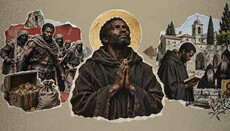
The saint later recalled: “At night they imprisoned me, naked and hungry. And to this day I suffer from that cold night.” His servants were driven out of the city “in nothing but their shirts,” without even boots or hats. Of their forty-six horses, Cyprian wrote, not one was returned unharmed.
What does a person usually do after such humiliation? Submit – or look for a chance to take revenge. Metropolitan Cyprian sat down to write a letter.
Pastor of a divided flock
He was born around 1330 in the Bulgarian city of Tarnovo, lived as an ascetic on Mount Athos, and became part of the circle surrounding Patriarch Philotheos of Constantinople. He lived in difficult times. The Metropolis of Kyiv was coming apart at the seams. Metropolitan Alexy supported Moscow, and the Lithuanian princes refused to admit him into their eparchies. Ties between the eparchies were severed, leaving the western lands without a chief pastor. The Lithuanians demanded a separate metropolitan and threatened to receive one “from the Latin Church.” By 1375, a Catholic ecclesiastical province had already been established in Halych.
On December 2, 1375, Patriarch Philotheos consecrated Cyprian as “Metropolitan of Kyiv and Lithuania,” with the understanding that the Moscow portion of the metropolis would eventually come under his omophorion as well. The new archpastor arrived in Kyiv. He later described what he found there: “The priests, the monks, and all the Christians are like livestock without a shepherd.”
The saint ransomed and freed captives, built churches, and brought to Baptism those who did not yet know Christ. In Volhynia, he wrote, the Volodymyr Eparchy had “stood without a bishop and fallen into desolation” for many years. He appointed a bishop there and restored order. When Metropolitan Alexy died in 1378, Cyprian rightfully set out for Moscow. But Moscow was not waiting for him.
A curse written in code
The letter Cyprian wrote after his expulsion was addressed to two abbots – St. Sergius of Radonezh and St. Theodore of Simonov. Historian G. M. Prokhorov, who published the letter in translation, described the text as “no longer a private letter, but a work of polemical writing.” In his words, Cyprian “turned to the pen as a weapon in the struggle.”
The metropolitan had no armed retinue to protect him, but he did have the canons in his arsenal. Deprived of any external protection, he cited the rules of the Holy Apostles and the Council of Antioch, arguing that ecclesiastical authority could not be inherited, bought, or obtained through “the power of princes.” His central principle was clear: “Princes have no right to judge hierarchs. I have a patriarch above us, and there is the Great Council.”
There is a striking detail in the manuscript at the point where the saint pronounces an anathema against the ruler.
Where the words “let them be excommunicated,” directed against the grand prince, should have appeared, there is a cipher. Writing such words openly was apparently too frightening and dangerous for the scribes.
The saint threatened anyone who tried to burn or conceal the letter with the same excommunication.
The letter ends not with complaint, but with dignity: “And I am going to Constantinople to defend myself through God, the holy patriarch, and the Great Council. They place their hopes in money and the Franks, but I place mine in God and in the justice of my cause.”
Three years later, those same abbots helped persuade the prince to invite St. Cyprian to Moscow. In 1381, he entered with honor the city from which he had once been driven out after being robbed.
The book is mightier than the sword
St. Cyprian understood that the unity of the Church rested on more than official decrees. It required common books, common prayer, and a common liturgical rule.
In 1387, already a metropolitan, he personally copied St. John Climacus’ Ladder of Divine Ascent in Constantinople. The manuscript survives to this day. In 1403, he commissioned the Lenten and Festal Triodia for the Dormition Cathedral of the Moscow Kremlin. He translated the canons of Patriarch Philotheos and composed a service to St. Peter – the earliest such service in Rus’ based on the Jerusalem Typikon. He also contributed to the compilation of the “List of Rus’ Cities, Near and Far” – an inventory of Orthodox cities throughout the Metropolis of Kyiv. On that parchment, a land divided by politics once again appeared as a single whole.
Together with Athonite scribes, the Jerusalem Typikon came to Rus’. The liturgical reform carried out under Metropolitan Cyprian’s guidance proceeded gently, though rather slowly.
Firmness without bitterness
It would be inaccurate to portray Cyprian as a gentle pacifist. He excommunicated the people of Novgorod when they refused to recognize his ecclesiastical jurisdiction, and this was followed by a war waged by the grand prince. He relied on princely power and yielded to powerful rulers when circumstances required it. He lived in a brutal age and adapted to it pragmatically.
And yet, once he had achieved his aims, he lifted the prohibitions and blessed those who had only recently been his opponents.
Even while serving as the patriarch’s envoy, he reconciled Prince Mikhail of Tver with Metropolitan Alexy. When Khan Timur advanced toward Moscow in 1395, it was at Cyprian’s suggestion that a church dedicated to the Meeting of the Lord was built on the site where the Vladimir Icon of the Mother of God was received. Thus arose a feast in Rus’ that the entire Church continues to celebrate to this day.
The final kiss
On September 12, 1406, the ailing metropolitan dictated his spiritual testament. The man who had once pronounced curses against his persecutors in cipher now bestowed “peace and blessing” upon Christians and forgave everyone who had wronged him. To Grand Prince Vasily, the son of Dmitry Donskoy, he left “peace, blessing, and a final kiss.” Four days later, on September 16 – September 29 according to the new calendar – the saint reposed in the Lord at Golenishchevo near Moscow.
Today, the Church in Ukraine once again lives under pressure from authorities that consider themselves entitled to judge bishops and determine the fate of holy sites. St. Cyprian’s example underscores that Church unity is preserved through fidelity to the canons and living prayer – and through a heart that, at the end of its earthly journey, is ready to forgive all who have wronged it, even its enemies.