Peacemaker between capitals: Why Patriarch Theophilos is going to Kyiv
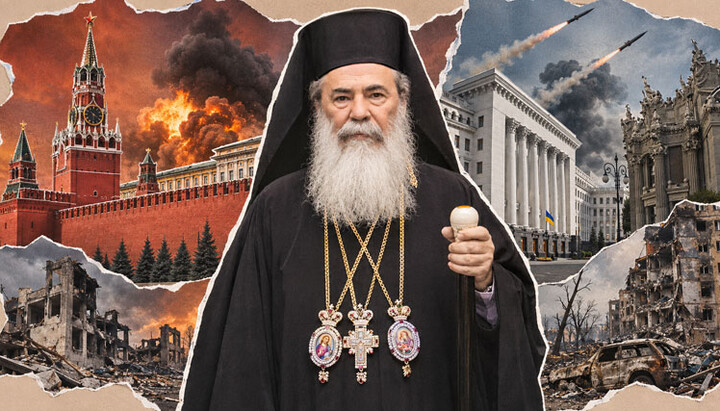
The Patriarch of Jerusalem has met with Trump and Putin, and now he is expected in Kyiv. Why might his cautious approach accomplish more than the Phanar's bold declarations?
Patriarch Theophilos III of Jerusalem has announced that he is preparing to visit Ukraine. He made the announcement shortly after his trip to Moscow, where he met with Vladimir Putin at the Kremlin on November 5. His statement was characteristically understated: no grand declarations, just a brief remark that he intended to devote the coming days to preparing for the visit and talks aimed at "bringing calm and peace to the region." The Jerusalem Patriarchate added that the trip was part of a broader international mission that began over the summer with a meeting with Donald Trump in Washington.
What does this mean? At first glance, nothing particularly new. Patriarch Theophilos presents himself as a peacemaker. But so does virtually every senior Church hierarch today, especially Patriarch Bartholomew of Constantinople. The word "peace" is constantly on the lips of Church leaders, and it would be strange if it were otherwise. What else should a Christian bishop be talking about as the war in Ukraine enters its fifth year? Yet the difference lies not in the words themselves, but in what stands behind them, whom they are addressed to, and what they might actually accomplish.
A peacemaker on one side
Patriarch Bartholomew's position is well known and has remained virtually unchanged for more than four years. Constantinople has firmly aligned itself with one side of the conflict – Ukraine and the West. Its rhetoric is unequivocal: criticism of Russia and the assignment of responsibility for the war to both the Russian state and the Russian Orthodox Church. This position is also reflected in regular phone calls and meetings with Volodymyr Zelensky, during which the Ukrainian president thanks the Patriarch for his "absolutely clear moral stance," as well as visits to Washington, where the war in Ukraine is frequently a central topic. Patriarch Bartholomew's demand is straightforward: the war must end on terms set by the Ukrainian authorities.
His position is clear and consistent. Patriarch Bartholomew does not pretend to misunderstand who started the war, nor does he hide behind diplomatic language. From an ordinary human perspective, it is difficult to find fault with his words. But the question here is different: can this position truly be called peacemaking? The author of these lines, with all due respect for the Patriarch of Constantinople and a full understanding of who attacked whom, must answer: no. And here is why.

Peacemaking is not about choosing a side, even when that side is right. Taking sides is the work of prosecutors, judges, and historians, and their roles are indispensable. But a peacemaker has a different task: finding a point at which two sides that hate each other can at least sit down at the negotiating table. For that to happen, both sides must be willing to talk to the mediator.
Patriarch Bartholomew, however, is regarded by Moscow not as a potential negotiating partner but as an adversary – a situation that developed long before 2022. Peace negotiations, after all, require two parties. Someone whom one side refuses to listen to may say all the right things, but those words will produce no results.
There is another uncomfortable reality that must be addressed. No clear-eyed observer today sees a realistic prospect of an outright Ukrainian military victory that would allow Kyiv to dictate the terms of peace. It is bitter and unjust, but that is the reality. This means that unconditional support for Kyiv, combined with unconditional condemnation of Moscow, is not in itself a path to peace. Patriarch Bartholomew cuts an admirable figure in this role: presidents thank him, members of Congress welcome him, and his moral standing in the West grows.
Unfortunately, however, such rhetoric does little in practical terms to end the war. It affirms one side's understanding of the truth without bringing either side closer to peace. In this situation, the Patriarch of Constantinople is strengthening his position in the Western world. That is his right and perhaps even his duty as the head of a Church based in Turkey and dependent on Western support. But we should call things what they are: this is the position of an ally, not a mediator.
A different path
Patriarch Theophilos takes an entirely different approach, something even his fiercest critics can recognize. He avoids harsh language toward either side. He does not speak of "aggression," but neither does he repeat the formula "special military operation." He visits one capital and then travels to another. In June, Trump received him at the White House, where the Patriarch spoke about the "ecclesiastical factor" in resolving the war and achieving peace. In November, he met with Putin at the Kremlin. Now he is preparing to visit Kyiv. In between came Athens, where Greek officials described his mission as "opening a new spiritual channel" for a settlement between Russia and Ukraine.
He has been criticized from both sides, often in remarkably similar terms. In Kyiv, critics recall that he described the war in Moscow as "the situation on the western borders" and told Putin he was praying for his health. Critics in the Russian émigré press have called him "Schröder in a cassock" and scrutinized Moscow's donations to the Holy Land. It is hardly a comfortable position for Patriarch Theophilos. Yet the very ambiguity that makes him such an easy target is also the Jerusalem Primate's greatest diplomatic asset. He can enter the Kremlin and be heard. He can enter the White House and be received. He can walk into the presidential offices on Bankova Street in Kyiv and find someone willing to talk – if only because it would be difficult to turn away a man who has already been received by Trump. Patriarch Bartholomew has no comparable opportunity, nor is he likely to acquire one. The doors of one of these capitals are closed to him, and they will remain closed for a long time.
It is worth remembering that Byzantine Church diplomacy, whose traditions the Church of Jerusalem has inherited, has always operated in much this way. It did not rely on public denunciations. It waited, maneuvered, accepted gifts from all sides, and refused audiences to none. Such diplomacy was frequently condemned, yet people returned to it when other channels had been exhausted. Patriarch Theophilos is doing precisely what his predecessors did for fifteen centuries – and what they knew how to do better than anyone.
His influence may be more limited than one would wish. His actions may also reflect the Jerusalem Patriarchate's own interests: it needs pilgrims, patrons, and guarantees of security for its holy sites in a region where no one can take security for granted. But only this kind of position – standing between the parties, rather than above them or alongside one of them – can, in principle, produce results. For all Patriarch Bartholomew's merits, his position rules out that possibility. Patriarch Theophilos's does not.
The chances may be slim, but they are not zero. And under present circumstances, that alone is a great deal.
The Gospel Standard
Here it is worth recalling words familiar to every Christian: "Blessed are the peacemakers: for they shall be called the children of God" (Matthew 5:9).
Christ did not say, "Blessed are those who correctly identify the guilty." He did not say, "Blessed are those who condemn the wrongdoer most loudly." He said, "Blessed are the peacemakers" – those who make peace as a craftsman makes something with his hands, using the materials actually available rather than the ones he wishes he had.
Which of the two Patriarchs better fulfills these words today – Theophilos or Bartholomew? One delivers sincere, morally justified denunciations and receives expressions of gratitude that he may genuinely need. The other travels to places that are uncomfortable to visit, shakes hands that many would rather not shake, and speaks about one thing: negotiations, a ceasefire, and peace. The question is rhetorical, and the author will leave readers to answer it for themselves. We should simply remember that the Gospel promises blessedness not to those who are right, but to those who work for peace.
Patriarch Theophilos can be accused endlessly of being "bought" or "pro-Russian," as representatives of the OCU are particularly fond of doing. But for the Ukrainian people – not the Ukrainian government or political elites, but ordinary people sheltering in basements and receiving death notices – it is precisely his approach that offers something genuinely useful. Because it alone holds out the possibility of giving these people what they need most. Not victory, not justice, not punishment for those responsible, but peace.
The Church question after the war
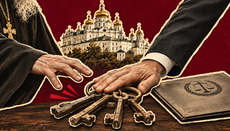
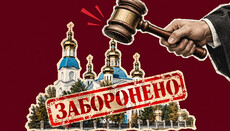
There is another dimension to this issue, one that has received relatively little attention but will inevitably come to the forefront. The end of the war will bring renewed efforts to negotiate a settlement of Ukraine's Church dispute. This is only natural: a peace settlement cannot simply ignore the issue that has led to churches being closed and bishops being put on trial.
It is already clear that the strategy pursued by the OCU and the Ukrainian authorities to dismantle the Ukrainian Orthodox Church has failed. A law aimed at banning the Church has been passed. The Lavra has been taken away. Metropolitans are standing trial. Yet the Church remains, and millions of its faithful have not abandoned it. Constantinople, it seems, is beginning to understand this as well. On January 6 of this year, Patriarch Bartholomew, concelebrating with Epifaniy, publicly urged him to "seek ways of rapprochement with fellow bishops in Ukraine through dialogue." He also reminded him that reconciliation requires moving beyond "the stubborn conviction that only one side possesses the absolute truth."
These are important and honest words, and they are worth a great deal – especially coming from the man who himself created the OCU and who finds it harder than anyone to admit that the project has not brought the expected unity. But the Phanar has not gone further than these words so far. Yet after the peace negotiations, some all-Orthodox meetings will have to be held anyway, and perhaps, God willing, councils as well.
And here Patriarch Bartholomew and Patriarch Theophilos find themselves in a situation that is in many ways the same as on the question of the war. Constantinople is bound by its own decisions of 2018–2019 and cannot retreat from them without losing face: the OCU has been “recognized,” the Tomos has been issued, Epiphany is the only “canonical Metropolitan” of Kyiv, and any other view of things is perceived as an attack on the authority of the Ecumenical Throne. For the Phanar this position is (at least for now) unchanging. But it is hard to negotiate from such a position, because negotiations presuppose that the other side also has something to say, whereas here the other side has been assigned in advance the role of the condemned.
Patriarch Theophilos, however, has not recognized the OCU. He receives UOC pilgrims, has said more than once that he considers Metropolitan Onuphry the Primate of the Ukrainian Church in the present difficult time, and at the same time maintains relations with Constantinople. That is, he does not break communion with either side. It was he who in 2020 gathered in Amman the Primates and representatives of several Churches, when he understood that there was no one left to initiate an all-Orthodox conversation about Ukraine – and he did so without quarreling with the Phanar. It was he who in 2023 discussed with Pope Francis mediation in the Russian-Ukrainian conflict. In other words, he is trying to reach an understanding with both sides, without demanding preliminary capitulation from anyone.
In this role he looks more convincing – both from the Christian and even from the simply human point of view. Not because he is better than Patriarch Bartholomew, but because he is freer: he has promised nothing to either Kyiv or Moscow, and therefore can offer both what Constantinople, bound by obligations and an “unchanging” position, cannot offer.
What Patriarch Theophilos will bring to Kyiv
One may suppose that Patriarch Theophilos is coming to Ukraine not empty-handed. And not only to Zelensky. It would be strange if the Primate of Jerusalem, who has visited the Kremlin and is preparing to visit Bankova Street, did not bring some proposals both to Metropolitan Onuphry and to Epiphany Dumenko. It is quite possible that the Church part of his mission will turn out in the end to be more important than the political one: the Patriarch has no army and no sanctions, but he has what neither Trump, nor Putin, nor Zelensky has – the right to speak with bishops as a bishop and the ability to propose a format capable of moving the situation off dead center.
What shape this format will take is still unknown, and there is no point in guessing. Something else is clear. Any decision made without the UOC or over its head will prove just as unviable as all the previous ones. But it will not work to simply "abolish" the OCU either: it is backed by the authorities and by almost eight years of attempts to obtain "recognition," and this will have to be reckoned with. Between these two impossibilities lies a narrow path on which someone must walk first. Patriarch Theophilos, it seems, is the only one today who is ready to try.
War – political and ecclesiastical – is an evil that is destructive for everyone without exception. No side will emerge from it as an unconditional victor, and the ordinary faithful, who have been divided into the right and the wrong for years now, will certainly not win. We must move toward peace and toward at least some kind of agreement – even an imperfect one, even a temporary one, even one built on compromises that will please no one.
If Patriarch Theophilos helps here – even for the sake of some interests of his own, even for the Order of Friendship and donations (as representatives of the OCU accuse him of doing), – honor and praise to him. Because a peacemaker will be judged not by whom he dined with, but by whether the guns fell silent after his visit. And that, in the end, is the only criterion that matters.