Dissolution of Rovenky Eparchy: A dangerous precedent for UOC
The court ruling concerning an eparchy in the occupied part of the Luhansk region is unlikely to change its day-to-day church life. But the precedent could be used against other UOC eparchies.
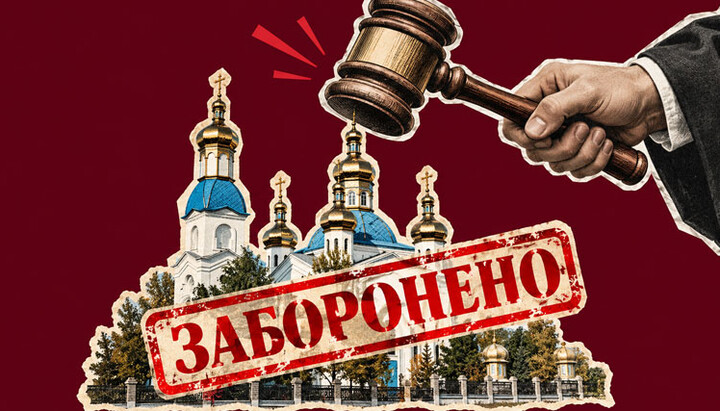
On October 21, 2026, the Sixth Administrative Court of Appeal partially granted a lawsuit filed by the State Service of Ukraine for Ethnopolitics and Freedom of Conscience (DESS), ordering the dissolution of the religious organization "Administration of the Rovenky Eparchy of the Ukrainian Orthodox Church." At the same time, the court rejected the second part of the agency's demands – the transfer of the organization's property, funds, and other assets to the state.
At first glance, the ruling may seem relatively insignificant. The Rovenky Eparchy is located in the Russian-occupied part of the Luhansk region and has effectively been under the direct jurisdiction of the Moscow Patriarchate since October 2022. A Ukrainian court ruling is unlikely to change much about its daily operations.
But the decision establishes a precedent that could also be applied to other UOC eparchies – including those in Ukrainian-controlled territory. In fact, the same approach is already being used against one of the Church's synodal departments.
The current status of the Rovenky Eparchy
The eparchy was established on January 5, 2013, by a decision of the Holy Synod of the UOC, which separated it from the Luhansk Eparchy. Its first ruling hierarch was Bishop Panteleimon (Povorozniuk). On August 17, 2021, the UOC Synod transferred Panteleimon to the Luhansk see and appointed Archbishop Arkadiy (Taranov) as the new head of the Rovenky Eparchy.
The territory of the Rovenky Eparchy has been under Russian control since 2014. On October 13, 2022, the Synod of the Russian Orthodox Church (ROC) decided to place the eparchy under the direct canonical and administrative authority of the Patriarch of Moscow. The stated reason was the inability to maintain regular communication with the Kyiv Metropolia.
However, the UOC continues to regard the Rovenky Eparchy as part of its structure, lists it in its official directories, and recognizes Archbishop Arkadiy as its ruling hierarch. Nevertheless, the eparchy's current official website explicitly identifies it as an eparchy of the ROC.
The situation becomes even more interesting when we turn to government records.
Ukraine's Unified State Register of Legal Entities still lists the "Administration of the Rovenky Eparchy of the Ukrainian Orthodox Church." Moreover, its registered head is Vasyl Dmytrovych Povorozniuk – Metropolitan Panteleimon, who was transferred to another see more than five years ago.
It was this registry entry that became the basis for the court-ordered dissolution.
A bishop's criminal conviction as grounds for dissolving an eparchy
On June 18, 2025, the Desnianskyi District Court of Chernihiv convicted Metropolitan Panteleimon in absentia of aiding the aggressor state under Part 1 of Article 111-2 of Ukraine's Criminal Code. He was sentenced to 11 years in prison, confiscation of property, and a 13-year ban on holding positions in religious organizations. The verdict became legally binding on November 11, 2025.

One might assume that this conviction had nothing to do with the Rovenky Eparchy, which Panteleimon had not headed for several years. But the situation is not so simple.
The current version of Article 16 of Ukraine's Law "On Freedom of Conscience and Religious Organizations" allows a religious organization to be dissolved by court order if its authorized representatives are convicted of crimes against the foundations of Ukraine's national security, as well as certain other offenses.
DESS filed its lawsuit citing Panteleimon's conviction and the fact that he remained listed as head of the Rovenky Eparchy's administration. The court sided with DESS.
Formally, this happened because no one updated the state register when Panteleimon was transferred to the Luhansk see.
But there is another, far more troubling aspect. The Law "On Freedom of Conscience and Religious Organizations" does not explicitly require that the crime have been committed by an authorized representative on behalf of the religious organization, at its direction, or in its interests.
In other words, a religious organization can be dissolved on the basis of a criminal conviction involving someone whose actions were entirely unrelated to the organization's activities.
DESS is now seeking to dissolve another UOC institution – the Synodal Department for Family Affairs, which is registered in Kyiv. The grounds are the same: Metropolitan Panteleimon's criminal conviction and the fact that he is also listed in the state register as head of that department.
On October 23, the Synodal Department filed a counterclaim challenging DESS's actions. It argued that the agency had failed to establish any connection between Panteleimon's crimes and the department's activities.
However, on November 5, the Sixth Administrative Court of Appeal returned the counterclaim, ruling that DESS's actions must be challenged in separate proceedings. The court did not consider the department's substantive arguments.
Thus, an institution registered in Kyiv now also faces the threat of dissolution.
An organization can be dissolved. But can its property be seized?
The Sixth Administrative Court of Appeal granted DESS's request to dissolve the Rovenky Eparchy but rejected its demand to transfer the eparchy's property, funds, and other assets (excluding religious property) into state ownership.
The court noted that Ukrainian legislation does not adequately regulate the procedures for identifying an organization's assets, handling creditors' claims, or appointing and operating a liquidation commission. The court itself cannot remedy this legislative gap.
This is already the second case of its kind. On September 9, 2025, the same Sixth Administrative Court of Appeal ordered the dissolution of the religious organization "Spiritual Administration of Muslims of Crimea" but likewise rejected the demand to transfer its property to the state.
The result is a legal deadlock. Dissolving a legal entity necessarily involves determining what happens to its property, yet gaps in the legislation make that issue impossible to resolve.
When religious organizations in temporarily occupied territories are dissolved, this may have little practical significance. But similar cases in Ukrainian-controlled territory could create serious legal problems.
Conclusion
The Rovenky case establishes a precedent: an eparchy can be dissolved not because of its ties to the ROC, but because a bishop has been convicted of crimes against national security. Moreover, under certain circumstances, this approach could prove easier for government authorities than establishing affiliation with the ROC.
When DESS argues that UOC institutions are affiliated with the ROC, one of its main arguments is that such affiliation is stipulated in the ROC's governing documents. Law No. 3894-IX, commonly known as the "law banning the UOC," does indeed treat such provisions in the ROC's charter as evidence of ties to the Russian Church.
But the absurdity of the situation is obvious: Ukrainian government agencies are effectively relying not on Ukrainian legislation, but on the internal documents of a foreign religious organization.
Perhaps this absurdity – to put it mildly – will eventually come to an end, and Ukrainian courts will stop treating provisions of the ROC charter as sufficient proof of the UOC's affiliation with the Moscow Patriarchate. If that happens, Ukrainian authorities will still have another means of dissolving UOC institutions – through criminal convictions of their leaders.
There is one final point worth considering.
In Ukraine, the Rovenky Eparchy is being dissolved. In Russia, however, it will continue to exist – both in practice and as a legal entity. In other words, Ukraine itself is pushing such eparchies into Russia's jurisdiction and ensuring that they can never return to the UOC. And this is yet another absurdity.
On the one hand, DESS head Viktor Yelensky stated in October 2026 that the ROC had "annexed eight eparchies in Crimea and eastern and southern Ukraine." Moreover, one of DESS's demands to the UOC's Kyiv Metropolia was that it formally reject recognition of this annexation.
On the other hand, the same agency secured a court ruling dissolving the Rovenky Eparchy in Ukraine while leaving it intact under Russian law. In effect, DESS has given legal recognition to the very annexation it condemns.
Which raises the question: how much longer will this assault on common sense continue?