Dialogue with Elder Joseph: "Only the narrow gate leads to the expanse of paradise"
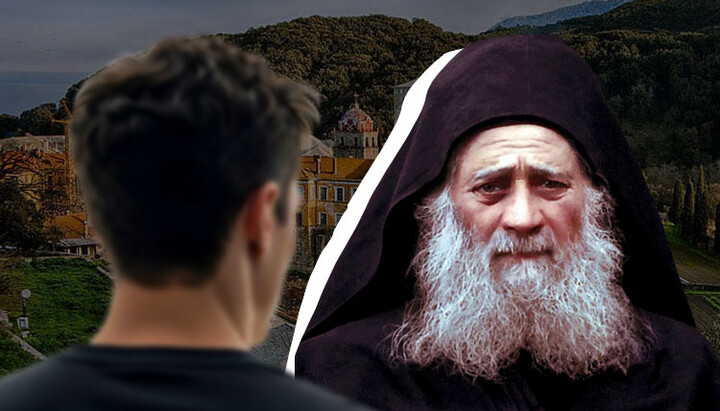
Elder Joseph calls us to full spiritual growth. Photo: UOJ
During the last conversation, Abba Joseph revealed to us a simple yet very important truth: "the purpose of man is to find God". And a true sign that this search has been successful is the gift of purifying grace, which the Creator sends in response to repentance.
Each of us is familiar with this feeling of first grace after prayer, confession, Communion. In theology, it is also called prevenient grace. Through it, the Lord, in His great mercy, reveals to us the mystery of His Kingdom and with a quiet voice of good thoughts encourages us to live a pious life.
But such a gracious feeling is always temporary.
An abundance of spiritual gifts would lead a person to delusion, and their lack to despondency. Therefore, God gives His blessings in measure.
The Apostle Paul also writes about this, recalling how in suffering from the "thorn in the flesh" he thrice prayed to Christ for help, to which he received the answer: "My grace is sufficient for you, for My strength is made perfect in weakness" (2 Cor. 12:9).
A Christian is a warrior-hero who repels the devil’s arrows
That very “thorn in the flesh” which the Apostle laments has been driven into each of us. These are the temptations and trials with which the “angel of Satan” assails the soul daily. God permits such a painful struggle so that we may humble our pride and not exalt ourselves. Our task, as diligent disciples, is to repel these tempting arrows from ourselves through the power of prayer and humility.
Elder Joseph the Hesychast speaks of this invisible battle:
"The enemy, being inventive, knows well how to hide behind passions and weaknesses". And advises: "To strike him, you must fight with yourself, mortify yourself [spiritually]. When the old man dies, then the power of the enemy and adversary will be abolished."
A Christian is called to resemble the epic heroes in their courage. But unfortunately, we rarely perceive church life as a spiritual struggle. It is easier for us to "read" the rule, "stand" the service, but not to work on eradicating passions. The soul of a lazy person, even caressed by grace, is like a pampered orchid: without painstaking care, it quickly withers and bears no fruit.
Christ said that man is offered only two paths: "Enter through the narrow gate. For wide is the gate and broad is the road that leads to destruction, and many enter through it. But small is the gate and narrow the road that leads to life, and only a few find it" (Matt. 7:13-14).
And Elder Joseph, continuing these words, with fatherly love addresses each of us:
«My child! Compel yourself from the very beginning to enter through the narrow gate, for only it leads to the expanse of paradise!».
"Do not dress in leaves alone, but spread your roots deep"
When a believer realizes the depth of their falls, they have a strong desire to break free from the captivity of passions. But in practice, this is not easy. A sinful life is like quicksand: the longer you stand on it, the deeper you sink. If a person lives relaxed, hoping for salvation by "happy accident", they are seriously mistaken.
Often we build our spiritual life superficially, not laying a deep foundation. Warning against such formalism, Elder Joseph says:
"Do not dress in leaves alone, but spread your roots deep, so that you may find the source. So that you may draw water and grow continuously. So that when drought comes, you will not undergo any change."
But how to find this inexhaustible source in the desert of life? The Athonite spiritual father himself gives the answer. "First of all – acquire perfect and unquestioning obedience to all. From it is born humility," says the elder.
For us, laypeople, this call should not be taken literally, in a monastic way. Our main obedience is obedience to the will of God, which the Lord reveals through life circumstances. Humility before everything that God sends us – both joyful and sorrowful – gives birth to a gracious feeling in the soul.
"If you acquire this, – emphasizes the holy hesychast, – you will not fear changes, for you become a person of another nature. The properties of your nature are changed by grace."
Asceticism protects the fruits of the Spirit from drought
In the understanding of the elder, humility is the root that allows the soul to be strengthened in piety. Then the tree of the soul will certainly bear fruits – virtues. And various spiritual exercises, like leaves, will preserve these fruits from drought.
Joseph the Hesychast also calls this practical spirituality – asceticism – the "rule". It includes prayer, reading, and bodily feats. Here are the instructions given by the spiritual father:
"Psalmody should be performed humbly. The mind should strive to grasp the meaning of the prayer. Reading should also be with great attention... The body should strive with all its might, always being enslaved to the spirit. Whether you eat or work – do not cease the Jesus Prayer."
Wherever a person lives, in a monastery or in the world, these tips are always relevant. Bodily fasting without spiritual fasting is little different from a diet. And spiritual fasting without bodily fasting is like flying an aerorplane without fuel: no matter how long you plan in the air, sooner or later you will still crash.
Elder Joseph calls us to full spiritual growth. He is confident that the seed of obedience will grow the root of humility. Humility will become the foundation for virtues. And asceticism will protect these virtues from the pests of demons and the sinful heat. Then the tree of the soul, even growing in the desert, will stand, and the caring Gardener-Lord will constantly water it with His grace.
With this, we temporarily bid farewell to the wise elder, thanking him for his valuable advice. Abba sees us off with warm words that are often found on the pages of his letters: "Rejoice in the Lord, Child of the Heavenly Father!"
Read also
Faith is not a checker piece in a spectator sport
Arguments about faith on social media increasingly resemble no-holds-barred fights. We turn to a saint who, sixteen centuries ago, knew how to speak to those interested only in turning theology into a combat arena.
The metropolitan who fought with a pen
St. Cyprian of Kyiv was robbed, expelled, and barred from his see. He answered with letters, books, and canons – and before his death, forgave everyone.
Loneliness under one roof
Spouses can share a home for years, raise children, and faithfully attend church – yet remain strangers to each other.
The cross – the deepest healing of the human soul
Emotional exhaustion and anxiety have become a way of life. Ancient Christian tradition offers an unexpected way out – embracing one's own cross.
The Prophet Elisha and the mystery of the Bethel massacre
The story of the prophet Elisha and the two bears seems to be the harshest in the Bible. But in reality, it carries a profound theological meaning.
Why does God remain silent in times of trial?
After months of praying for a loved one’s healing and salvation, we hear nothing from the Creator but agonizing silence. How can we endure the long wait for an answer?