In Silicon Valley, high-IQ "genetic super caste" attempted to be raised
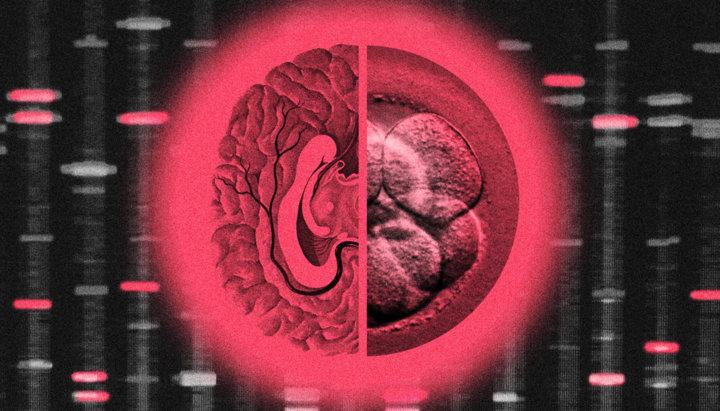
An illustrative photo: wsj.com
Technological leaders of Silicon Valley are creating a kind of "genetic super caste" using advanced methods of testing and selecting high-IQ embryos, writes The Wall Street Journal.
According to the publication, Silicon Valley executives pay up to $50,000 for the genetic selection of "smart" children with a predicted high IQ. Startups Nucleus Genomics and Herasight offer DNA embryo analysis services costing from $6,000 to $50,000, assessing not only disease risks but also intelligence levels.
The growing obsession with IQ is causing controversy, and bioethics experts are raising the alarm about genetic screening services. "This worries a lot of people," says Hank Greely, director of the Center for Law and the Biosciences at Stanford University. "It's a great plot for science fiction: the rich create a genetic super caste that takes power over all of us, the proletarians."
However, as noted, the demand for these services is rapidly growing. "In Silicon Valley, they love IQ," emphasized Nucleus Genomics founder Kian Sadeghi.
To choose the optimal offspring, engineer-parents create scoring systems. The publication tells about a pair of engineers from San Francisco who created a complex scoring system to select the "optimal" embryo. Their daughter was conceived from an embryo that went through the selection system. As a result, an embryo with the third highest predicted intelligence but the highest overall score was chosen.
Among those who decided on such testing are Simone and Malcolm Collins, who became leaders of the pro-natalist movement. This couple, who worked in technology and venture capital, had four children through in vitro fertilization and used Herasight services to analyze some of their embryos.
According to Simone, they chose the embryo she is currently carrying because it had a low risk of developing cancer. But they are also pleased that it turned out to be "in the 99th percentile of the polygenic score, and therefore there is a high likelihood that it will have an exceptionally high level of intelligence."
According to WSJ, in reality, the ethical aspects of such selection concern few people, as society has long existed in conditions of active implementation of new technologies.
The publication notes that the most radical position is taken by the so-called rationalists – a group of scientists from Berkeley who explain the need for genetic enhancement of people as protection against the threat of AI.
According to the son of a rabbi and co-founder of the Berkeley Genomics Project, Benson-Tilsen, "a new caste of people" with more developed intelligence will be able to make AI conform to human values or convince humanity to abandon its creation altogether.
As reported by the UOJ, the first computer in the world based on human neurons has gone on sale.
Read also
Sumy Eparchy venerares miraculous Korsun-Shpylivka Theotokos Icon
Celebrations honoring the Mother of God’s icon known as the “Restorer of Sight” were held at Sumy Cathedral and concluded with a car procession around the city.
Receding Dniester in Khmelnytskyi region exposes foundation of flooded church
The foundation of St. John the Theologian Church, submerged during the construction of a hydroelectric power plant, has emerged for the first time in 45 years.
Medieval сhurch сrumbles as Culture Ministry сites missing agreement
The 14th–15th-century St. Nicholas Church in Chesnyky, Ivano-Frankivsk Region, is falling into disrepair.
Poland сondemns Lviv Regional Council's decision to declare 2007 year of UPA
Polish Prime Minister Donald Tusk says the Lviv Regional Council's decision to dedicate 2027 to the UPA and Roman Shukhevych is harmful to Ukraine.
OCU seeks court recognition of ownership of seized Cherkasy cathedral
The Cherkasy Regional Commercial Court will hear an OCU lawsuit seeking ownership of St. Michael's Cathedral, which was seized from UOC believers.
Lithuanian bishop: Ukraine is no model for believers' rights
Vicar of Vilnius Diocese voices concern over attempts to import Ukraine's religious conflict into Lithuania.