UGCC head: Idea of Ukrainian and Russian women carrying a cross offensive
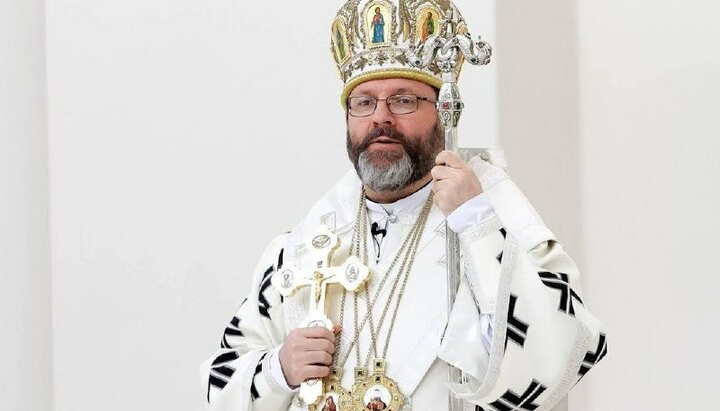
The head of the Ukrainian Greek Catholic Church, Sviatoslav Shevchuk, said that the Pope's idea of a cross being carried by a Ukrainian and a Russian woman in the Colosseum procession was unacceptable in the context of the ongoing war, reports the official website of the Ukrainian Greek Catholic Church.
He noted that for Greek Catholics in Ukraine this is "incomprehensible and even offensive, especially in the context of the expected second, the even bloodier advance of Russian troops on our cities and villages."
"I know that our Roman Catholic brothers share these thoughts and concerns as well," the UGCC head added.
Shevchuk said he has already conveyed to the Vatican numerous negative reactions from a host of bishops, priests, monks and laity who are convinced that gestures of reconciliation between the two nations will only be possible when the war ends and the perpetrators of crimes against humanity are justly condemned.
The procession in the Coliseum will take place on 15 April, the Friday before Catholic Easter. Pope Francis has invited family members of a Ukrainian and a Russian citizen, who have worked together for many years at a hospice in Rome, to participate in the ceremony. They are to hold a large wooden cross for part of the procession. Ukrainian Ambassador to the Vatican Andrey Yurash also expressed his disagreement with the Pope's idea.
Read also
Medieval сhurch сrumbles as Culture Ministry сites missing agreement
The 14th–15th-century St. Nicholas Church in Chesnyky, Ivano-Frankivsk Region, is falling into disrepair.
Poland сondemns Lviv Regional Council's decision to declare 2007 year of UPA
Polish Prime Minister Donald Tusk says the Lviv Regional Council's decision to dedicate 2027 to the UPA and Roman Shukhevych is harmful to Ukraine.
OCU seeks court recognition of ownership of seized Cherkasy cathedral
The Cherkasy Regional Commercial Court will hear an OCU lawsuit seeking ownership of St. Michael's Cathedral, which was seized from UOC believers.
Lithuanian bishop: Ukraine is no model for believers' rights
Vicar of Vilnius Diocese voices concern over attempts to import Ukraine's religious conflict into Lithuania.
Hundreds of believers honor St. Alexis of Carpatho-Russia in Khust Eparchy
At the St. Nicholas Monastery in the village of Iza-Karputlash, Metropolitan Mark of Khust led a festive liturgy, concelebrated by six metropolitans, five archbishops and three bishops.
Court upholds UOC parish appeal in Voloshky over OCU switch dispute
The Northern Commercial Court of Appeal has upheld the appeal of the St. Nicholas parish of the UOC in the village of Voloshky, Volyn region, in a dispute over a transfer to the OCU.