When the judge is friends with one side – against the other
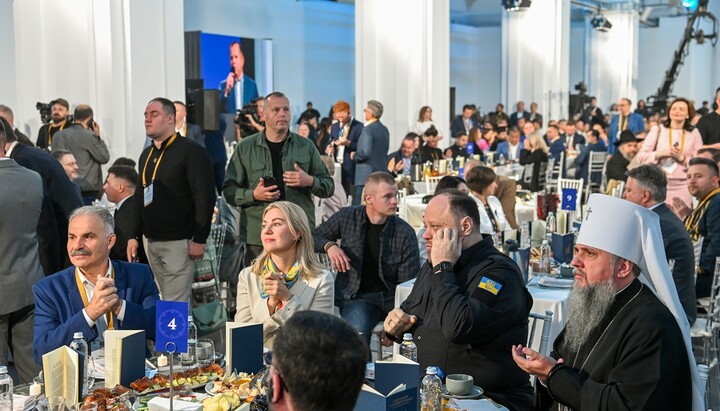
Yelensky, Stefanchuk, and Dumenko at the same table. Photo: OCU press service
On August 27, the head of the State Service for Ethnopolitics and Freedom of Conscience (DESS), Viktor Yelensky, signed a decree recognizing the affiliation of the Kyiv Metropolis of the UOC with Moscow, paving the way for its ban. Just a couple of days before that, on August 25, Yelensky dined at the same table with the head of the Rada, Stefanchuk, and the head of the OCU, Serhiy Dumenko. Coincidence?
In the judicial system, any connections of a judge with one of the parties are an unconditional basis for recusal. Friendly contacts, public statements, even simple communication make a judge's participation in the consideration of a case impossible. Especially if there is personal interest involved. A judge in a property dispute cannot publicly call for the transfer of assets from one party to another.
In football, it's the same. A referee whose nationality matches one of the participants in an international match is never appointed.
Today, Yelensky and Stefanchuk are like judges for the UOC, deciding its fate. But over the past 10 years, Yelensky has made numerous statements expressing negative views on the UOC. At the same time, he actively supports the OCU and does not hide the fact that banning the UOC would greatly benefit Dumenko's organization. This is a clear case of blatant bias on the part of an official holding a high state position.
Of course, against the backdrop of everything happening in the church field, a shared dinner may seem like a minor detail. Anyway, is this really how things are supposed to work in a democratic state? Are we expected to believe in “justice” toward the UOC after this?
Read also
Who destroyed and restored Kyiv Lavra? MinCulture's video reveals the truth
The Culture Ministry’s propaganda about the Kyiv-Pechersk Lavra has inadvertently revealed the truth.
Ternopil post on Feast of Intercession: Has calendar reformn failed?
A significant number of believers have rejected the new church calendar introduced by the OCU and UGCC with government support.
Shoulder straps or a cassock: who writes the script for UOC "fighters"?
Everything indicates that both Veliar and Pshenychny are ordinary performers of someone else's script. There is only one question – does the scriptwriter wear shoulder straps or a cassock?
Why is it legal to kill a person before birth but not after?
Children are the most privileged members of society. Yet that same society officially permits children to be killed – and on a massive scale.
Honoring the Bolsheviks’ successors at Kyiv Lavra
It was under the Reserve that the relics of the saints were desecrated, Lavra churches were turned into an atheism museum, and toilets were installed in sanctuaries.
"Degenerates" and "stupid animals": anti-UOC activists turn on children
Future historians will wonder how a vast country’s information agenda could have been shaped for so long by people so petty, vicious, and utterly contemptible.