Orthodox Church commemorates the Beheading of John the Forerunner
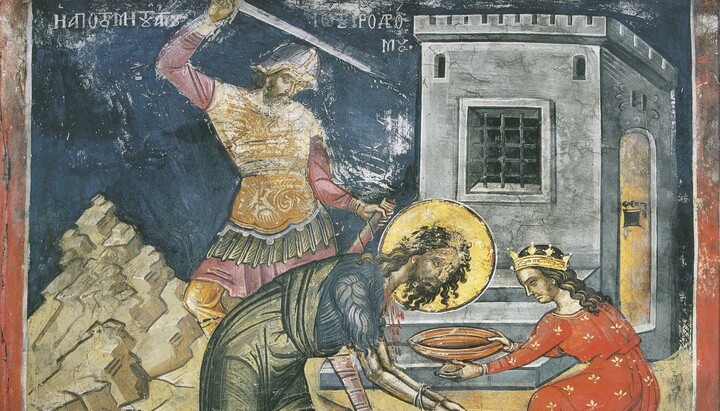
Icon of the Beheading of John the Forerunner, Greece; 16th century. Photo: wikipedia.org
On September 11 (August 29 according to the Old Calendar), the Orthodox Church commemorates the Beheading of the Prophet, Forerunner, and Baptist of the Lord John.
On this day the Church recalls the New Testament events described in the 14th chapter of the Gospel of Matthew and the 6th chapter of the Gospel of Mark.
John the Baptist, who foretold the coming of the Messiah and baptized Jesus Christ in the Jordan River, was imprisoned by order of King Herod Antipas.
At that time Herod ruled Galilee, and the great prophet rebuked the sins and crimes of the king and his entourage. Herod feared to execute the saint, beloved by the people, but Herodias – the wife of his brother with whom he cohabited – incited her daughter Salome to force the king to kill the prisoner.
At a banquet Salome danced for Herod and pleased him so much with her dance that he swore before the guests to give her whatever she desired. On the advice of her mother, Salome asked for the head of Saint John the Baptist on a platter, and Herod carried out her request. Thus the prophet received a martyr’s death.
God’s judgment befell Herod, Herodias, and Salome already in their earthly lives.
Once, while crossing the river Sikoris in winter, Salome fell through the ice, which severed her neck – her body was never found, but her head was brought to Herod and Herodias, just as once the head of Saint John the Forerunner had been.
Aretas, king of Arabia and father of Herod’s lawful wife, in revenge for the dishonor of his daughter, raised an army against Herod. Having suffered defeat, Herod fell under the wrath of the Roman Emperor Gaius Caligula, who sent him together with Herodias into exile in Gaul, and then to Spain – there they were swallowed up by the gaping earth.
In memory of the beheading of Saint John the Baptist, the Church established a strict fast as an expression of Christians’ sorrow over the violent death of the great prophet. Those who keep this fast abstain from meat, fish, eggs, and dairy products.
Earlier, the UOJ reported that a throne hall of Herod, in which Salome had danced, was discovered in Jordan.
Read also
UOC Chancellor explains why state persecutes Church
Metropolitan Anthony explained the reasons behind government pressure on the Church, drawing on the history of the Seventh Ecumenical Council.
Yelensky: UOC lawyer tells Americans Zelensky eats Christian babies
The head of DESS accused Robert Amsterdam of distorting the Ukrainian authorities' treatment of the UOC when speaking to American audiences.
OCU cleric describes how UOC church was “politely seized” in Cherkasy region
An OCU cleric acknowledged on video that a village church in the Cherkasy region had previously belonged to the UOC before being “politely seized” and reopened.
Metropolitan Onuphry sends greetings to Kyiv Theological Academy conference
The UOC Primate addressed participants in the 18th conference of the Kyiv Theological Academy and Seminary, dedicated to the 430th anniversary of St. Peter Mohyla's birth.
Court orders TRC to remove transgender woman from military register
A Dnipropetrovsk administrative court ruled that a TRC’s refusal to remove a transgender woman from the military register constituted discrimination.
Pope Leo, King Charles unite in "Christian fraternity"
The head of the Church of England has granted the Pope the honorary title of “Confrater” as a symbol of “spiritual fellowship and ecumenical friendship.”