Yelensky to UOC clergy on how to avoid mobilization: Change denomination
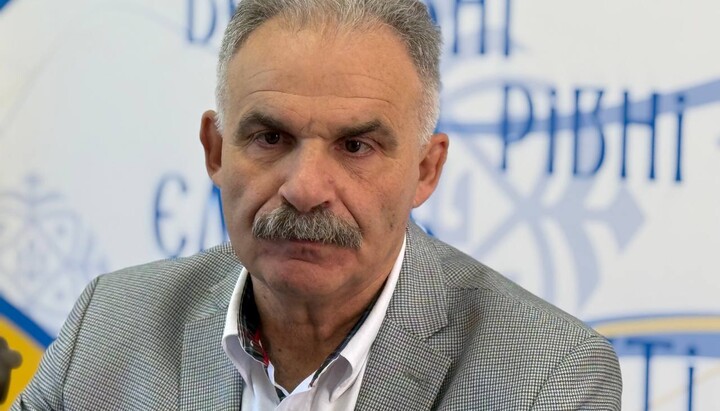
Yelensky. Photo: DESS Facebook
The head of DESS, Viktor Yelensky, told the former editor-in-chief of TRK "Hlas" Ilona Sokolovska how UOC clerics can avoid mobilization.
The official said that today not only the UOC clergy are subject to mobilization but also "religious communities that are not included in the list of non-profit organizations or have not submitted tax reports".
According to him, today up to half of the religious organizations in Ukraine do not meet the criteria for belonging to critical infrastructure. After this, Yelensky recommended that "religious organizations meet these criteria".
Regarding UOC clerics, the DESS head advised that "they should not belong to those religious organizations whose statutes have lost their validity in terms of their names".
Earlier, the UOJ reported that a mobilized UOC priest was killed at the front.
Read also
Mobilized priest of Volodymyr-Volynsky Eparchy of UOC killed
A funeral service for Fr Andrii Korynchuk, a priest killed in the war, to be held at UOC Resurrection Cathedral in Kovel.
TRC officers draft UOC priest in Chernihiv
TRC officers have detain Archpriest Pavlo Tovstohon of the Christ's Nativity Church.
Patriarch Bartholomew and Shevchuk discuss obstacles to ecumenical unity
The head of the UGCC said that replacing Christian patriotism with the idea of loyalty to a "warring god" is an obstacle to ecumenical dialogue.
Ukraine’s Foreign Ministry plans advocacy visits abroad for UCCRO
Members of the All-Ukrainian Council of Churches and Religious Organizations have planned advocacy visits abroad following a meeting with Ukraine’s deputy foreign minister.
UOC priest detained by recruitment officers in Kyiv sent to training ground
UOC priest Maksym Kostiuchenko, who was detained on his way to a church service in Kyiv, has been sent to a military training ground in Chernihiv Region.
25 tons of humanitarian aid from Volyn reach Sviatohirsk Lavra
Around 25 tons of food donated by believers of the UOC Volyn Eparchy arrived at Sviatohirsk Lavra on October 22.