When some suffer while others demand a “genuine peace”
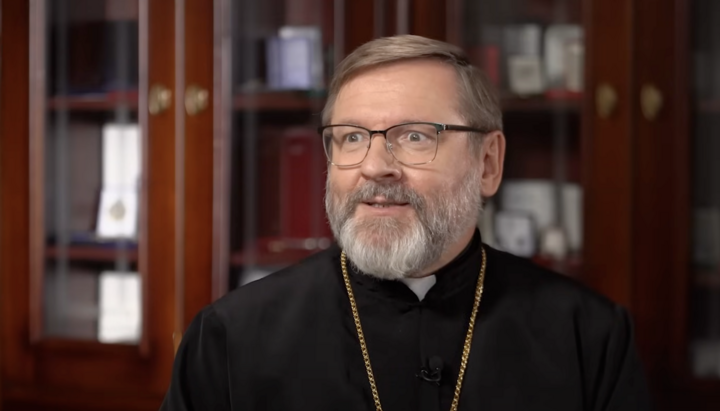
Sviatoslav Shevchuk. Photo: Apostrof
At a conference in Poland, the head of the UGCC, Sviatoslav Shevchuk, once again spoke out against ending the war with Russia, stating that “true peace has nothing to do with pacifism.” He criticized the idea of “peace at any price” and declared that “genuine peace is bound up with truth and justice for the victims, the restoration of international law, and accountability for the perpetrators.”
In today’s circumstances, Shevchuk’s talk of “restoring international law and holding perpetrators accountable” can only be read as demanding Russia’s capitulation. How realistic is that now?
Given the situation at the front, the economy, and Ukraine’s prospects for international assistance, the likelihood is extremely low. Meanwhile, many Ukrainians continue to die every day – both military and civilians. Why does Shevchuk ignore this? It seems there are several reasons.
The majority of UGCC parishes are abroad; they do not suffer from the war. What is more, UGCC clergy actively court Ukrainian refugees in the EU (who are predominantly Orthodox) – and often successfully. The UGCC is growing.
Despite a strong post-Euromaidan expansion eastward, the overwhelming share of UGCC parishes inside Ukraine is in the country’s west. People there hardly feel the war’s breath. Strikes do happen – but very rarely.
UGCC clergy are not mobilized; they have exemptions. And those “needed” by the Uniates are “patriotically” shielded from the draft.
The entire rhetoric of the UGCC – and of Shevchuk personally – is built on “justice” in war, on securing that justice at any cost, regardless of the casualties. It just so happens that Greek Catholics bear far less of that “cost” than others, since they are scarcely present in the “war” regions. Yes, the draft offices operate in Halychyna too, sending UGCC parishioners to the front. But apparently not with enough effect to temper the rhetoric of Uniate leaders.
In words, we have a “united country.” In reality, it’s a bit different: one part suffers from the war, while another calls for fighting on until a “genuine peace.”
Read also
Why is Jerusalem “wrong” about OCU, but Constantinople isn’t?
In the eight years since the OCU was established, we have never once heard its leader suggest that the Patriarch of Constantinople is capable of error.
Who destroyed and restored Kyiv Lavra? MinCulture's video reveals the truth
The Culture Ministry’s propaganda about the Kyiv-Pechersk Lavra has inadvertently revealed the truth.
Ternopil post on Feast of Intercession: Has calendar reformn failed?
A significant number of believers have rejected the new church calendar introduced by the OCU and UGCC with government support.
Shoulder straps or a cassock: who writes the script for UOC "fighters"?
Everything indicates that both Veliar and Pshenychny are ordinary performers of someone else's script. There is only one question – does the scriptwriter wear shoulder straps or a cassock?
Why is it legal to kill a person before birth but not after?
Children are the most privileged members of society. Yet that same society officially permits children to be killed – and on a massive scale.
Honoring the Bolsheviks’ successors at Kyiv Lavra
It was under the Reserve that the relics of the saints were desecrated, Lavra churches were turned into an atheism museum, and toilets were installed in sanctuaries.